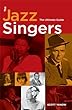
Jazz Singers: The Ultimate Guide
by Scott Yanow
How brave of
Scott Yanow to publish his book! Everyone
familiar with jazz singing will quibble
in some way with either the choices he has
made or the opinions he has expressed. For
instance, Ruth Olay, one of my favorite
vocalists from the ‘50s, is absent and so
is my favorite Kenny Rankin album recorded
with arranger/conductor Don Costa. However,
the multi-talented Ann Hampton Callaway,
often overlooked by jazz critics, is given
much deserved credit.
The feisty Yanow doesn't shy from controversy
but invites it by naming “Ten Songs That
Should Be Avoided” and listing his “Jazz
Singing Giants” with a request for readers
to argue among themselves over his selections.
In the introduction Yanow explains his
motivations and decision-making processes.
He admits to erring on the side of inclusiveness
by including singers in the first decade
of their careers. Thankfully, he also covers
hundreds of deserving singers who are mainly
known regionally. So if you’re traveling,
take the book with you and catch some fine
talent along the way.
Published in 2008, the book features
521 singers profiled through the year 2007,
sketches of 198 more singers, 55 instrumentalists
who have sung during their careers, a section
for jazz vocal groups, a list of singers
on film, and recommended reading on jazz
singing. And in his introduction he includes
a brief history of jazz singing. That is
a lot of helpful information.
Yanow’s writing sparkles, so there
is nothing encyclopedic about the book.
And regardless of the stature of the singer,
if his/her life is interesting, space is
allowed for it. As much as you think you
know about a particular singer, Yanow often
comes up with a surprising tidbit.
How did he go about such an enormous
task? He sent out a questionnaire to all
the living artists he was able to track
down. For those who did not respond, he
researched past interviews, and, in a couple
of borderline cases he decided that they
were not interested in their careers and
left them out. Furthermore, in the
case of every singer he evaluates their
best CD’s with enlightening information—quite
a job, requiring thousands of hours of listening.
There are more than the average
number of typos but considering the number
of entries, there are few errors of fact.
Overall, Yanow has done a terrific service
to the art of jazz singing by compiling
this information in such scintillating prose.
He brings all of his years of listening
to and writing about jazz to The Jazz
Singers, which is, indeed, The Ultimate
Guide.
–Sandra Burlingame
You can purchase
an autographed copy of this book at
www.scottyanow.com. |
|
|
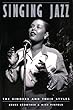
Singing Jazz: The Singers and Their Styles
by Bruce Crowther and Mike Pinfold
Crowther
and Pinfold’s book, published in 1997, follows
the development of jazz singing from the
beginning to the end of the 20th
century. And with such diverse material
to cover—show tunes, blues, gospel, bebop,
and soul, all of which have contributed
to the jazz lexicon and new equipment that
has expanded the possibilities of jazz singing—the
book is a cornucopia of information. Also
included are 200 short biographies with
recommended recordings, photographs, a general
index, an index of song titles, and a bibliography
that serves as a recommended reading list.
Within each chapter are biographies of
artists appropriate to the topic, explanations
of particular styles, and enlightening commentary
by contemporary artists. While the authors
devote an early chapter to jazz singers,
ultimately they throw up their hands at
a precise definition of the art form, offering
instead numerous inclusive options and stylistic
categories as markers for listeners to explore.
The book is well organized, giving a
clear picture of how our uniquely American
music broke from European roots to include
black musical forms and, in the heyday of
Tin Pan Alley, resulted in some of the most
memorable music ever created. Today’s artists
continue to stretch the boundaries of the
art form—Jay Clayton with her poetry and
digital delay and Bobby McFerrin who incorporates
a multitude of sounds into his solo performances.
Students will find the book useful and
get a reality check as well. From the early
days of on-the-job training with big bands
to the jazz education programs of today,
singers of all persuasions talk of their
experiences and influences and offer advice
on topics such as building repertoire, developing
technique, getting gigs, and the necessity
of self-promotion. Some interesting asides
include vocalist/educator Mike Campbell
discussing the making of his pop album where
he recorded multiple takes of the songs,
line by line, then selected the best lines
and put them together. “To me it wasn’t
making music,” says Campbell. “To me, making
music means people playing together and
communicating.”
The explosion of rock music in the ‘60s
and ‘70s affected all aspects of the music
industry, and “the interlacing of the jazz
and popular strands…all but disappeared.”
The repository of popular song was not being
replenished. “Who can remember more than
a tiny handful of the songs written for
the smash-hit musical shows of the last
quarter century?” ask the authors. Jazz
musicians found the new music less inspiring
and difficult to personalize. As pianist
Oscar Peterson said, “[It] has no holes
in it.”
Even though many entries in The Great
American Songbook are approaching the century
mark, singers keep returning to them for
their rhythmic, harmonic and melodic richness.
In the end the authors contemplate a future
for jazz singing that includes a worldwide
organization; more promotion by record companies;
and “a living research source for jazz singers.”
–Sandra Burlingame
|
|
|
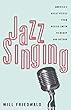
Jazz Singing: America’s Great Voices from
Bessie Smith to Bebop and Beyond
by Will Friedwald
Let’s get this out of the way now. Friedwald
can be opinionated and indiscreet, calling
Diane Schuur “an awful singer,” Oscar Peterson
“a cocktail pianist,” and dismissing all
Manhattan Transfer albums. Such statements
can invalidate opinions as being personal
rather than scholarly. And he points to
Nat Cole’s recording of “Lush Life” as “the
most luscious of all lush lives,” although
its composer would not agree. David Hajdu
in Lush Life: A Biography of Billy Strayhorn
reports that the usually unruffled Strayhorn
was furious over Cole’s recording because
the arrangement took liberties with the
composition and Cole messed up the lyrics.
That said, Jazz Singing is a valuable
resource for anyone interested in the history
of jazz singing and its major practitioners.
The central thesis of the book is “jazz’s
effect on popular singing,” but this is
really a means of avoiding the term “jazz
singer” which has yet to be precisely defined
by anyone. And it opens the door for Friedwald’s
discussion of hundreds of interesting “jazz-tinged”
vocalists.
What Friedwald does do well is chronicle
the singers and styles that have developed
during the 20th century and influenced
the course of jazz-influenced singing. He
cites Louis Armstrong and Bing Crosby as
the first to successfully combine elements
of both black and white music and appeal
to general audiences. He describes the swing
bands as ushering in the era of “…art and
entertainment at their most convergent,”
pointing to the influence of the microphone
and juke box as well.
The book is rich with biographies of
big band singers, vocal groups, and lesser
known but influential singers. In tackling
the big talents such as Billie and Ella
with whom we’re familiar, he focuses on
their styles, influences, and impact on
others. He also evaluates specific recordings
within the text in addition to including
a Selected Discography.
Friedwald covers the subjects of crooners,
bebop, vocalese, the cool school, and hard
bop and gives credit where it’s due to peripheral
jazz singers such as Kay Starr, Sammy Davis,
Jr. and Buddy Greco. A delightful chapter
on “others who sing” includes singing horn
players Jack Teagarden and Chet Baker, singing
songwriters Hoagy Carmichael and Johnny
Mercer, singing dancer Fred Astaire, and
others.
Since the arrival of rock and roll he
says, “… records remain one of the more
profitable areas of the children’s toy industry.”
However, vocalists such as Tony Bennett,
Abbey Lincoln, and Carmen McRae weathered
the maelstrom, and Betty Carter and Sheila
Jordan as well as younger talents such as
Cassandra Wilson point to the future. The
book, published in 1990, does not include
singers who have come to the fore since
then. However, the information that Friedwald
has compiled in a very readable format is
as useful today as it will be for future
generations of readers.
–Sandra Burlingame
|
|



