| By Terry Perkins 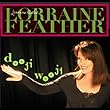 The world of jazz standards embraces considerable territory, as a quick exploration of the JazzStandards.com website will confirm. In addition to memorable tunes written by jazz musicians, you’ll find everything from Broadway, film and Tin Pan Alley tunes generally agreed to be part of the “Great American Songbook,” more recent pop, R&B and rock hits that have been covered by jazz vocalists as well as tunes written by contemporary songwriters and singers that mine the same classic vein explored by the likes of the Gershwins, Cole Porter, Hoagy Carmichael and others. The world of jazz standards embraces considerable territory, as a quick exploration of the JazzStandards.com website will confirm. In addition to memorable tunes written by jazz musicians, you’ll find everything from Broadway, film and Tin Pan Alley tunes generally agreed to be part of the “Great American Songbook,” more recent pop, R&B and rock hits that have been covered by jazz vocalists as well as tunes written by contemporary songwriters and singers that mine the same classic vein explored by the likes of the Gershwins, Cole Porter, Hoagy Carmichael and others.
You’ll also find songs that meld new lyrics to the frame of classic jazz instrumentals, creating a musical style known as vocalese - a term first used by noted jazz critic Leonard Feather in a 1959 article in Jazz: A Quarterly of American Music to describe the musical approach taken by the legendary vocal trio of Dave Lambert, Jon Hendricks and Annie Ross in the late 1950s and early ‘60s. Unlike scat singing, in which nonsense syllables serve as the building blocks for improvised vocals that mimic instrumental solo turns, vocalese involves the writing of a set of lyrics designed to fit the melody and arrangements of established jazz instrumentals. The “vocalese” approach was actually pioneered by Eddie Jefferson and King Pleasure. “Moody’s Mood for Love,” Pleasure’s 1952 recording, added new lyrics to a saxophone solo by James Moody on a recording of “I’m in the Mood for Love” and is generally regarded as the touchstone of the genre. But Lambert, Hendricks and Ross took vocalese a step further, working up elaborate vocal arrangements that mimicked the sound of entire horn sections or small groups.
For our first exploration of the world of vocalese and its impact on jazz standards, it seems appropriate to talk with lyricist and singer Lorraine Feather. Her latest release, Dooji Wooji, made several 2005 “best of” lists - including the top 5 vocal releases named by All About Jazz-New York. The recording’s 12 tunes all feature original lyrics by Feather. Eight of the songs were written by c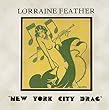 ontemporary writers such as Eddie Arkin, Shelly Berg, Bill Elliott and Russell Ferrante. Four others are pure examples of vocalese, blending Feather’s lyrics with classic Ellington instrumentals “Harlem Air Shaft,” “Jubilee Stomp,” Doin’ the Voom Voom” and, of course, “Dooji Wooji.” Another number, “Once Bitten,” is an original by Arkin and Berg that uses Ellington’s “San Juan Hill” as a springboard. Two of Feather’s earlier albums - 2001’s New York City Drag and 2003’s Such Sweet Thunder - ontemporary writers such as Eddie Arkin, Shelly Berg, Bill Elliott and Russell Ferrante. Four others are pure examples of vocalese, blending Feather’s lyrics with classic Ellington instrumentals “Harlem Air Shaft,” “Jubilee Stomp,” Doin’ the Voom Voom” and, of course, “Dooji Wooji.” Another number, “Once Bitten,” is an original by Arkin and Berg that uses Ellington’s “San Juan Hill” as a springboard. Two of Feather’s earlier albums - 2001’s New York City Drag and 2003’s Such Sweet Thunder - 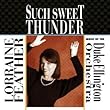 featured her vocalese versions of compositions, respectively, by Fats Waller and Ellington. featured her vocalese versions of compositions, respectively, by Fats Waller and Ellington.
Born Billie Jane Lee Lorraine Feather, she was the daughter of the late Leonard Feather and was named for her mother, Jane (a singer with several New York bands), Billie Holiday (Lorraine’s godmother), Peggy Lee (her mother’s roommate at one time) and the song, “Sweet Lorraine.” With that kind of musical background, it seemed that Lorraine Feather was destined for a career in music. But it took her quite awhile to actually get there.
“I still have a very strong memory of my parent’s old record player in our Manhattan apartment,” recalls Feather, 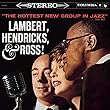 speaking from her current home in northern California. “You know the way they used to be - heavy mahogany with a spindle. And I remember listening to an album by Lambert, Hendricks and Ross called The Hottest New Group in Jazz before I remember hearing anything else. My mother and I would listen and try and sing along to “Moanin’,” “Centerpiece” and “Twisted,” and, of course, we couldn’t! So I guess it really was like osmosis, because I never intended to be a singer.” speaking from her current home in northern California. “You know the way they used to be - heavy mahogany with a spindle. And I remember listening to an album by Lambert, Hendricks and Ross called The Hottest New Group in Jazz before I remember hearing anything else. My mother and I would listen and try and sing along to “Moanin’,” “Centerpiece” and “Twisted,” and, of course, we couldn’t! So I guess it really was like osmosis, because I never intended to be a singer.”
After her family moved to Los Angeles when she was 12, young Lorraine concentrated on jazz dance lessons rather than singing. Eventually, acting became her passion, and after studying theater arts at Los Angeles Community College, she moved back to New York to pursue a career in acting.
“I managed to get in a few shows,” she recalls. “But there were long gaps in between. It was getting to the point where I couldn’t stand it anymore. Finally, I decided to start singing around at clubs. I moved back to LA and did an album of standards for Concord. Then a singer friend called and told me she had just auditioned for something that was wrong for her, a singing group called Swing. But she told them she knew the perfect person - me.”
Feather followed her friend’s advice, auditioned and immediately became a member of the band that eventually became known as Full Swing. Put together by producer Richard Perry, who also was producing the Pointer Sisters, Diana Ross and Barbra Streisand, Full Swing (which also included Charlotte Crosley, a backup singer in Bette Midler’s Harlettes, and Mel Torm?’s son, Steve March Torm?) was designed to update the vocal group style of the 1940s for contemporary audiences in the 1980s. As Perry began the recording sessions for Full Swing’s first album, he decided to add new lyrics to an instrumental by Tommy Newsom that he wanted on the record.
“I told Richard that I could write lyrics for the tune,” says Feather. “I’d been trying to write lyrics a little anyway. So I wrote them and submitted them to him, but he didn’t like them and gave me his thoughts on what they should be like. So I rewrote them and he accepted them that time. I ended up writing lyrics for about half the tunes on that album, and by the end I was completely devoured by the whole thrill of writing lyrics. At that point, it became obvious to me that was the thing I was best at and meant to do.”
Feather continued working with Full Swing until the group broke up in 1990, writing lyrics for tunes such as Ellington’s “Creole Love Call” and “Rockin’ In Rhythm.” She then decided to move back to the west coast, where she became a freelance lyricist, writing songs recorded by Patti Austin, Kenny Rankin and others, as well as writing lyrics for TV shows (earning seven Emmy nominations), films and the 1996 Olympics. She recorded a pop album, The Body Remembers, in 1997 that featured her lyrics paired with contemporary songs in a techno-groove setting, but the record label folded just after the album’s release.
But Feather continued to be attracted to writing lyrics for jazz instrumentals as well, and listening to the music of Fats Waller once again opened the door to another recording project featuring her talents as a singer as well as a lyricist.
“When my father passed away, we donated a lot of CDs and vinyl recordings to the University of Idaho,” says Feather. “So my mom and I spent a lot of time going through them, and whenever I was over at her house I’d borrow a handful and listen to them, because I knew there were a lot of periods in 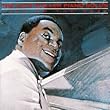 jazz music I didn’t know much about and wanted to explore. When I started listening to the Fats Waller recording, Turn on the Heat, I was really taken by it. Before that, I really hadn’t known much about Waller. But I just loved the piano solos and found a real depth in his music. I was going through a slow period with my freelance lyric writing at the time, so I decided that just for fun, I’d write lyrics to a Waller piece called “Smashing Thirds.” When I finished it, I called up Don Grusin, whom I’d been doing some work with, and sang it to him and asked him what he thought. He told me I should get musicians into the studio to record around the sample of Fats’ piano playing, then sing over it. So that’s what I did. I just saw it as a fun project. But when I sent it to Dick Hyman, whom I knew from being a friend of my folks, he told me I should do a whole album of this - and that if I did, he’d play on it! So I decided to take the plunge.” jazz music I didn’t know much about and wanted to explore. When I started listening to the Fats Waller recording, Turn on the Heat, I was really taken by it. Before that, I really hadn’t known much about Waller. But I just loved the piano solos and found a real depth in his music. I was going through a slow period with my freelance lyric writing at the time, so I decided that just for fun, I’d write lyrics to a Waller piece called “Smashing Thirds.” When I finished it, I called up Don Grusin, whom I’d been doing some work with, and sang it to him and asked him what he thought. He told me I should get musicians into the studio to record around the sample of Fats’ piano playing, then sing over it. So that’s what I did. I just saw it as a fun project. But when I sent it to Dick Hyman, whom I knew from being a friend of my folks, he told me I should do a whole album of this - and that if I did, he’d play on it! So I decided to take the plunge.”
In the next column Lorraine Feather talks about researching and recording her Waller recording, New York City Drag; her subsequent Ellington tribute, Such Sweet Thunder; her move away from concentrating exclusively on “vocalese” recordings to focus on working with contemporary songwriters; and her thoughts on other writers and lyricists working in the jazz standard format. (Click here for Part 2.)
You can visit Lorraine Feather’s website at:
www.lorrainefeather.com
|



