| By Terry Perkins 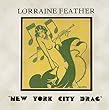
In the continuation of an interview with Lorraine Feather, the lyricist/vocalist discusses her various recording projects. (If you missed Part 1 of the interview, click here.)
With the encouragement of noted jazz musicians Don Grusin and Dick Hyman, Feather decided to go forward with New York City Drag, a full album’s worth of compositions pairing her lyrics with Fats Waller tunes.
“It’s very time-consuming making new lyrics work with existing standards,” she explains. “It takes weeks to make one of these combinations fit. You don’t want to be disrespectful to the original, but there are certain melodic lines that are just too pianistic for a singer to sing--or they might be too rangy to make them work. So you do have to take some liberties with the arrangements. The musicians bring so much to the table in terms of making these combinations work. It becomes a multi-layered collaboration that involves existing music, new lyrics, and creative musicianship to really make it come alive.”
Feather’s work on the Waller recording was complicated by her mother’s death from a sudden stroke, plus the stress of dealing with tax problems associated with her parents’ estate. But she continued to focus on finishing the record.
“It was a very stressful time,” she recalls, “but I decided to keep on with the Fats Waller album. I had started getting tapes and CDs from Dick, and I was getting carried away by the music. I managed to finish it and found out about a little label called Rhombus Records, sent it to them and they agreed to put it out. It turned out to be the first thing I had ever done on my own that got played on the radio, and I also got some nice press coverage. So that began my addiction of recording my own albums.”
Feather’s successful career as a lyricist in the Hollywood film and television industry allowed her to pursue projects such as the Waller recording. Feather’s resum? includes credits on films such as The Jungle Book II and The Princess Diaries II as well as TV shows such as Dinosaurs and Beverly Hills 90120. Writing lyrics for film and TV clients can be demanding, but Feather has managed to balance her Hollywood lyricist career with her efforts as a jazz lyricist and vocalist.
“I’ve been writing lyrics for TV and films since Full Swing broke up, so I don’t mind direction and rewriting,” she states. “But it’s also nice to be able to do what I want-go left in the middle of a lyric, for example. I still love doing both, but writing lyrics for myself is certainly more entertaining, knowing I can do whatever I want because I’m not writing for a client.”
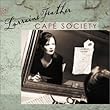 Feather followed up New York City Drag with the recording Cafe Society in 2003 in which she mixes vocalese numbers, rearranged from her days with Full Swing (Ellington’s “Rockin’ In Rhythm” and “Creole Love Call”), with originals written in collaboration with Grusin, Johnny Mandel, David Benoit, Eddie Arkin and others.
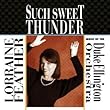 But once again Feather found herself drawn to the concept of crafting new lyrics to classic jazz instrumentals. She soon began work on a tribute to the music of Duke Ellington and Billy Strayhorn, crafting original lyrics to many of their instrumentals for her next recording, Such Sweet Thunder, But once again Feather found herself drawn to the concept of crafting new lyrics to classic jazz instrumentals. She soon began work on a tribute to the music of Duke Ellington and Billy Strayhorn, crafting original lyrics to many of their instrumentals for her next recording, Such Sweet Thunder,
“I have a fascination with music from the ‘30s,” she explains. “It really speaks to me. I find it mysterious and dreamlike. Also, the groove of that music is more attractive for me to write lyrics and sing to--compared to bebop, for example. And I have a family relationship with the Ellingtons through my parents who knew them quite well. I’ve always felt a bond and, beyond that, was just really drawn to Duke’s music. I had already written some lyrics to Ellington and Strayhorn tunes during my years with Full Swing, so I thought it would be interesting to do a whole Ellington album to follow up the approach I took with the Waller record.”
Feather started the project by writing lyrics to well-known compositions such as “Harlem Air Shaft” and “Jubilee Stomp.” Unfortunately, problems in obtaining publishing rights to many of the compositions she was working on proved to be a formidable obstacle to finishing the project.
“I didn’t know at the time what a bucket of blood it is to try and get the publisher’s approval,” she explains. “So I just took the plunge and wrote the first few songs then took it to one of the main publishers of Ellington and Strayhorn music and got their blessing. They said they would speak to the other two publishers that essentially handle almost all the Ellington music and take care of everything. To my surprise, it turned out that after the writing was finished and the last sessions were scheduled, one of those publishers refused to give me the rights. So I had to essentially throw out everything I had written and recorded in terms of ‘30s era Ellington.”
Luckily, Feather had several friends who were Ellington experts, and they directed her to later Ellington compositions-especially his many suites that were not controlled by that particular publishing house.
“That’s how I found tunes like “Suburbanite,” “Suburban Beauty,” “Ricitic” and others,” says Feather. “If I hadn’t had to change direction, I never would have discovered any of those later Ellington tunes. So in a way, it was a real process of discovery, and I’m very happy with the way the project turned out.”
The lesser-known Ellington tunes gave Feather the necessary material to finish Such Sweet Thunder, and it was released to considerable critical acclaim in 2004. But once again, Feather decided that for her next recording project, she needed to refocus her efforts on working with contemporary songwriters.
She turned once again to writers such as Eddie Arkin and Russell Ferrante whom she had worked with successfully in the past. But as she continued work on her new recording, Feather kept thinking of the Ellington lyrics she had written that were in limbo and decided to try once again to seek publishing rights for those earlier efforts.
“With the latest recording project, I was doing another ‘30s-based effort but with lots of original material done with contemporary songwriters in that style,” she explains. “I was also using a small big band sound, and those earlier Ellington pieces just fit perfectly into the mix, so I thought I’d ask that publisher one more time. By then, someone else was on the scene and within a day I got a call saying everything was fine.”
As a result Feather was able to include “Calistoga Bay” (her version of 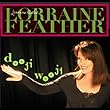 “Harlem Air Shaft”) and three other Ellington compositions on Dooji Wooji. The recording made quite a few top 10 lists for 2005 and strikes a nice balance between Feather’s vocalese efforts and her work with contemporary songwriters. But according to Feather, it’s now time to focus completely on original songs rather than creating lyrics for classic jazz instrumentals, an effort that is paying off. “Harlem Air Shaft”) and three other Ellington compositions on Dooji Wooji. The recording made quite a few top 10 lists for 2005 and strikes a nice balance between Feather’s vocalese efforts and her work with contemporary songwriters. But according to Feather, it’s now time to focus completely on original songs rather than creating lyrics for classic jazz instrumentals, an effort that is paying off.
Feather hadn’t planned on releasing a new recording until 2007, but work on the project has proceeded so rapidly that’s she’s considering a late summer/early fall release. In addition, Feather is working on an opera project as well-an adaptation of Tom Wolfe’s novel Bonfire of the Vanities. The project is still in its early stages, but Feather is already writing lyrics for some of the characters.
Although she has moved away from vocalese for the time being, Feather still sees merit in the approach, citing several contemporary artists for their work. And she also notes that several of today’s songwriters are writing songs in the same vein as some of the classic tunes of yesteryear that have become accepted standards.
“Of course, Jon Hendricks is the gold standard when it comes to vocalese,” she states. “Kurt Elling has done some nice work as well, and I have to say I love Bob Dorough’s work,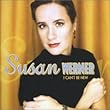 both his vocalese and his originals. And in terms of contemporary songwriters writing quality material, there are certainly a lot of them out there. One who comes to mind immediately is Susan Werner, who came out of a more folk background but whose last album, I Can’t Be New, is really modeled on classic standards.” both his vocalese and his originals. And in terms of contemporary songwriters writing quality material, there are certainly a lot of them out there. One who comes to mind immediately is Susan Werner, who came out of a more folk background but whose last album, I Can’t Be New, is really modeled on classic standards.”
You can visit Lorraine Feather’s website at:
www.lorrainefeather.com
|



