| By Terry Perkins 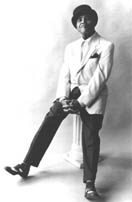 Jon Hendricks started his professional career as a musician in the mid-1930s while still in high school in Toledo, Ohio. He sang on the local radio station with a vocal group called The Swing Buddies and occasionally played local clubs backed by neighbor and friend Art Tatum on piano. Jon Hendricks started his professional career as a musician in the mid-1930s while still in high school in Toledo, Ohio. He sang on the local radio station with a vocal group called The Swing Buddies and occasionally played local clubs backed by neighbor and friend Art Tatum on piano.
After serving in World War II in Europe, Hendricks returned to Ohio and enrolled in the University of Toledo as a pre-law major. But he continued his musical career as well, playing drums and singing at local clubs every night of the week. Touring musicians such as Charlie Parker and the now famous Tatum encouraged Hendricks to move to New York City and pursue a fulltime career in music. In 1950, when his GI Bill benefits ran out, Hendricks did make the move to the Big Apple where he found work writing songs for Louis Jordan and King Pleasure.
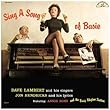 He showcased his vocalese prowess on a lyricized version of the Woody Herman instrumental hit, “Four Brothers,” which also marked his first recording with fellow vocalist and arranger Dave Lambert. The two singers formed a trio in 1957, adding vocalist Annie Ross to form Lambert, Hendricks and Ross. The trio’s first recording, Sing a Song of Basie, took the jazz world by storm. He showcased his vocalese prowess on a lyricized version of the Woody Herman instrumental hit, “Four Brothers,” which also marked his first recording with fellow vocalist and arranger Dave Lambert. The two singers formed a trio in 1957, adding vocalist Annie Ross to form Lambert, Hendricks and Ross. The trio’s first recording, Sing a Song of Basie, took the jazz world by storm.
LH&R broke up in 1962 after recording a string of classic recordings. But more than four decades later, Hendricks is still going strong at the age of 84. Recently, JazzStandards.com caught up with Hendricks at his Toledo home for a lengthy interview in which the legendary musician looked back on his early years and the creation of vocalese. He also provided an overview of his current activities and comments on some of today’s singers attempting to follow in his footsteps.
When asked how he came up with the idea of writing lyrics and vocal arrangements that mirrored complete band charts by groups such as the Basie and Ellington orchestras, Hendricks detailed the influence of King Pleasure and Eddie Jefferson on his concept. He also noted another influence from his early years in Toledo.
“In my early days in New York, I had been writing for Louis Jordan,” explains Hendricks. “I had written ‘I’ll Die Happy’ and ‘I Want You to Be My Baby,’ so I was doing well as a songwriter. Then King Pleasure asked me to do a song with him called ‘Don’t Get Scared.’ That was actually my first recording. But I had been inspired earlier by his version of ‘Moody’s Mood for Love.’ When I heard that, I realized you don’t have to stop at 32 bars. You can go on and do a whole vocal arrangement of a band chart. That’s when I wrote ‘Four Brothers.’ My inspiration was to go beyond the vocalization of a single horn solo like ‘Moody’s Mood.’ ”
According to Hendricks, that inclination to vocalize instrumental lines actually went back to his early days in Toledo, when money was tight and he would try and earn pocket change in clubs.
“In a way, what I did with vocalese was just a development of what I always loved,” he recalls. “I used to stand in front of the jukebox at clubs in Toledo during the depression, and when someone came to play it, I’d say, ‘Don’t put the nickel in the jukebox. Give it to me and I’ll sing the song.’ Because I had memorized the entire jukebox-even the instrumentals-I’d sing the solos by imitating the sound of the instruments. I realized later that that was the basis of what became vocalese. All I had to do was add the words, and I loved to write plays and songs.”
The vocalese approach was pioneered by Eddie Jefferson and King Pleasure. Their 1952 recording, “Moody’s Mood for Love,” added new lyrics to mimic the saxophone solo performed by James Moody on his own recording of “I’m in the Mood for Love.” But according to Hendricks, vocalese is more complicated than the single line vocal improvisation of “Moody’s Mood.”
“Some people say that Jon Hendricks is a usurper, taking the credit from King Pleasure and Eddie Jefferson,” he explains. “What those guys did was my inspiration, and I knew and loved both of them. I came up with the idea to do the same thing, but I expanded it for an entire orchestra. Leonard Feather reviewed it and called it ‘vocalese.’ So that is what the word applies to-not to single line lyric versions of trumpet or tenor sax or trombone solos but the entire band. That was my invention. I walked on that ground. We all used each other’s ideas and built in our own ways. And that’s what art is.”
There’s no denying that Lambert, Hendricks and Ross produced vocal jazz artistry at the highest level. Here’s how Hendricks remembers the genesis of LH&R’s first groundbreaking recording, Sing a Song of Basie.
“I was living in the Village at the Earl Hotel in a little alcove with a bed in it,” says Hendricks. “I had met Dave and we talked about doing something together and eventually did-‘Four Brothers.’ Dave was having a hard time making ends meet and was recently divorced. He told me he had an extra room and asked me to move in so we could pool our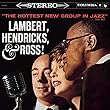 resources. One day we were sitting around scraping the bottom of the Nescafe jar to make two cups of coffee. Dave said, ‘You know, we’re going to die and nobody’s going to know we were ever on the earth. Why don’t we do something that will remain after us?’ I said, ‘Good idea, but what do we do?’ He said, ‘We both love Basie. Why don’t you write some lyrics to Basie arrangements and we’ll sing ‘em?’ I replied, ‘Do you have any idea how long it would take to lyricize a whole Basie arrangement? Take ‘Jumpin’ at the Woodside.’ It has to have words about the Woodside, whatever that was. And then the solos have to become lyrics by people who stayed there and who talk about it-and it has to be rhymed and sequenced to make a whole story. Do you realize how long it would take to do ten of those?’ Dave just said, ‘Do you have anything else to do?’ I picked up a pad and started right away.” resources. One day we were sitting around scraping the bottom of the Nescafe jar to make two cups of coffee. Dave said, ‘You know, we’re going to die and nobody’s going to know we were ever on the earth. Why don’t we do something that will remain after us?’ I said, ‘Good idea, but what do we do?’ He said, ‘We both love Basie. Why don’t you write some lyrics to Basie arrangements and we’ll sing ‘em?’ I replied, ‘Do you have any idea how long it would take to lyricize a whole Basie arrangement? Take ‘Jumpin’ at the Woodside.’ It has to have words about the Woodside, whatever that was. And then the solos have to become lyrics by people who stayed there and who talk about it-and it has to be rhymed and sequenced to make a whole story. Do you realize how long it would take to do ten of those?’ Dave just said, ‘Do you have anything else to do?’ I picked up a pad and started right away.”
When Hendricks looks back on the legacy of LH&R, he regards some of those Basie lyricizations and vocal arrangements as his best work.
“I immediately think of those Frank Foster/Basie tunes,” he states, “‘Shiny Stockings’ and especially ‘Blues Backstage,’ which is an adaptation of the storyline from the opera Pagliacci told from the viewpoint of a bebop musician instead of a clown. Those are deeply poetic and literary lyrics, and they won’t be discovered in this generation. It takes time for art. You do it for love, not for money or fame. You’re God’s pencil is what you are. And if you realize that and you’re happy with that, you can produce good work.”
After Annie Ross left LH&R in 1962, Hendricks kept the group together with replacement singer Yolande Bavan, but the new lineup only lasted until 1964. Hendricks continued to record projects on his own and spent the years from 1968 to 1972 living in England. He currently teaches at the University of Toledo and continues to tour and perform with an updated version of the LH&R concept called LH&R Redux that features Hendricks, his wife Judith, and Joel Hazard.
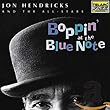
“When we started doing this LH&R Redux, I realized how much I missed it,” states Hendricks. “It was just great doing a three-part vocal version of ‘My Ship’ from Miles Ahead, and Bird’s version of ‘Everything Happens to Me.’ I feel like a born-again jazz singer! We debuted the group at the Blue Note in Milan-one of the most popular jazz clubs in Europe-and it was a smash. We couldn’t get off the stage. We had the same response at the Blue Note in New York. It just shows the reason that Lambert, Hendricks and Ross were the number one vocal group in the world for those five years is that people love that style, and they still do love it now as much as they did then! It’s a style that never depended on personality. It was all about the sound and the idea-the lyricizations and the talent of the three people singing them.”
In addition, Hendricks has put together a 15-piece vocal group he calls the Vocalstra. The group expands the LH&R concept and also takes it into the realm of classical music.
“I lyricized the third movement of Rimsky Korsakov’s ‘Scheherazade’ and the Vocalstra performed it with the Toledo Symphony,” says Hendricks. “Now I’m working on Rachmaninoff’s ‘Piano Concerto #2.’ I’m getting into everything.”
When Hendricks looks at the contemporary jazz vocal scene, he doesn’t see anyone attempting to work in the vocalese concept at the same level he did with Lambert, Hendricks & Ross. But he does see plenty of talent and the potential to do so.
“I think Kurt Elling has great talent,” comments Hendricks. “He’s the nearest anyone has come to that. I think if anyone attempts it on a larger scale, he will be the one. He’s a brilliant cat. And Lorraine Feather is a wonderful singer who also writes great lyrics. I’ve known her since she was a little girl.”
You can visit Jon Hendricks’s website at:
www.johhendricks.com
|



