|
|
|
| “...One of the definitive readings of the tune.” |
|
 |
|
- Noah Baerman
|
|
| |
Jean Sargent introduced “Alone Together” in the Broadway musical, Flying Colors, while Clifton Webb and Tamara Geva danced. Flying Colors opened at the Imperial Theater on September 15, 1932, produced by Max Gordon and directed by Howard Dietz. The reviews were mixed, and it ran for 188 performances. The Harms sheet music from that era lists “Alone Together” as the top song, followed by “A Shine on Your Shoes,” “Smokin’ Reefers,” “Louisiana Hayride,” and “A Rainy Day.”
|
| |
| |
|
| |
|
Regarding “Smokin’ Reefers,” one may wonder what a tribute to marijuana is doing in a Dietz/Schwartz musical. The song includes the phrase, “the stuff that dreams are made of.” Marijuana was not illegal in most states at that time and was probably a subject of great interest due to its popularity with jazz musicians and the ongoing effort to ban it at the federal level. The government finally succeeded in passing the Marijuana Tax Act of 1937, with the state of Louisiana leading the way in these efforts. Another song from this musical, “Louisiana Hayride,” is purportedly a phrase meaning political corruption.
“Alone Together” moved onto the recording charts in late 1932, rising to ninth place with Leo Reisman and His Orchestra (Frank Luther, vocal), a group which Jerome Kern called “the String Quartet of Dance Bands.”
|
|
| |
|
| |
|
Howard Dietz and Arthur Schwartz were extremely prolific, writing over two hundred songs each. Of their many dozen collaborations, “Alone Together” is the most enduring and most often recorded.
|
| |
| |
|
| |
|
|
| |
| |
|
| |
|
|
|
|
|
More information on this tune... |
|
See the Reading and Research page for this tune for additional references. |
|
- Jeremy Wilson
|
|
| This section suggests definitive or otherwise significant recordings that will help jazz students get acquainted with
“Alone Together.” These recordings have been selected from the Jazz History and
CD Recommendations sections.
|
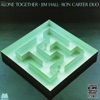
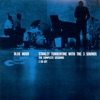
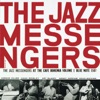
“Alone Together” is a very versatile tune. It is often performed as a hard swinging tune with a medium tempo, as demonstrated brilliantly on Stanley Turrentine’s 1960 recording with Gene Harris and the Three Sounds ( Complete Blue Hour Sessions). Jim Hall and Ron Carter, meanwhile, demonstrate how the tune can be played in a looser and more interactive manner on their landmark duo recording from 1972 ( Alone Together). The song’s more traditional context, that of a ballad, is wonderfully demonstrated on Hank Mobley’s ballad feature with Art Blakey’s Jazz Messengers from a live performance in 1955 ( At the Cafe Bohemia, Vol. 1).
Noah Baerman - Jazz Pianist and Educator
|
Described as “haunting,” “remarkable,” “urbane,”
“sensual,” and “a gem,” its brooding minor-key reflects
the novel lyrical contradiction of “alone” and “together”
as well as the conditional nature of the lovers’
strength. The lovers are portrayed as interdependent,
clinging individuals who, despite a deep love, feel
strong only as a pair in seclusion. -JW
|
Musical analysis of
“Alone Together”
|
| Original
Key |
D minor |
| Form |
A – A – B
– A |
| Tonality |
Primarily
minor |
| Movement |
This tune
is primarily step-wise, interspersed with
skips no larger than a third. “A” rises
and falls in a graceful arc, while “B” uses
a sequential descending pattern from the
song’s upper range; long, sustained notes. |
|
Comments
(assumed
background)
|
|
This Dietz/Schwartz ballad has the same
dark, romantic ambience and slow-moving,
graceful melodic lines as their other well-known
work, “Dancing
In the Dark,” but the tunes are very
different in harmonic construction. This
tune has a simple I – V7(b9) – I progression
for the first eight measures, until the
V becomes minor, turning into a ii of iv
as the piece changes key temporarily (A7
– D7 – Gm in the original). This new key
soon drops a minor third, however, leading
into an unusual, but pleasing, harmonic
sequence with a descending inner voice that
makes it work from a voice-leading standpoint.
In the original key, this is (from measure
9): Esus4 – E7 | Gm7 – C7 | Fmaj7 – Bbmaj7
|A7| Dmaj7|. On a keyboard, it will be noted
how the suspended 4th of the initial E chord
begins a line that descends in an exotic
mode–one note change per chord change, this
is A – G# - F – E – D –C#. “A” also ends
on the “picardy third,” a parallel major
chord. “B” changes key to G minor by way
of the dominant turning minor and thus into
a ii7 of the new key (actually a iim7(b5)
in which the b5 becomes the b9 of the new
V7 chord – in this case, D7). The fifth
of the new key of G minor drops a half step,
turning it into yet another ii7 of the chord
one step below (in the original F major.)
Since the melody note is A here – the third
degree of the key of the moment – a smooth
common tone modulation is easily created
by raising 5 and lowering 1 a half step.
Because few melody notes land on chord extensions,
jazz players have added many exotic harmonies
and used different chord substitutions to
this piece over the years.
|
|
K. J. McElrath - Musicologist for JazzStandards.com |
|
The late Artie Shaw had impeccable musical taste.
He was an obsessive perfectionist, and his clarinet
playing and the bands he led performed exceptional,
quality music. Many of the tunes he selected for
his big bands of the 1930s and 40s became standards
years after he recorded them.
Shaw was the premier jazz musician to record
“Alone Together.” The first reading was with his
standard “reeds, brass, rhythm” band in 1939. He
recorded it again in 1940 with a group including
strings and with a different arrangement. Although
both versions lean towards the smooth, instrumental,
dance band style of that era, it’s Shaw’s brief
clarinet expositions that reveal the improvisational
potential of the song.
Chris Tyle - Jazz Musician and Historian
|
Additional information for "Alone Together" may be found in:
|
|
|
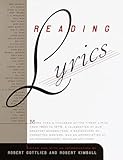 Robert Gottlieb, Robert Kimball
Reading Lyrics
Pantheon
Hardcover: 736 pages
(Includes the following types of information: song lyrics.)
|
|
|
|
|
“Alone Together” was included in these films:
|
|
|
|
Comment Policy
- Your comments are welcome, including why you like
this tune, any musical challenges it presents, or additional background information.
- Jazz musicians, fans, and students of all ages use this website as an educational resource.
As such, off-topic, off-color, unduly negative, and patently promotional comments will be removed.
- Once submitted, all comments become property of JazzStandards.com.
By posting, you give JazzStandards.com permission to republish or otherwise distribute your comments in any format or other medium.
JazzStandards.com reserves the right to edit or remove any comments at its sole discretion.
|
|
| Click on any CD for more details at Amazon.com |
 Dizzy Gillespie
Dizzy Gillespie Story
1994 Savoy 177
Original recording 1950
|
|
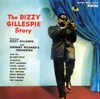
Gillespie’s first recording of this tune is noteworthy in part because the tune’s bridge had earlier provided the harmony for Gillespie’s tune “A Night In Tunisia.” Johnny Richards’ string arrangement is somewhat distracting, but Gillespie’s playing offers a classic example of how this tune can be interpreted in a ballad context.
|
 Miles Davis
Blue Moods
1991 Original Jazz Classics 43
Original recording 1955
|
|
Davis offers a relaxed version of “Alone Together” with a Latin feel on the melody and a slow swing groove on solos by himself, vibraphonist Teddy Charles and bassist Charles Mingus. Trombonist Britt Woodman and drummer Elvin Jones round out the unorthodox quintet.
|
 Jim Hall With the Ron Carter Duo
Alone Together
Ojc
Original Recording 1972
|
|
There is great interplay and tremendous melodic invention on this, the title track from the first of several duet collaborations between guitarist Hall and bassist Carter. This is one of the definitive moments in this great partnership and one of the definitive readings of the tune.
|
 Joe Williams & Harry "Sweets" Edison
Together/Have a Good Time
Blue Note Records
|
|
Williams offers a sly, assured rendition of “Alone Together” with swinging accompaniment by Harry “Sweets” Edison and his sextet.
|
 Stanley Turrentine, Three Sounds
Complete Blue Hour Sessions
Blue Note Records
Original Recording 1960
|
|
Pianist Gene Harris and his trio, the Three Sounds, match tenor saxophonist Turrentine’s prodigious level of swing on this delightful performance.
|
 Lee Konitz
The Lee Konitz Duets
1991 Original Jazz Classics 466
Original recording 1967
|
|
The fifteen minute “Variations on Alone Together” takes the duet concept to another level. Konitz switches between alto and tenor, and begins by using electronics to play “duet” with himself. He follows with duets with, in order, drummer Elvin Jones, vibraphonist Karl Berger and bassist Eddie Gomez. The exhilarating track ends with all of these artists joining for a driving quartet exploration.
|
 Art Blakey
At the Cafe Bohemia, Vol. 1
2001 Blue Note 32148
Original recording 1955
|
|
“Alone Together” provides saxophonist Hank Mobley with one of his great moments as a ballad player on this tender, searching performance.
|
|
 Jessica Williams
A Song That I Heard
Hep Jazz
1994
|
|
Pianist Williams subsequently recorded “Alone Together” several times as a solo. In this 1994 rendtion she engages her sidemen, bassist Jeff Johnson and drummer Dick Berk, to help pull some rabbits out of the hat for this playful reading.
|
|
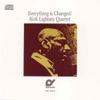
 Kirk Lightsey Quartet
Everything Is Changed
1995, Sunnyside1020
Original recording, 1986
|
|
Pianist Lightsey takes “Alone Together” uptempo with Jerry Gonzalez flitting around the melody on muted trumpet for the first chorus. Santi Debriano on bass and Eddie Gladden on drums have a dialogue under Lightsey’s second chorus improvisation.
|
|
 Pepper Adams
Conjuration: Live at Fat Tuesday's Session
1994, Reservoir 113
Original recording, 1983
|
|
Joining the baritone saxophonist on this lazy version of the song are Kenny Wheeler on trumpet and flugelhorn; Hank Jones, piano; Clint Huston, bass; and Louis Hayes on drums.
|
|
|
|