|
|
|
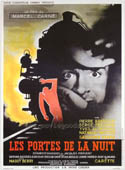
| “Yves Montand introduced the song ‘Les Feuilles Mortes’ in the 1946 film Les Portes De La Nuit, a gloomy urban drama set in post World War II Paris.” |
|
 |
|
- JW
|
|
| |
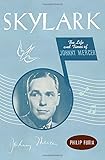
Composer Joseph Kosma and Jacques Prevert created one of the songs for Les Portes De La Nuit by setting a Prevert poem to music, “Les Feuilles Mortes.” In 1949 Johnny Mercer wrote English lyrics for the tune changing the original French title to “Autumn Leaves.” Not surprisingly, Jo Stafford was the first to record “Autumn Leaves.” From 1943 until 1950 she was under contract with Capitol Records, a company founded and co-owned by Mercer. Following Stafford’s recording were a number of covers including renditions by Bing Crosby, Edith Piaf, Artie Shaw, and Jo Stafford’s husband, Paul Weston.
|
| |
| |
|
| |
|
|
| |
| |
|
| |
|
|
| |
| |
|
| |
|
The Italian born, French singing idol Yves Montand introduced the song “Les Feuilles Mortes” in the 1946 film Les Portes De La Nuit, a gloomy urban drama set in post World War II Paris. Scriptwriter and poet Jacques Prevert and director Marcel Carne (1909-1996) had been responsible for a string of films spawning the French “poetic realism,” a genre upon which the American film noir movement was based. Although Les Portes De La Nuit was a commercial failure it fared much better when released in the United States several years later under the title Gates of the Night.
|
| |
| |
|
| |
|
Initially the public showed little interest in “Autumn Leaves.” In 1955 that changed, however, as pianist Roger Williams (1925-) (renowned for the instrumental hits “Near You” (1958), and “Born Free” (1966)) recorded a million-seller, number-one hit rendition of the song that stayed on the charts for 6 months. Williams’ success opened the door for a second spate of covers by Steve Allen, Mitch Miller, the Ray Charles Singers, Jackie Gleason, and Victor Young. These would be followed by hundreds of renditions in subsequent decades.
As the 1940’s waned so too did the public’s appetite for the Tin Pan Alley style ballad. With decreasing demand for his sophisticated talents, lyricist Johnny Mercer found himself penning words for instrumentals. In the case of “Les Feuilles Mortes,” Mercer would not have thought twice about renaming what was literally “The Dead Leaves” to “Autumn Leaves.” “The Dead Leaves” may have been an appropriate song title for the somber Les Portes De La Nuit, but it would not do for an American popular song.
|
| |
| |
|
| |
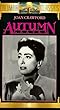
In 1956 Columbia Pictures produced a film entitled Autumn Leaves starring Joan Crawford and Cliff Robertson. It is a generally well-reviewed tale of a spinster marrying a young man who has mental problems as a result of his ex-wife’s (Vera Miles) affair with his father (Lorne Green). Nat King Cole sang his hit version of “Autumn Leaves” during the credits.
|
|
|
|
More information on this tune... |
|
See the Reading and Research page for this tune for additional references. |
|
- Jeremy Wilson
|
|
| This section suggests definitive or otherwise significant recordings that will help jazz students get acquainted with
“Autumn Leaves (Les Feuilles Mortes).” These recordings have been selected from the Jazz History and
CD Recommendations sections.
|
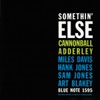
The 1958 Cannonball Adderley recording of “Autumn Leaves” ( Somethin’ Else) has inspired generations of jazz players. The arrangement, commonly credited to Miles Davis (who is also featured on trumpet here) actually comes mostly from Ahmad Jamal. Nonetheless, this is a recording that really caught on. The following year, Bill Evans made his recorded debut with his groundbreaking trio alongside bassist Scott LaFaro and drummer Paul Motian. Their version of “Autumn Leaves” ( Portrait in Jazz) is comparably influential to the Adderley version and offers an essential look at the interplay of these three musicians.
Noah Baerman - Jazz Pianist and Educator
|
|
Musical analysis of
“Autumn Leaves (Les Feuilles Mortes)”
|
| Original
Key |
G major/E
Minor |
| Form |
A-A-B-C |
| Tonality |
Initially
major; goes back and forth between major
and minor tonalities before finally resolving
to E minor at the end. |
| Movement |
Balanced
mixture of step-wise and skips. “A” sections
consists of a three-note ascending scale
followed by a skip of a fourth. “B” and
“C” contain more movement, with leaps of
a fifth and octave, giving the melodic contour
a “soaring” impression (the descent and
blowing of leaves in the storm?) |
|
Comments
(assumed
background)
|
|
Among the best known “standards,” this is
one of the first tunes novice jazz players
learn. Chord progression makes use of the
circle of fifths, but in a way quite different
than most tunes. The initial progression
is ii7- V7- I, followed by a IV chord
(similar to “All the Things You Are”), but then it uses
a viiø7 in order to modulate to the relative
minor (the viiø7 begins a iiø7-V7 in E minor).
In general, however, the voice leading is
quite orthodox and poses few surprises to
the ear. The only place that may pose difficulty
comes six measures before the end, where
the composer uses chords descending chromatically
from the tonic minor key down to the VI
chord. In the original key, this is Emin7
- Eb7 – Dm7 – Db7 – Cmaj7. This is really
the same “circle of fifths,” disguised using
tri-tone substitutions. In the foregoing
example, Eb7 and Db7 are substituted for
the functional voice-leading chords of A7
and G7 (which would work just as well, but
sound far less interesting). |
|
K. J. McElrath - Musicologist for JazzStandards.com |
|
This 1947 tune took almost ten years to catch
on as a jazz number, and 1957 saw three excellent
recordings. There were versions by Coleman Hawkins,
Dizzy Gillespie and
Duke Ellington.
Ellington’s version, taken at a very slow tempo,
features
Ray Nance on violin. Nance’s violin playing
represented almost the total opposite of his trumpet
playing, and he’s at his soulful best on “Autumn
Leaves,” where he plays an exquisite, emotional
solo; he then fills along with vocalist Ozzie Bailey.
The album, Ellington Indigos, offered a different,
more sentimental side of the Ellington ensemble
and has rarely been out-of-print since it was released.
Chris Tyle - Jazz Musician and Historian
 Duke Ellington
Indigos
Sony
Original recording 1957
|
|
|
|
|
Additional information for "Autumn Leaves (Les Feuilles Mortes)" may be found in:
|
|
|
 Thomas S. Hischak
The Tin Pan Alley Song Encyclopedia
Greenwood Press
Hardcover: 552 pages
(1 paragraph including the following types of information: film productions, history and performers.)
|
|
|
|
|
“Autumn Leaves (Les Feuilles Mortes)” was included in these films:
-
Les Portes De La
Nuit (1946, Yves Montand)
- Autumn Leaves (1956, Nat King
Cole)
- Hey Boy! Hey Girl! (1959,
Keely Smith)
- Addicted to Love (1997, Stephane
Grappelli)
- Midnight In The Garden Of Good And
Evil (1997, Paula Cole)
- Sidewalks of New York (2001,
Stan Getz)
|
|
|
|
Comment Policy
- Your comments are welcome, including why you like
this tune, any musical challenges it presents, or additional background information.
- Jazz musicians, fans, and students of all ages use this website as an educational resource.
As such, off-topic, off-color, unduly negative, and patently promotional comments will be removed.
- Once submitted, all comments become property of JazzStandards.com.
By posting, you give JazzStandards.com permission to republish or otherwise distribute your comments in any format or other medium.
JazzStandards.com reserves the right to edit or remove any comments at its sole discretion.
|
|
| Click on any CD for more details at Amazon.com |
 Bill Evans
Portrait in Jazz
Original Jazz Classics/Riverside 1162
Original recording 1959
|
|
This version of “Autumn Leaves” turned many heads with the stunning interplay between Evans and the virtuosic bassist Scott LaFaro.
|
 Sarah Vaughan
Crazy and Mixed Up
1991 Pablo 2312137
Original recording 1982
|
|
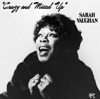
Vaughan swings her way through this small-group performance. Her scatting shows that even by 1982 she had lost none of her skill.
|
 Wynton Marsalis
Marsalis Standard Time ~ Vol.1
Sony
Original recording 1986
|
|
This version of “Autumn Leaves” is noteworthy for the rhythmic innovations of the arrangement, particularly in the drumming of Jeff “Tain” Watts.
|
|
 Erroll Garner
Concert by the Sea
Sony 40589
original recording 1955
|
|
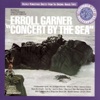
This is a “desert island”’ CD. Every cut is a gem. “Autumn Leaves”’ is transformed with Garner’s off-kilter rhythms.
|
 Karrin Allyson
Collage
Music
|
|
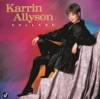
Karrin introduces the song in French and then swings into English and a Django/Grappelli mode with guitar and violin.
|
|
 Cannonnball Adderley
Somethin' Else
1999, Blue Note 95329
Original recording, 1958
|
|
All the stops are pulled out in this 11-minute version with Miles Davis and drummer Art Blakey. This cut can also be found on Davis’ Blues and Ballads.
|
 Patricia Barber
Night Club
Koch Records
|
|
Singer/pianist Barber mesmerizes with this version of “Autumn Leaves.” The song is refurbished with a torch singer’s touch.
|
|
|
|