|
|
|
“When it came to royalties, the settlement was often a flat fee.
For ‘Caravan’ Irving Mills paid Juan Tizol twenty-five dollars.” |
|
 |
|
- JW
|
|
| |
Barney Bigard and His Jazzopaters introduced “Caravan” on the Variety label in December, 1936. The recording entered the pop charts in June of 1937, rising to number four. A month later, the recording by Duke Ellington and His Orchestra on the Master label (pressed in May, 1937) found its way onto the charts and rose to number twenty.
Other recordings of “Caravan” to make the pop charts include:
- Billy Eckstine (1949, with Hugo Winterhalter and His Orchestra, #27)
- Ralph Marterie (1953, #6, million seller)
- Esquire Boys (1953, #27)
|
|
| |
|
| |
|
Around the same time that publisher and manager Irving Mills was writing the lyrics for “Caravan,” he was launching two new record labels, Master and Variety. A veritable who’s who of the jazz world attended the over-the-top party and jam session in celebration of the new labels. Mercer Ellington and Stanley Dance, authors of Duke Ellington in Person: An Intimate Memoir, report that the guest list included Benny Goodman, Count Basie, Lester Young, Herschel Evans, and Jo Jones while Duke Ellington played in a trio with Artie Shaw and Chick Webb. Ella Fitzgerald sang. The press coverage, as planned, was terrific.
|
| |
| |
|
| |
|
Of the two labels, Variety was reserved for new talent and experimental projects. Helen Oakley, the wife of journalist Stanley Dance, was its A & R (artist and repertoire) manager. She suggested to Mills that they try some small group recordings using musicians from the Ellington Orchestra. Given the go-ahead, Oakley arranged for a number of sessions, one of which included the December 19, 1936, Los Angeles recording of “Caravan” by Barney Bigard and His Jazzopaters. With Bigard on clarinet, the Jazzopaters consisted of Cootie Williams (trumpet), Juan Tizol (valve trombone), Harry Carney (baritone sax), Duke Ellington (piano), Billy Taylor (bass), and Sonny Greer (drums). Though the Jazzopator hit proved the feasibility of Oakley’s idea, both the Variety and Master labels were defunct before the close of 1937 due, in part, to stiff business competition.
|
| |
| |
|
| |
|
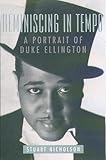
As with many of Duke Ellington’s compositions the idea originated with one of his musicians. In the case of “Caravan” it was trombonist Juan Tizol. Ellington is quoted in Stuart Nicholson’s Reminiscing in Tempo: A Portrait of Duke Ellington as saying “... that’s one of those things Tizol came up with. See, it wasn’t in tempo, he stood [and played it] sort of ad lib. He played it, [the] first ten bars, we took it and worked out the rest of it.”
|
| |
| |
|
| |
|
|
| |
| |
|
| |
|
When it came to credit and royalties for musicians’ contributions, the settlement was often a flat fee. For “Caravan” Irving Mills paid Juan Tizol twenty-five dollars. When the recording became a hit, however, Tizol requested Mills cut him in on the royalties, which the manager did.
|
|
|
|
More information on this tune... |
|
|
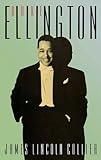 James Lincoln Collier
Duke Ellington
Oxford University Press, USA
Hardcover: 352 pages
(In this biography of Ellington one page is devoted to the history and musical analysis of the song.)
|
|
|
|
See the Reading and Research page for this tune for additional references. |
|
- Jeremy Wilson
|
|
| This section suggests definitive or otherwise significant recordings that will help jazz students get acquainted with
“Caravan.” These recordings have been selected from the Jazz History and
CD Recommendations sections.
|
The original recording of “Caravan” ( Duke’s Men: The Small Groups, Vol. 1) is as musically brilliant as it is historically significant, and it is still the place to start when studying the tune. A more modern, edgy arrangement of the tune appeared on several recordings in the early 1960s courtesy of trumpeter Freddie Hubbard. The version he did with Art Blakey’s band ( Caravan) would prove to be particularly influential. Meanwhile, though it is unusual to find a recent recording on any list of “definitive” recordings, the 1986 recording of “Caravan” by Wynton Marsalis ( Marsalis Standard Time, Vol.1) is a notable exception, as his group’s performance has tremendously impacted the approach to the tune by subsequent generations.
Noah Baerman - Jazz Pianist and Educator
|
Ellington’s arrangement of “Caravan” makes the song. Starting in a minor key and performed with a Middle Eastern beat, the music creates an exotic atmosphere, all the while conjuring up such elements as camels, tents and the desert. For those imagining a hot and dusty day in the caravan trade, Irving Mills’ lyrics provide a significant course correction, relating intrigue and romance as two lovers travel beneath the stars. Mills’ rhyming is simple, the words seem dashed off, and, unless you can accept an implied progression of time, the lines are contradictory: The stars are bright yet their light is fading; it is night yet you are “beside me here beneath the blue.” To Mills’ credit, however, his phrases are modest and evocative, nicely supporting the overall caravan mood.
- JW
|
Musical analysis of “Caravan”
|
|
Original Key
|
F minor
|
|
Form
|
A -A -B -A
|
|
Tonality
|
“A” is primarily minor, despite the fact that most of it is spent on V7 (or corresponding diminished substitution). “B” is a circle of fifths in major.
|
|
Movement
|
Embellished sustained note on dominant, descending chromatically to the tonic by the end of “A”. Section “B” ends with an upward arpeggiation to the dominant of the original key.
|
|
Comments (assumed background)
|
|
The chromatically altered notes in the melody over V7 and vii°7 chords tend to give the “A” section a mysterious, quasi-Oriental sound, and the slow harmonic rhythm gives the inexperienced improviser an opportunity to work on ideas in a single key over several measures (the C7 and Db°7 chord both serve the same function, as the latter is identical to C7(b9) without the root). The harmonic progression of the “B” section, in contrast, should be very familiar to anyone familiar with “Sweet Georgia Brown,” as it uses a “circle of fifths” in an almost identical fashion.
|
|
K. J. McElrath - Musicologist for JazzStandards.com
|
|
Although generally associated with Duke Ellington
(who over his career had many different arrangements
of the tune), “Caravan” was a popular “mood” piece
recorded by a number of big bands in the 1930’s
(Edgar Hayes, Bunny Berigan,
Benny Goodman). An interesting version from
1937 is by the Mills Brothers, doing an arrangement
featuring their vocal imitation of instruments.
By the 1950’s, the tune had become a set-up for
extended drum solos (musician/composer Frank Zappa
once remarked, “I wanna hear ‘Caravan’ with a drum
solo”), and to most people this is the way the tune
is expected to be performed.
Chris Tyle - Jazz Musician and Historian
|
Additional information for "Caravan" may be found in:
|
|
|
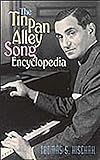 Thomas S. Hischak
The Tin Pan Alley Song Encyclopedia
Greenwood Press
Hardcover: 552 pages
(1 paragraph including the following types of information: Broadway productions, film productions, history and performers.)
|
|
|
|
|
James Lincoln Collier
Duke Ellington
Oxford University Press, USA
Hardcover: 352 pages
(1 page including the following types of information: history and music analysis.)
|
|
|
|
|
“Caravan” was included in these films:
-
Alice (1990, Error Garner)
-
Sweet and Lowdown (1999, Bunny
Berigan, also dubbed on guitar by Howard Alden
for Sean Penn)
-
Chocolat (2000, instrumental,
Johnny Depp played it on guitar with Malcolm
Ross)
-
Ocean’s Eleven (2001, Arthur Lyman
Group)
And on Broadway:
-
Sophisticated Ladies (1981, Gregg
Burge)
-
Swing! (1999, Gotham City Gates)
|
|
|
|
Comment Policy
- Your comments are welcome, including why you like
this tune, any musical challenges it presents, or additional background information.
- Jazz musicians, fans, and students of all ages use this website as an educational resource.
As such, off-topic, off-color, unduly negative, and patently promotional comments will be removed.
- Once submitted, all comments become property of JazzStandards.com.
By posting, you give JazzStandards.com permission to republish or otherwise distribute your comments in any format or other medium.
JazzStandards.com reserves the right to edit or remove any comments at its sole discretion.
|
|
| Click on any CD for more details at Amazon.com |
 Duke Ellington
Duke's Men: The Small Groups, Vol.1
1991 Sony 46995
Original recording 1936
|
|
This small-group performance is Ellington’s first version of the tune, and it is brilliant. It was actually issued under the name of clarinetist Barney Bigard and also features Harry Carney, Cootie Williams and the composer, Juan Tizol.
|
 Jeanne Lee
After Hours
Sunny Side
Original recording 1994
|
|
The adventurous Lee offers a faithful, moody performance accompanied only by the piano of Mal Waldron.
|
 Wynton Marsalis
Marsalis Standard Time ~ Vol.1
Sony
Original recording 1986
|
|
Marsalis offers an infectious version of “Caravan” with a New Orleans groove that has subsequently been absorbed by many other musicians tackling this tune.
|
|
 Randy Weston
Portraits of Duke
1989, Polygram France
|
|
Weston lived for many years in Africa, absorbing its culture, and as a result brings new insight to Ellington’s work. He knew and admired Ellington, and here the pianist celebrates the Africanism of Duke’s music with Jamil Nasser (b), Idris Muhammad (drums and percussion), and Eric Asante (percussion.)
|
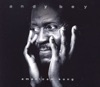
 Andy Bey
American Song
2004, Savoy Jazz
|
|
Bey was voted Vocalist of the Year by the Jazz Journalists Association in 2003. The immediacy of Bey’s vocal is set against an unusual rhythmic pattern on “Caravan.” Pianist Geri Allen’s arrangements throughout the CD make everything fresh.
|
 Leon Parker
Above and Below
1994, Sony 66144
|
|
Drummer Parker lays down a distinctly tribal rhythm for Sam Newsome’s improvisations on soprano sax. He recorded “Caravan” again on his 2000 CD, The Simple Life.
|
|
 Art Blakey & the Jazz Messengers
Caravan
1991 Orig. Jazz Classics #38
Original recording, 1962, Riverside Records
|
|
In this high-energy rendition drummer Blakey leads the sextet rhythmically while the horn section of trumpeter Freddie Hubbard, saxophonist Wayne Shorter and trombonist Curtis Fuller weave around each other like kites.
|
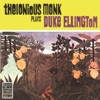
 Thelonious Monk
Plays Duke Ellington
Riverside 201
Original recording 1955
|
|
Monk offers a funky yet ominous rendition of “Caravan” featuring a brilliant solo by bassist Oscar Pettiford.
|
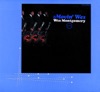
 Wes Montgomery
Movin' Wes
1997, Polygram 521433
Original recording, 1964
|
|
Wes Montgomery is backed by a larger group than he usually performed with, but the arrangement works and allows the guitarist a brilliant solo.
|
|
|
|