|
|
|
| “Although it was a hit for the Charlie Barnet Orchestra, ‘Cherokee’ wasn’t really considered a vehicle for jazz improvisation until Charlie Parker’s arrival in New York in the early 1940’s.” |
|
 |
|
- Chris Tyle
|
|
| |
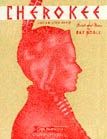
British bandleader Ray Noble wrote and introduced “Cherokee” as the first of five movements for “Indian Suite” (Cherokee, Comanche War Dance, Iroquois, Seminole, and Sioux Sue). The following year trumpeter and arranger Billy May created a hit instrumental arrangement of “Cherokee” for Charlie Barnet and His Orchestra. The tune would rise to number fifteen on the pop charts.
An extension of “Cherokee” titled “Redskin Rhumba” subsequently became Barnet’s theme song. According to Don Kennedy, host of the Big Band Jump radio show,
It was, of course, based on the plunger-muted trombones, but the “melody” was simply Barnet’s ad-lib tenor sax noodlings. That way, he told me, it could be expanded or contracted to fit any situation in a “live” remote.
“Redskin Rhumba” is credited to Dale Bennett, a pseudonym for Charlie Barnet.
“Indian Suite” may be heard in its entirety on Ray Noble & His American Orchestra Centenary Issue: 26 Original Mono Recordings 1935-1947 2004 Asv Living Era.
|
| |
| |
|
| |
|
“Cherokee” was not Ray Noble’s first hit song. He had written the words and music to “Love Is the Sweetest Thing” (1932), “The Very Thought of You” (1934), “The Touch of Your Lips” (1936) and “I Hadn’t Anyone Till You” (1938). The first two songs were number one hits on the pop charts.
|
|
| |
|
| |
|
|
|
|
|
More information on this tune... |
|
|
 George T. Simon
Big Bands Songbook
Barnes & Noble
Paperback
(Author/drummer Simon devotes four pages to the songwriter and the performers and includes the sheet music.)
|
|
|
|
- Jeremy Wilson
|
|
| This section suggests definitive or otherwise significant recordings that will help jazz students get acquainted with
“Cherokee (Indian Love Song).” These recordings have been selected from the Jazz History and
CD Recommendations sections.
|
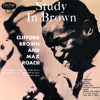
While Charlie Parker is perhaps the definitive soloist over the chord progression from “Cherokee,” this mostly took the form of original tunes over that progression. For actual versions of “Cherokee,” we look to other important people who crossed paths with Parker at one point or another. Don Byas offered a brilliant, virtuosic reading of the tune in 1945 ( Savoy Jam Party: The Savoy Sessions), showing why he was considered one of the greatest tenor saxophonists in bebop. Bud Powell’s burning trio interpretation from 1949 ( Jazz Giant) shows the extent to which the tune became a showcase for bop virtuosity. Meanwhile, Clifford Brown’s classic 1955 recording ( Study in Brown) provides a stellar example of the ways in which Brown added his own nuance and clarity to the bop language.
Noah Baerman - Jazz Pianist and Educator
|
Noble’s lyrics are written
from a male perspective, the first and last sections
beginning with “Sweet Indian maiden” and “My sweet
Indian maiden.” Interestingly, when the rarely heard
lyrics are recorded it is usually by a female; male
performers are perhaps not comfortable with the
quaint tone. Sarah Vaughan performs the tune with
modified lyrics on her 1955 recording,
In the Land of Hi-Fi. And Keely Smith included
it in
Keely Swings Basie Style With Strings, Concord
Records 2002. Keely Smith’s Cherokee heritage was
undoubtedly a factor in her choosing to sing “Cherokee.”
- JW
|
Musical analysis of
“Cherokee (Indian Love Song)”
|
| Original
Key |
Bb major |
| Form |
A1 – A2 –
B –A2 |
| Tonality |
Major throughout |
| Movement |
Pentatonic
in both directions, with occasional chromatic
embellishing tones. Interestingly, the pentatonic
tonality of the melody continues through
the several key changes that happen during
the “B” section. |
|
Comments
(assumed
background)
|
|
This is a jam session war-horse, usually
played at “tempo de bitch” (quarter note=
250 b.p.m. or more). The many long, sustained
pitches and slow harmonic movement make
it a vehicle for virtuosos desiring to display
their technique by playing lots of very
fast notes.
The harmonic progression of the first
eight measures is a variation of the descending
series of changes found in songs like “I’m
Gonna Meet My Sweetie Now” and the last
eight measures of “Charleston”
while the second eight measures of the first
“A” do a turnaround that delays the resolution:
I – II7 – ii7 – iiim7(b5) –VI7(9) – ii7
– V7(+5). The second “A” eliminates the
four chords between the first ii7 and V7.
The “B” section contains an interesting–and
highly logical--descending progression that
starts on biii9, which is the ii7 of the bII. This, in turn, becomes minor, functioning
as the ii7 of the chord a step below it,
and so on, until the V7 of the original
tonic. In the original key, it is as follows:
Dbm9 – Gb7 – B; Bm9– E7 – A; Am9 – D7 –
G; Gm9 – C7 – F7(+5). This same kind of
chord progression is heard in “Laura”
and “How High the Moon.”
|
|
K. J. McElrath - Musicologist for JazzStandards.com |
|
After Charlie Barnet’s success with Billy May’s arrangement, “Cherokee” was picked up by one jazz musician after another, and today it is affectionately referred to as a jazz warhorse. The song’s A-A-B-A 64-bar form and unusual chord progressions and bridge are the basis for compositions by many jazz greats including clarinetist Buddy DeFranco (“Swinging the Indian”) and Charlie Parker (“Ko-Ko”).
Parker’s interest in “Cherokee” was not just a fleeting fancy. Jazz composer and performer Gerry Mulligan is quoted on the Library of Congress website I Hear America Singing as saying,
Somebody sent me a little bit of tape that had Bird playing at home when he must have been maybe seventeen years old ... of course he was playing “Cherokee.” This was his number, man, he worked on that thing for years. Somebody said that when he did “Ko-Ko.” It was not just a little accident that it came out the way it did.
And on a related note, Mulligan explains the title of his song “Noblesse” on the liner notes for Gerry Mulligan Quartet’s Dream a Little Dream.
Ray Noble was a songwriter and a band leader for whom I had great admiration ... He wrote a number of memorable tunes of which the best known to jazz audiences is “Cherokee.” Noblesse is my tribute to Ray Noble.
-JW
Although it was a hit for the Charlie Barnet Orchestra, “Cherokee” wasn’t really considered a vehicle for jazz improvisation until Charlie Parker’s arrival in New York in the early 1940’s.
Don Byas’ 1945 version of “Cherokee” is fascinating. It’s taken at approximately the tempo of Barnet’s, but drummer Fred Radcliffe is doubling the tempo, giving the performance a feeling of being much faster. Byas’ first chorus is in regular time, but by the second chorus he is double-timing along with the drums. His solo shifts back and forth between straight-time and double-time and is technically amazing. Charlie Parker stated that “Don Byas plays everything there is to play” and Byas’ version of “Cherokee” predates Parker’s “Ko-Ko” (his version based on the chord changes) by six months.
Chris Tyle - Jazz Musician and Historian
|
Additional information for "Cherokee (Indian Love Song)" may be found in:
|
|
|
George T. Simon
Big Bands Songbook
Barnes & Noble
Paperback
(4 pages including the following types of information: performers, song writer discussion and sheet music.)
|
|
|
|
|
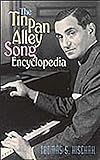 Thomas S. Hischak
The Tin Pan Alley Song Encyclopedia
Greenwood Press
Hardcover: 552 pages
(1 paragraph including the following types of information: film productions, history and performers.)
|
|
|
|
|
 Gary Giddins
Visions of Jazz: The First Century
Oxford University Press; New Ed edition
Paperback: 704 pages
(1 paragraph including the following types of information: history and performers.)
|
|
|
|
|
“Cherokee (Indian Love Song)” was included in these films:
- Jasper in a Jam (1946, Peggy
Lee, Charlie Barnet and His Orchestra) puppetoon
- The Gene Krupa Story aka Drum Crazy
(1959, The Gene Krupa Orchestra)
- Racing with the Moon (1984)
- Kansas City (1996) cut
And on television:
- Lush Life (1993) Showtime
TV
|
|
|
|
Comment Policy
- Your comments are welcome, including why you like
this tune, any musical challenges it presents, or additional background information.
- Jazz musicians, fans, and students of all ages use this website as an educational resource.
As such, off-topic, off-color, unduly negative, and patently promotional comments will be removed.
- Once submitted, all comments become property of JazzStandards.com.
By posting, you give JazzStandards.com permission to republish or otherwise distribute your comments in any format or other medium.
JazzStandards.com reserves the right to edit or remove any comments at its sole discretion.
|
|
| Click on any CD for more details at Amazon.com |
 Charlie Parker
Early Bird
1996 Epm Musique 158572
Original recording 1942
|
|
On this early performance, we can hear Parker digging into “Cherokee.” Even though the bebop movement had not yet begun in earnest, Bird was already ahead of his time and developing a striking mastery of his instrument and of the negotiation of challenging harmonies.
|
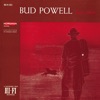
 Bud Powell
Jazz Giant
Polygram Records
|
|
This is truly vintage Powell. His improvisation on “Cherokee” is executed with jaw-dropping dexterity and creative flow. His trio-mates, Ray Brown and Max Roach, do a wonderful job of keeping up with the bright tempo.
|
 Clifford Brown
Study In Brown
1990 Polygram 14646
Original recording 1955
|
|
Brown first recorded performance of “Cherokee,” from 1953, was brilliant. This recording, made about a year and a half later, shows how quickly and strikingly he evolved. He plays with a stunning level of assurance and control, particularly given the bright tempo.
|
 Stan Getz, Lionel Hampton
Hampton & Getz
Polygram Records
|
|
Vibraphonist Hampton and tenor saxophonist Getz came from different eras, but they find plenty of common ground on this lengthy, high-energy romp through “Cherokee.”
|
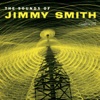
 Jimmy Smith
The Sounds of Jimmy Smith
2005 Blue Note 11426
Original recording 1957
|
|
This early-career performance by Smith is an excellent example of his earthy sense of swing and his thorough command of the Hammond B-3 organ.
|
|
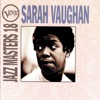
 Sarah Vaughan
Verve Jazz Masters 18
1994 Polygram 18199
Original recording 1955
|
|
In 1955 Vaughan was the first female vocalist to cover the difficult “Cherokee” which appeared on her In the Land of Hi-Fi release. The lyric was changed, with the publisher’s permission, so that the song could be sung to an “Indian warrior” instead of an “Indian maiden.” Vaughan’s clarity, her range, her high-speed intervallic jumps are spectacular, and Cannonball Adderley takes a brilliant saxophone solo.
|
|
 Charlie Barnet
Cherokee
1999, ASV 5288
|
|
This could be considered the definitive version of the song. In this 1939 recording, Barnet and His Orchestra swing through the original, slow tempo reading of the song that would inspire so many others.
|
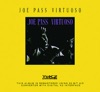
 Joe Pass
Virtuoso
2001 Pablo 2310708
Original recording 1973
|
|
Guitarist Pass’ playing is sharp and scintillating as he rips through the song on this solo turn.
|
 Wynton Marsalis
Marsalis Standard Time ~ Vol.1
Sony
Original recording 1986
|
|
Trumpeter Marsalis treats the listener to two versions of “Cherokee.”’ Both are excellent-- one played with control and one played with abandon. While markedly different, each is electrifying and inventive.
|
 Slide Hampton
Spirit of the Horn
Mcg Jazz
|
|
Trombonist Slide Hampton does a great job of arranging the song for a group that is almost entirely made up of trombones. This rendition is potent and clever due to what JazzTimes calls “the versatility and unlimited colors of the instrument.”
|
|
|
|