|
|
|
| “Buster Bailey opens the first few bars of the song on clarinet, and Lester Young and the others play soulfully behind Ms. Holiday.” |
|
 |
|
- Jon Luthro
|
|
| |
“Easy Living” is a slow ballad with straightforward lyrics that declare just how wonderful life can be when living for someone you love. The songwriting team of Ralph Rainger and Leo Robin wrote this song while under contract to Paramount. It was written for the film of the same name and was the film’s only song.
|
| |
| |
|
| |
|
|
| |
| |
|
| |
|
The 1937 Paramount movie starred Jean Arthur, Edward Arnold, Ray Milland, Luis Alberni, Mary Nash, Franklin Pangborn and William Demarest. Mitchell Leisen directed and Preston Sturges wrote the screenplay, which was based on a story by Vera Caspary (A Letter to Three Wives, Laura). Easy Living is generally well-reviewed and is best characterized as a screwball comedy classic.
“Easy Living” was reprised in the 1949 RKO film, Easy Living (same name, different plot), starring Victor Mature, Lucille Ball, Sonny Tufts, and Lizabeth Scott. Again it is the film’s sole song, but this time it is sung by Audrey Young, who went on to become better known as Audrey Wilder, wife of Billy Wilder.
“Easy Living” did not immediately garner much public attention because it was only performed instrumentally in the original film. However, Billie Holiday recorded it with Teddy Wilson’s Orchestra on June 1, 1937, and their version stayed on the charts for two weeks in July, 1937, peaking at fifteenth position.
|
| |
| |
|
| |
|
|
| |
| |
|
| |
|
|
|
| |
|
| |
|
To capitalize on the success of the Holiday/Wilson recording, “Easy Living” was recycled in the 1939, Paramount film Remember the Night, also written by Preston Sturges and directed by Mitchell Leisen.
|
|
|
|
More information on this tune... |
|
|
 Robert Gottlieb, Robert Kimball
Reading Lyrics
Pantheon
Hardcover: 736 pages
(This book conatains a short biography of Leo Robin and eight pages of his lyrics, including those for “Easy Living.”)
|
|
|
|
See the Reading and Research page for this tune for additional references. |
|
- Jeremy Wilson
|
|
| This section suggests definitive or otherwise significant recordings that will help jazz students get acquainted with
“Easy Living.” These recordings have been selected from the Jazz History and
CD Recommendations sections.
|
Billie Holiday’s classic and stunningly emotional rendition of “Easy Living” ( Strange Fruit: 1937-1939) has become the point of reference for many people who have taken on the tune since then. Among the great instrumental recordings of the tune are performances by two of the definitive ballad interpreters in modern jazz history, Bill Evans ( Bouncin' with Dex) and Dexter Gordon ( New Jazz Conceptions).
Noah Baerman - Jazz Pianist and Educator
|
|
Musical analysis of
“Easy Living”
|
| Original
Key |
Eb major,
modulating to B major during the “B”section,
then back to Eb major for the last “A” section |
| Form |
A - A - B
- A |
| Tonality |
Major throughout |
| Movement |
Primarily
skips; leaps of a major 6th and minor 7th
occur frequently. |
|
Comments
(assumed
background)
|
|
The initial chord progression is an acending
I-vii˚7/ii-ii-vii˚7/iii, similar to “Memories
Of You” and “Doin’ The New Low-Down,”
which is actually a variation of I-vi7-ii-V7
(“I
Could Write a Book,” “At
Long Last Love,” etc.) The latter progression
would work just as well, but the original
elegant changes are preferable. The reason
is to provide a contrast with the “B” section,
which actually does use the latter progression,
albeit in a distant key. The modulation
from Eb to B in the second ending is worth
commenting on since it works so well. It
begins with a I going to IV7 – typical for
an ending – but then, instead of returning
to I, the IV7 resolves to bviim7. In the
original key this is: Eb-Ab7-Dbm7. The Dbm7
then becomes a ii7 of the new key of B major,
making for a smooth transition. The second
modulation–going from B major back to Eb–is
accomplished almost as well, as the bass
note of the vi7 chord (of B major) drops
two steps, turning it into a “pivot” chord
that leads to the V7 of the original “A”
key (Eb major).
Melodically, this sort of piece is loved
by instrumentalists and hated by vocalists
for the same reason–wide intervals. Despite
this, the range of the song is no more than
octave and a fifth. With proper warm-up
and technique (translation: RELAX!), this
should pose no more than a moderate challenge
for the intermediate jazz vocalist.
|
|
K. J. McElrath - Musicologist for JazzStandards.com |
|
Tenor saxophonist Wardell Gray lived a tragically
short life but made a mark on postwar transitional
jazz. On his 1949 recording session (which produced
his famous original “Twisted”), Gray works his magic
on a ballad version of “Easy Living.” He’s accompanied
by alto saxophonist Charlie Parker’s rhythm section
of Al Haig (piano), Tommy Potter (bass) and Roy
Haynes (drums). (The CD reissue includes an alternate
version).
Another tenor player, Stan Getz, was influenced
by Lester Young (as was Wardell Gray). In an interesting
alignment, Getz is featured with Count Basie’s orchestra
in a live 1954 recording, playing the tune that
Young recorded with
Billie Holiday.
Chris Tyle - Jazz Musician and Historian
|
Additional information for "Easy Living" may be found in:
|
|
|
 Thomas S. Hischak
The Tin Pan Alley Song Encyclopedia
Greenwood Press
Hardcover: 552 pages
(1 paragraph including the following types of information: film productions, history and performers.)
|
|
|
|
|
Robert Gottlieb, Robert Kimball
Reading Lyrics
Pantheon
Hardcover: 736 pages
(Includes the following types of information: song lyrics.)
|
|
|
|
|
“Easy Living” was included in these films:
- Easy Living (1937, instrumental)
- Remember the Night (1939,
Billie Holiday)
- Easy Living (1949, Audrey
Young)
- Chinatown (1974)
- The Bridges of Madison County
(1995, Johnny Hartman)
|
|
|
|
Comment Policy
- Your comments are welcome, including why you like
this tune, any musical challenges it presents, or additional background information.
- Jazz musicians, fans, and students of all ages use this website as an educational resource.
As such, off-topic, off-color, unduly negative, and patently promotional comments will be removed.
- Once submitted, all comments become property of JazzStandards.com.
By posting, you give JazzStandards.com permission to republish or otherwise distribute your comments in any format or other medium.
JazzStandards.com reserves the right to edit or remove any comments at its sole discretion.
|
|
| Click on any CD for more details at Amazon.com |
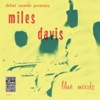
 Miles Davis
Blue Moods
1991 Original Jazz Classics 43
Original recording 1955
|
|
A few months before forming his classic hard bop quartet, trumpeter Davis recorded this cooler-toned session along with vibraphonist Teddy Charles and trombonist Britt Woodman. Interestingly, the other players, bassist Charles Mingus and drummer Elvin Jones, would come to be known for music that was anything but cool, but they show total restraint on this ballad performance.
|
 Bill Evans
New Jazz Conceptions
Ojc
Original recording 1956
|
|
In the 1950s, Bill Evans became the most widespread influence on jazz pianists since Bud Powell a decade before. This ballad performance from his debut album shows that his lush, modern sense of harmony and his crisp, flowing right hand lines were already well-developed at the beginning of his recording career as a bandleader.
|
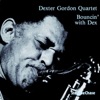
 Dexter Gordon Quartet
Bouncin' with Dex
Steeplechase
Original recording 1975
|
|
This session, featuring Tete Montoliu on piano, Niels-Henning Orsted Pederson on bass and Billy Higgins on drums, is among the best of the many excellent sets Gordon recorded for the Steeplechase label while living in Europe in the 1970s. Though these recordings are less heralded than his previous work, they show that he was still evolving. The two takes of “Easy Living” here show his ballad artistry to be undiminished.
|
|
Billie Holiday
Strange Fruit: 1937-1939
2000, Jazzterdays Records #102423
|
|
Billie became identified with this song. This collection includes the 1937 version recorded with Teddy Wilson's Orchestra. Buster Bailey opens the first few bars of the song on clarinet, and Lester Young and the others play soulfully behind Ms. Holiday.
|
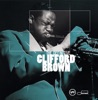
 Clifford Brown
The Definitive...
2002, Universal
Original recording, 1953, Blue Note
|
|
Trumpeter Brown's regal version is included in this collection along with his compositions, "Joy Spring"' and "Daahoud."' There's also a bop outing with Art Blakey, a lyrical version of "Stardust,"' an exchange with Sonny Rollins, and vocals by Dinah Washington and Sarah Vaughan.
|
 Nancy Wilson
But Beautiful
Blue Note Records
Original recording 1969
|
|
Wilson gives an unhurried, assured performance of “Easy Living” alongside the sympathetic quartet of guitarist Gene Bertoncini, pianist Hank Jones, bassist Ron Carter and drummer Grady Tate.
|
 Howard Roberts
Good Pickin's
2006 Verve 5931
Original recording 1959
|
|
The underrated guitarist Roberts shines on this ballad performance, showing the rich chordal style and clear single note lines that made him an underground hero of sorts among guitarists.
|
 Ann Hampton Callaway
Easy Living
Sin-Drome Records
|
|
This CD features two different lineups of musicians, including, among others, Kenny Barron and Bill Charlap on piano, Peter Washington on bass, and Lewis Nash on drums; an excellent album by an excellent vocalist.
|
 Alan Broadbent
Pacific Standard Time
1995, Concord 4664
|
|
This instrumental version features the ever-graceful and refined Alan Broadbent Trio with Broadbent on piano, Putter Smith on bass, and Frank Gibson, Jr. on drums.
|
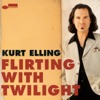
 Kurt Elling
Flirting with Twilight
2001, Blue Note
|
|
Elling’s straight-ahead but impassioned reading of the vocal is leant urgency by the throbbing instrumental backing.
|
|
|
|