|
|
|
| “…[Irving Berlin] followed Elizabeth Barrett Browning’s lead in ‘How Do I Love Thee’ by spinning a series of questions into a children’s riddle …” |
|
 |
|
- Philip Furia
|
|
| |
In 1932 Paul Whiteman and His Orchestra with vocalist Jack Fulton were the first to make the pop charts with their recording of “How Deep Is the Ocean?”
The song would spawn four hit recordings that year:
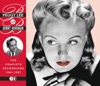
In 1945, with Peggy Lee’s growing appeal, Columbia released a 1941 recording:
|
| |
| |
|
| |
|
|
| |
| |
|
| |
|
|
|
| |
|
| |
|
Preceding the Great Stock Market Crash of 1929, life for Irving Berlin had been both productive and profitable. His life, however, was not without its troubles. In 1928 Berlin’s three-week-old son died, precipitating a bout of depression that would last for several years. Also, in the latter half of the 1920’s, Berlin had let up on what had been non-stop songwriting and began to doubt his viability as a composer. In Caryl Brahms and Ned Sherrin’s book Song by Song: The Lives and Work of 14 Great Lyric Writers, Berlin confesses, “I was scared ...I had had all the money I wanted for the rest of my life. Then all of a sudden I didn’t. I had taken it easy and gone soft, and wasn’t too certain I could get going again.”
Discouraging experiences with early Hollywood musicals gave Berlin further reason to despair, and while he continued to write songs he lacked the self-confidence to promote them.
In 1932 when the rest of the country was sunk in the depths of the Great Depression, Irving Berlin embarked on the second half of his career. Unwilling to accept Berlin’s professional demise, Max Winslow, a friend and employee, retrieved a song Berlin had filed and presented it to Rudy Vallee. “Say It Isn’t So” became a number one hit and one of only a few Berlin songs to be introduced on the radio. The song endures to this day as a jazz standard.
A reenergized Berlin then borrowed four lines of the chorus of his “To My Mammy” (1920), including the querying phrase, “How Deep Is the Ocean?” and created a new song whose lyrics are a succession of questions, “How deep is the ocean? (How high is the sky?)”
|
| |
| |
|
| |
Berlin begins the refrain with How much do I love you?
I’ll tell you no lie.
The second line, “I’ll tell you no lie,” is the only line that does not ask a question. Philip Furia, in The Poets of Tin Pan Alley: A History of America’s Great Lyricists depicts the lyrics as
Another slang formula--the Yiddish penchant for answering a question with another question...
|
|
|
|
More information on this tune... |
|
See the Reading and Research page for this tune for additional references. |
|
- Jeremy Wilson
|
|
| This section suggests definitive or otherwise significant recordings that will help jazz students get acquainted with
“How Deep Is the Ocean? (How High Is the Sky?).” These recordings have been selected from the Jazz History and
CD Recommendations sections.
|
Benny Goodman’s recording of “How Deep Is the Ocean” ( The Complete Recordings 1941-1947) is an all-time classic and is historically significant for documenting the early days of his partnership with vocalist Peggy Lee. Charlie Parker’s ballad rendition from 1947 ( Complete Dial Sessions Master Takes), meanwhile, helped legitimize the song as a standard relevant to modern jazz. Meanwhile, the common modern-day approach to the tune can be well heard in the wonderful trio rendition by pianist Tommy Flanagan ( Sea Changes).
Noah Baerman - Jazz Pianist and Educator
|
The melody of “How Deep Is the Ocean?” requires little more than a one-octave range, making it an easy vehicle for vocalists. Its form can be diagrammed as A-B-A-B’ or A-B-A-C with no formal bridge. According to Allen Forte in his book The American Popular Ballad of the Golden Era, 1924-1950: A Study in Musical Design, “What momentarily appears to be the bridge proves to be the second period of a double contrasting period.” -JW
|
Musical analysis of
“How Deep Is the Ocean? (How High Is the
Sky?)”
|
| Original
Key |
One flat,
beginning in D minor and ending in the relative
major with a false key change to A minor
in mm 4-7. |
| Form |
A - B - A
- C |
| Tonality |
Primarily
minor, gradually moving toward major |
| Movement |
Arpeggios
with lower neighbor tone embellishments
and descending scale patterns. |
|
Comments
(assumed
background)
|
| A descending bass line in section “A” creates
a harmonic progression that is at once unique
and firmly grounded in tonal tradition.
The only unusual sounding spot is the modulation
in mm 4-5, in which Berlin goes directly
from iiø7 to i in A minor (the V7 [E7] would
clash with the melody at this point). The
shift from Am up to C7 (as a V7 of F major)
is also unusual but not jarring to the ear
because of the close relationship between
the tonalities involved. The “B” section
uses what sounds suspiciously like a “blue
note” – a flatted third in the key of F
major played over the IV7 chord (Bb7). This
note alternates with a lower F over a G
bass, creating a V7(b9)/V7 in the key of
F. However, there is a deceptive resolution
to the V7(b9) in the key of D minor– that
is, A7(b9). Again, this is not completely
jarring to the ear. It works because of
the diminished triad shared by C7 and A7(b9). |
|
K. J. McElrath - Musicologist for JazzStandards.com |
|
Benny Goodman’s 1941 recording of this number
no doubt brought it back to the attention of the
jazz world. But it wasn’t until Coleman Hawkins’
1943 version that the tune really caught on with
jazz players.
Hawkins had probably played the number with Fletcher
Henderson’s Orchestra in the early 1930’s when it
was initially popular. Using an approach similar
to that of his 1939 hit “Body and Soul,” Hawkins is accompanied by a rhythm
section of Ellis Larkins (piano),
Fats Waller’s guitarist Al Casey, bassist Oscar
Pettiford and drummer Shelly Manne, a group he would
make several successful recordings with. The results
are astounding; Hawkins outdoes his own version
of “Body and Soul” and plays an unaccompanied coda that
is brilliant.
Chris Tyle - Jazz Musician and Historian
|
Additional information for "How Deep Is the Ocean? (How High Is the Sky?)" may be found in:
|
|
|
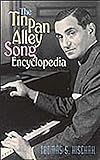 Thomas S. Hischak
The Tin Pan Alley Song Encyclopedia
Greenwood Press
Hardcover: 552 pages
(1 paragraph including the following types of information: film productions, lyric analysis, music analysis and performers.)
|
|
|
|
|
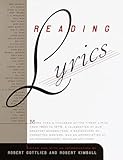 Robert Gottlieb, Robert Kimball
Reading Lyrics
Pantheon
Hardcover: 736 pages
(Includes the following types of information: song lyrics.)
|
|
|
|
|
“How Deep Is the Ocean? (How High Is the Sky?)” was included in these films:
- Blue Skies (1946, Bing Crosby)
- Meet Danny Wilson (1952, Frank
Sinatra)
- Unconditional Love (2002,
Dan Aykroyd)
And on television:
- I Love Lucy (1954, Desi Arnaz)
Episode 88, "Ricky’s Hawaiian Vacation"
|
|
|
|
Comment Policy
- Your comments are welcome, including why you like
this tune, any musical challenges it presents, or additional background information.
- Jazz musicians, fans, and students of all ages use this website as an educational resource.
As such, off-topic, off-color, unduly negative, and patently promotional comments will be removed.
- Once submitted, all comments become property of JazzStandards.com.
By posting, you give JazzStandards.com permission to republish or otherwise distribute your comments in any format or other medium.
JazzStandards.com reserves the right to edit or remove any comments at its sole discretion.
|
|
| Click on any CD for more details at Amazon.com |
 Peggy Lee & Benny Goodman
The Complete Recordings 1941-1947
Sony
Original recording 1941
|
|
This recording documents the beginning of Lee’s long and prosperous career as a vocalist. She radiates warmth throughout the performance while Goodman’s big band swings gently.
|
 Charlie Parker
Complete Dial Sessions Master Takes
Definitive/Disconforme SL
Original recording 1947
|
|
Parker delivers a classic ballad performance on this track. At times he is subtle and lyrical, while at other times his horn cries with unbridled emotion.
|
|
 Tommy Flanagan
Sea Changes
1997 Evidence 22191
|
|
Tommy Flanagan is well-known as a remarkably elegant pianist, and this performance is a sterling example of his touch and his wonderful rhythmic sense.
|
 Curtis Counce
You Get More Bounce With Curtis Counce
1991 Original Jazz Classics 159
Original recording 1957
|
|
Bassist Counce led a wonderful though underrated quintet, and this album is one of their classics. The featured soloists here are tenor saxophonist Harold Land and pianist Carl Perkins.
|
 Billy Holiday
First Issue: Great American Songbook
1994 Polygram 23003
Original recording 1954
|
|
Holiday shines on this mid-1950s performance with an all-star band anchored by Oscar Peterson’s piano. The swing here is gentle but unmistakable, and Holiday sounds truly invigorated.
|
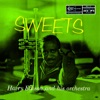
 Harry Edison
Sweets
2005 Verve 393602
Original recording 1956
|
|
Harry “Sweets” Edison is surely one of the most swinging trumpet players in jazz, and his relaxed but grooving performance here is proof positive.
|
 J.J. Johnson
Vivian
1992 Concord 4523
|
|
This remarkably tender performance features sparse, melodic solos from Johnson on trombone and Ted Dunbar on guitar.
|
 Hank Mobley, Al Cohn, John Coltrane, Zoot Sims
Tenor Conclave
1991, Orig. Jazz Classics 127
Original recording, 1956
|
|
While there are four great tenor sax men on this track, it is more about camaraderie than competition. Mobley, Cohn, Sims and Coltrane trade solos with reserve on this sentimental reading.
|
 Diana Krall
Love Scenes
Grp Records
|
|
Canadian pianist/vocalist Krall does a wonderful job on this melancholy rendition of the song. Joined by bassist Christian McBride and guitarist Russell Malone, Krall dazzles with her deft piano and sultry voice.
|
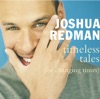
 Joshua Redman
Timeless Tales for Changing Times
1998 Warner Bros 47052
Original recording 1998
|
|
Saxophonist Joshua Redman’s explorations lead to some intriguing places in this mid-tempo version. It is packed with soul and originality.
|
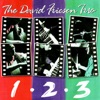
 The David Friesen Trio
1.2.3
1994, Burnside Records 17
|
|
This sensitive and interactive trio, comprised of bassist Friesen, pianist Randy Porter, and drummer Alan Jones, exemplifies the art of jazz, improvising everything on the spot with magical results.
|
|
|
|