|
|
|
| “Ella Fitzgerald virtually owned ‘How High the Moon.’” |
|
 |
|
- Noah Baerman
|
|
| |
On February 8, 1940, Alfred Drake and Frances Comstock introduced “How High the Moon” during the Broadway revue Two for the Show. The musical would run at the Booth Theatre for 124 performances.
An instant hit, Benny Goodman’s recording of “How High the Moon,” featuring vocalist Helen Forrest, entered the pop charts a few weeks after the show opened, rising to number six. Subsequent hit recordings include:
- Mitchell Ayres and His Fashions in Music (1940, Mary Ann Mercer, #18)
- Stan Kenton and His Orchestra (1948, instrumental, #20)
- Les Paul and Mary Ford (1951, #1)
Two for the Show comprised a series of song and dance numbers set in wartime London. It was just one of several Hamilton and Lewis collaborations which include the related One for the Money and Three to Get Ready. Two for the Show starred Alfred Drake, Keenan Wynn, Eve Arden, Richard Haydn, and Betty Hutton in her Broadway debut.
|
| |
| |
|
| |
|
In 1951 guitar legend Les Paul and his vocalist wife Mary Ford hit the top of the charts with “How High the Moon” remaining there for nine weeks. The landmark recording was accomplished by using a multi-track tape recorder to overdub the guitar and vocals, allowing the duo to record a full instrumental sound with multi-part vocal harmonies. Paul is credited with perfecting the use of the multi-track tape recorder, a pioneering effort that changed the course of recorded music.
|
|
| |
|
| |
|
In a December 15, 2003, USATODAY.com interview Paul explained,
I created a little radio show I did every Friday where I could do anything I wanted. As the ideas progressed to do everything in multi-track (I invented the machine, the delay, the echo, all that) ...I took this idea of multi-track recording to Capitol Records and hit with “How High the Moon.”
After “Mockingbird Hill,” “How High the Moon” would become the second million-selling recording in 1951 for Les Paul and Mary Ford. Within the year Les Paul would also go on to collaborate with Gibson Guitar Corporation to create the extremely popular “Les Paul” model--a solid-body, electric guitar.
|
| |
| |
|
| |
|
Morgan Lewis wrote “How High the Moon” as a slow ballad. Because of its complex and interesting chord progressions, however, the song became a bebop favorite and is now almost always performed up-tempo. In his book Easy to Remember: The Great American Songwriters and Their Songs, William Zinsser refers to the song as belonging to “... the elite company of romantic ballads that generations of jazzmen have embraced for their melodic energy and harmonic interest ...” Countless jazz musicians have employed it as the basis for new compositions, notably Charlie Parker’s “Ornithology” and John Coltrane’s (note the word play) “Satellite.”
For a time, “How High the Moon” contended for the honor of being the most recorded composition by jazz musicians. Today critics glorify the composition with such arguable titles as “the bop national anthem,” “the bop hymn,” or “the national anthem of the modern jazz movement.” Regardless of such nicknames, a title that is indisputable is “Towering Song,” an honor bestowed by the National Academy of Popular Music at the 1957 annual award ceremony.
|
| |
| |
|
| |
|
|
|
|
|
More information on this tune... |
|
|
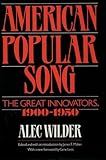 Alec Wilder
American Popular Song: The Great Innovators, 1900-1950
Oxford University Press; Reprint edition
Hardcover: 576 pages
(In his definitive book on American popular song, AlecWilder includes an analysis of the harmonic structure of “How High the Moon” which made it popular with improvisors.)
|
|
|
|
See the Reading and Research page for this tune for additional references. |
|
- Jeremy Wilson
|
|
| This section suggests definitive or otherwise significant recordings that will help jazz students get acquainted with
“How High the Moon.” These recordings have been selected from the Jazz History and
CD Recommendations sections.
|
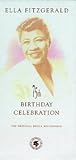
Ella Fitzgerald virtually owned “How High the Moon.” In 1947 she offered a performance with Dizzy Gillespie’s all-star big band (collected in the box set 75th Birthday Celebration), going from a straightforward reading of the song to some playful alterations of the lyrics and a scat solo. Her 1960 version ( The Complete Ella in Berlin: Mack the Knife), recorded live in Berlin, updates the same arrangement with a tight quartet as her only accompaniment. In each case there is a straightforward reference to the song itself as well as scatting that shows off the tune’s usefulness as a bebop vehicle, complete with references to the bop tune “Ornithology.”
Noah Baerman - Jazz Pianist and Educator
|
Nancy Hamilton’s lyrics may be sonically supportive
in the up-tempo renditions we hear today, but the
sentiment seems to get lost in the rush. Her words
tell the story of a love that is beyond reach, like
faint music or a distant moon. The verse is seldom
performed although it is relevant, setting the stage
for the refrain that is modestly clever and sweet
without being cute.
It is a shame that Morgan Lewis’ original intent
has been all but lost. As a dreamy ballad, “How
High the Moon” compares favorably with many of the
best jazz standards. Ballad-like renditions with
the verse included can be found on the highly rated
Mel Torme’s
Swingin’ on the Moon and Weslia Whitfield’s
High Standards. -JW
|
Musical analysis of “How High the Moon”
|
|
Original Key
|
G major
|
|
Form
|
A -B1 -A -B2
|
|
Tonality
|
Primarily major; brief passage in the parallel minor in mm. 11-12.
|
|
Movement
|
Primarily leaps and steps upwards; repeated notes in the “B” sections.
|
|
Comments (assumed background)
|
|
The song uses a descending chord progression in which the tonic of the moment turns minor to become the ii7 of the chord a whole step below it. By the time this happens a third time, there need only be a half-step drop to arrive at the V7 of the original key (Eb -D7 -G in the original). Although the harmonic progression is exotic sounding, it really follows the orthodox practices of voice leading and should pose no surprises as long as the performer trusts his/her ear and aural experience.
|
|
K. J. McElrath - Musicologist for JazzStandards.com
|
|
“How High the Moon” has long been associated
with singer Ella Fitzgerald. In the early 1940’s,
after the death of her bandleader
Chick Webb, Fitzgerald found her career waning.
It was not until she fell in with the bebop movement
several years later that she was able to rejuvenate
her calling. Having internalized bop fundamentals,
she began scatting, that is, using her voice to
simulate a horn and using invented syllables with
which to improvise around the melody. On her December
20, 1947, recording of “How High the Moon” she is
in full swing, singing the first chorus then scatting
the remainder, even quoting Charlie Parker’s “Ornithology”
on the third chorus. “How High the Moon” soon became
a staple of her concert performances. -JW
Even though considered to be the “national anthem”
of bebop, “How High the Moon” caught the fancy of
swing players in the mid-to-late 1940s. Pianist
Teddy Wilson’s small combo recorded it several
times, and it was frequently played at Norman Granz’s
“Jazz at the Philharmonic” concerts, generally as
the backdrop for a somewhat tasteless tenor saxophone
battle. One of the earliest J.A.T.P. versions, from
1946, features the tasty playing of ex-Count Basie
trumpeter Buck Clayton.
Belgian guitarist Django Reinhardt recorded the
tune on several occasions, but the most interesting
is his first in 1945 with an “all-star” combo made
up of members of
Glenn Miller’s Army Air Force Band that included
such talented players as pianist Mel Powell, clarinetist
Peanuts Hucko, and drummer Ray McKinley.
Chris Tyle - Jazz Musician and Historian
|
Additional information for "How High the Moon" may be found in:
|
|
|
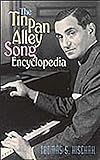 Thomas S. Hischak
The Tin Pan Alley Song Encyclopedia
Greenwood Press
Hardcover: 552 pages
(1 paragraph including the following types of information: Broadway productions, lyric analysis, music analysis and performers.)
|
|
|
|
|
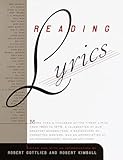 Robert Gottlieb, Robert Kimball
Reading Lyrics
Pantheon
Hardcover: 736 pages
(Includes the following types of information: song lyrics.)
|
|
|
|
|
“How High the Moon” was included in these films:
- Biloxi Blues (1988, conflicting
information)
- Eat a Bowl of Tea (1989, Pat
Suzuki)
- Casino (1995, Les Paul, Mary
Ford)
- The Curse of the Jade Scorpion
(2001, Dick Hyman, The Rainbow Room All
Stars)
- Mona Lisa Smile (2003)
And on stage:
- Two for the Show (1940, Alfred
Drake, Frances Comstock) Broadway
- Swingtime Canteen (1995) Off-Broadway
And on television:
- The Muppet Show (1980, Floyd,
Janice, Zoot, Lips, Rowlf, Animal, Nigel) Episode
120
|
|
|
|
Comment Policy
- Your comments are welcome, including why you like
this tune, any musical challenges it presents, or additional background information.
- Jazz musicians, fans, and students of all ages use this website as an educational resource.
As such, off-topic, off-color, unduly negative, and patently promotional comments will be removed.
- Once submitted, all comments become property of JazzStandards.com.
By posting, you give JazzStandards.com permission to republish or otherwise distribute your comments in any format or other medium.
JazzStandards.com reserves the right to edit or remove any comments at its sole discretion.
|
|
| Click on any CD for more details at Amazon.com |
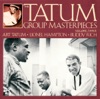
 Art Tatum/Lionel Hampton
The Tatum Group Masterpieces, Vol. 3
Pablo 2405426
Original recording 1955
|
|
On this spirited, up-tempo performance, Tatum is flanked by two of the rare musicians who were able to keep up with his virtuosity, vibraphonist Lionel Hampton and drummer Buddy Rich.
|
 Jaki Byard
Solo/Strings
2000 Prestige 24246
Original recording 1968
|
|
Byard absolutely burns on this performance, as does his “string” section of George Benson (guitar), Ray Nance (violin), Ron Carter (cello) and Richard Davis (bass).
|
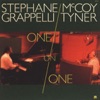
 Stephane Grappelli with McCoy Tyner
One On One
1990 Milestone 9189
|
|
Grappelli and Tyner find plenty of common ground on this interactive and energetic duo performance.
|
|
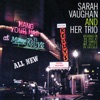
 Sarah Vaughan & Her Trio
...at Mr. Kelly's
2001 Polygram
Original recording, 1957
|
|
Vaughan accidentally starts the song off with “How high the ocean”’ and, without missing a beat, proceeds to make up her own words, scatting her way through to end with more of her own patter.
|
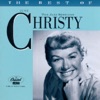
 June Christy
The Jazz Sessions: The Best of June Christy
Blue Note Records 53922
Original Recording 1962
|
|
Backed by the Kenton band, vocalist Christy sweetly sings the lyric to “How High the Moon” in the ballad mode before picking up the tempo.
|
|
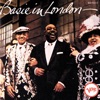
 Count Basie Orchestra
Basie in London
1990, Verve 833805
Original recording, 1956
|
|
While its title may be a red herring (the concert was performed in Sweden), the album and the song, in particular, are the genuine things. Basie has the orchestra in full force--invigorating, swinging with abandon, and tighter than a drum.
|
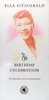
 Ella Fitzgerald
75th Birthday Celebration
Verve
Original recording 1945
|
|
On this popular and extended re-make of her 1947 recording, Fitzgerald begins at a medium tempo before playing around with the lyrics and then adding some jaw-dropping scatting at a brighter tempo. This is a recording frequently cited as an example of her virtuosity.
|
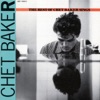
 Chet Baker
Chet
2000, Riverside
Original recording, 1959, Original Jazz Classics
|
|
Trumpeter Baker is joined by all-star talent for a melancholic reading of the ballad. Pianist Bill Evans, saxophonist Pepper Adams, guitarist Kenny Burrell and a strictly instrumental Baker make this a touchingly beautiful rendition.
|
|
|
|