|
|
|
| “Hearing Coltrane seize ‘In a Sentimental Mood’ is thanks enough.” |
|
 |
|
- Marc Greilsamer
|
|
| |
On April 30, 1935, Duke Ellington and His Orchestra introduced “In a Sentimental Mood.” Recorded on the Brunswick label and featuring Otto “Toby” Hardwick on alto saxophone, the composition went onto the pop charts on July 13, rising to number fourteen.
“In a Sentimental Mood” enjoyed a wave of popularity in the 1930’s. Other recordings to make the pop charts that decade included Benny Goodman and His Orchestra, 1936, which rose to number thirteen, and Mills Blues Rhythm Band, also in 1936, which rose to number nineteen. In an age of radio, “In a Sentimental Mood” was the theme song for no less than nine radio shows.
|
|
| |
|
| |
|
Although Ellington is credited for the music of “In a Sentimental Mood,” Toby Hardwick should be recognized beyond his introductory performance. In his biography, Duke Ellington, James Lincoln Collier comments, “...the central melodic ideas of virtually all of Ellington’s best-known songs originated in somebody else’s head.” Among many others examples, Collier points out that “In a Sentimental Mood,” “Sophisticated Lady,” and “Prelude to a Kiss” were adaptations of Hardwick melodies.
|
| |
| |
|
| |
|
|
| |
| |
|
| |
|
The combination of Ellington’s music and the Kurtz/Mills lyrics has elicited high praise from music critics. Accolades have included “Simply the most beautiful song ever written” and “The perfect soundtrack for falling in love.”
|
| |
| |
|
| |
|
|
| |
| |
|
| |
|
|
|
|
|
More information on this tune... |
|
|
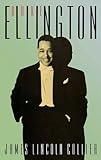 James Lincoln Collier
Duke Ellington
Oxford University Press, USA
Hardcover: 352 pages
(Ellington biographer Collier devotes two paragraphs to anecdotes and a musical analysis of the song.)
|
|
|
|
See the Reading and Research page for this tune for additional references. |
|
- Jeremy Wilson
|
|
| This section suggests definitive or otherwise significant recordings that will help jazz students get acquainted with
“In a Sentimental Mood.” These recordings have been selected from the Jazz History and
CD Recommendations sections.
|
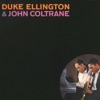
The original Duke Ellington version of “In A Sentimental Mood” from 1935 ( The Duke: The Columbia Years 1927-1962) is haunting and lyrical, showing what a brilliant composer and arranger he already was. Perhaps better known, especially among modern musicians, is his revisiting of the tune in 1962 ( Duke Ellington and John Coltrane) with a quartet featuring the passionate saxophone of John Coltrane. A standout among vocal performances of the tune is Sarah Vaughan’s assured, intimate version from 1961 ( Ballads: Sarah Vaughan) accompanied only by the guitar of Mundell Lowe and the bass of George DuVivier.
Noah Baerman - Jazz Pianist and Educator
|
It is always tempting to question how much Irving
Mills contributed to a song bearing his name. In
this case the lofty phrases,
“stars come through my room”
“flame that lights the gloom”
“wings of every kiss”
are so similar in style to Mills’ individual
effort on “Caravan”
(1937)
“stars above that shine so
bright”
“The myst’ry of their fading light...”
that it seems likely credit is due.
In his book
American Popular Song: The Great Innovators, 1900-1950,
Alec Wilder comments that the lyrics to “In a Sentimental
Mood” have little fluidity. While that may be true,
as with “Caravan”
their strength lies in the evocative power of the
phrases. The lyrics are not witty, urbane, or exemplary
in their construction like those of
Lorenz Hart or
Cole Porter, but they do successfully create
images that support the mood of Ellington’s music.
“In a Sentimental Mood” is written in the basic
popular song format A-A-B-A and appears to capitalize
on a supporting phrase from a Gershwin song. The
chorus opens with a seven-note climb up the scale
that, with the exception of key, is the same as
the opening of the chorus in Gershwin’s 1926 “Someone to Watch over Me.” The songs part company there,
however, with Gershwin launching into a series of
repeated notes before closing the first chorus (and
others) with the title phrase. “In a Sentimental
Mood,” on the other hand, pauses for a full measure
at the end of the initial seven-note climb, providing
emphasis that establishes the sequence of notes
as the hook phrase and as the logical place to fit
the title of the song. -JW
|
Musical analysis of
“In a Sentimental Mood”
|
| Original
Key |
One flat;
“A” starts in D minor and ends in F major
with a false key change to Db major |
| Form |
A - A – B
– A |
| Tonality |
About 45%
is minor; first “A” wanders to the relative
major key, while “B” is entirely major |
| Movement |
Primarily
scale-wise, initially ascending from the
third degree of the minor key, gradually
working its way back down through a combination
of steps and skips in both directions. |
|
Comments
(assumed
background)
|
|
The beginning minor gives the song a “brooding,”
introspective feeling, but the eventual
change to minor seems to bring some resolution.
It has been pointed out that the first seven
notes are identical to Gershwin’s “Someone To Watch Over Me.” However, the harmonic
context is so radically different as to
make it almost unrecognizable. Harmonically,
the piece is brilliant and unique. A descending
bass line subtly leads the ear from i to
iv. A V7 returns us to i, but then, changes
the V to a minor v chord, making it a pivot
iii chord of the relative major in a circle
of fifths that leads the ear to the new
tonic (in the original key: A7 – Dm – Am7
– D7 – Gm7 – C7 – F). This whole modulation
is done with such finesse, the listener
is hardly aware of it until the sudden shift
back to i for the second “A”.
The harmonic
progression of “B,” by contrast, is a fairly
standard I – vi – ii – V7 (“Blue Moon,” “Heart And Soul,” etc.), but since the song
has modulated into a distant key, it still
sounds fresh. Part of this is also because
many notes of the melody are on coloristic
chord extentions–the major (raised) seventh,
the ninth, and the eleventh, for the most
part. Other important melody notes are chord
extentions, the most notable being the first
long sustained note of “A”. The initial
seven-notescale run lands on the 11th (G
in D minor). This could only work in a minor
key and essentially makes the opening chord
Dm11. The next predominant note is the 9th
(A in G minor). |
|
K. J. McElrath - Musicologist for JazzStandards.com |
|
Duke Ellington’s lovely melody was the basis
for a number of arrangements in the 1930’s, most
notably those recorded by reedman Jimmy Dorsey,
the Mills Blue Rhythm Band, guitarist Dick McDonough,
Benny Goodman, and Elllington himself. The Belgian-gypsy
guitarist Django Reinhardt’s version with the Quintette
of the Hot Club of France in 1937 showed he was
not intimidated by the song’s harmonic structure;
his work on the recording is forward-thinking.
The tune had a bit of hiatus during the 1940’s
but resurfaced in 1953 with recordings by Sonny
Rollins and Art Tatum, after which it was revisited
by many jazz players.
Chris Tyle - Jazz Musician and Historian
|
Additional information for "In a Sentimental Mood" may be found in:
|
|
|
 Thomas S. Hischak
The Tin Pan Alley Song Encyclopedia
Greenwood Press
Hardcover: 552 pages
(1 paragraph including the following types of information: Broadway productions, history and performers.)
|
|
|
|
|
James Lincoln Collier
Duke Ellington
Oxford University Press, USA
Hardcover: 352 pages
(2 paragraphs including the following types of information: anecdotal and music analysis.)
|
|
|
|
|
“In a Sentimental Mood” was included in these films:
- The Natural (1984, instrumental)
- He Said, She Said (1991)
- A League of Their Own (1992,
Billy Joel)
- The Mambo Kings (1992, Duke
Ellington and His Orchestra)
- The Hudsucker Proxy (1994,
Duke Ellington and His Orchestra)
- The Mirror Has Two Faces (1996,
Marvin Hamlisch, instrumental)
- Love Jones (1997, John Coltrane
and Duke Ellington)
- Angel Eyes (2001, Dennis Smith)
And on Broadway:
- Sophisticated Ladies (1981,
Phyllis Hyman)
- Black and Blue: The Life and Lyrics
of Andy Razaf (1989, Bunny Briggs, Jerome
Richardson)
|
|
|
|
Comment Policy
- Your comments are welcome, including why you like
this tune, any musical challenges it presents, or additional background information.
- Jazz musicians, fans, and students of all ages use this website as an educational resource.
As such, off-topic, off-color, unduly negative, and patently promotional comments will be removed.
- Once submitted, all comments become property of JazzStandards.com.
By posting, you give JazzStandards.com permission to republish or otherwise distribute your comments in any format or other medium.
JazzStandards.com reserves the right to edit or remove any comments at its sole discretion.
|
|
| Click on any CD for more details at Amazon.com |
 Duke Ellington
The Duke: The Columbia Years 1927-1962
2004 Sony 92684
Original recording 1935
|
|
With all the great recordings of this tune, it would be easy to forget about Ellington’s haunting original version. It is well worth seeking out and provides a fascinating contrast with the more frequently cited quartet version with John Coltrane from 1962.
|
 Sonny Rollins/Modern Jazz Quartet
Sonny Rollins with the Modern Jazz Quartet
Original Jazz Classics 11
Original recording 1953
|
|
Rollins’ brilliantly lyrical approach to ballads is in full bloom on this elegant collaboration with the recently-formed Modern Jazz Quartet.
|
 Duke Ellington and John Coltrane
Duke Ellington and John Coltrane
Music
|
|
This Coltrane performance of “In a Sentimental Mood” can be found on a handful of compilations. It very well could be the definitive rendition of the song as the saxophonist is joined by Duke Ellington, himself, at the piano.
|
 Nancy Wilson
But Beautiful
Blue Note Records
Original recording 1969
|
|
Wilson sings this tune hauntingly, backed by a quartet featuring the piano of Hank Jones.
|
 Lucky Thompson
Lucky Strikes
1991 Original Jazz Classics 194
Original recording 1964
|
|
This is a lovely performance that displays tenor giant Thompson’s underrated skill at applying the bebop language to the soprano saxophone.
|
 Earl Hines
Plays Duke Ellington, Vol. 2
1997 New World 80532
Original recording 1972
|
|
Hines approaches the tune with a swinging bounce while applying the harmonic richness typical of his latter-day Ellington interpretations.
|
 Clark Terry
Duke With a Difference
Riverside/OJC 229
Original recording 1957
|
|
Terry was an important Ellington collaborator in the 1950s, and this joyful performance features him flanked by some of his cohorts from the Ellington orchestra.
|
 World Saxophone Quartet
Plays Duke Ellington
Nonesuch
Original recording 1986
|
|
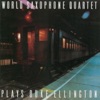
This performance is modern and harmonically edgy, but it sings nonetheless, expressing the lyricism implicit in the song.
|
|
 Leon Parker
Belief
1996, Sony 67457
|
|
You won’t hear another rendition like this. Parker employs only conga drum and hand claps, bolstered by flute, alto sax, trombone, bass, steel pan, marimba, and berimbau!
|
|
 Sarah Vaughan
Ballads
2002 Blue Note 37561
|
|
This compilation of recordings from the early sixties presents Vaughan at her most mature as a vocalist. Her elegance and innate sense of romance are perfectly suited for the song.
|
 Mark Whitfield
The Marksman
1990, Warner Bros 26321
|
|
In his debut as a leader, guitarist Whitfield displayed all-around talent. His gentle reading of “In a Sentimental Mood” speaks to his respect and understanding for the “classics.”
|
|
|
|