|
|
|
| “Prior to pianist Bud Powell’s 1947 trio recording, this pretty ballad was the property of big band vocalists.” |
|
 |
|
- -Chris Tyle
|
|
| |
Bob Allen introduced “I Should Care” with the Tommy Dorsey Orchestra in MGM’s Thrill of a Romance in 1945. Soon after the release of the film Martha Tilton had a hit with the song, the first of four appearances it would make on the pop charts that year. (Bob Allen’s rendition is included on Tommy & Jimmy Dorsey: Swingin’ In Hollywood.)
|
| |
| |
|
| |
|
The hit recordings of “I Should Care” include:
- Martha Tilton (1945, with Eddie Miller and His Orchestra, #10)
- Jimmy Dorsey and His orchestra (1945, Teddy Walters, vocal, #13)
- Tommy Dorsey and His orchestra (1945, Bonnie Lou Williams and the Sentimentalists, vocals, #11)
- Frank Sinatra (1945, with Axel Stordahl and His Orchestra, #8)
- Ralph Flanagan and His Orchestra (1952, Harry Prime, vocal, #4)
- Jeff Chandler (1954, with Victor Young and His Orchestra, #21)
|
|
| |
|
| |
|
The glossy musical, Thrill of a Romance starring Esther Williams and Van Johnson, appealed to war-weary audiences perhaps, in part, because of its lack of substance. Johnson is an air-force pilot who falls in love with a honeymooning swim instructor (Williams) while her husband is away on an emergency business trip. Adding spice to an otherwise bland production were Tommy Dorsey and His Orchestra and Wagnerian tenor Lauritz Melchior in his film debut. Critical appraisals are generally unfavorable and run the gamut from “Delightful! A film well worth seeing...” to “Cloying ...a waste of time and money.” Other songs included in the soundtrack were “Please Don’t Say No, Say Maybe,” “Lovely Night,” “Vive L’Amour,” “Thrill of a Romance,” and “Schubert’s Serenade.”
|
| |
| |
|
| |
|
|
| |
| |
|
| |
|
|
| |
| |
|
| |
|
It is curious that Sammy Cahn, Axel Stordahl, and Paul Weston chose to share the credit for both the words and the music of “I Should Care.” As a rule, Cahn was the lyricist of the three. It is also perplexing that Cahn decided to use the song’s title for his 1974 autobiography I Should Care as he did not receive full credit for it in the first place.
|
|
|
|
More information on this tune... |
|
See the Reading and Research page for this tune for additional references. |
|
- Jeremy Wilson
|
|
| This section suggests definitive or otherwise significant recordings that will help jazz students get acquainted with
“I Should Care.” These recordings have been selected from the Jazz History and
CD Recommendations sections.
|
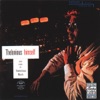
“I Should Care” received its first definitive modern jazz treatment in 1947, courtesy of pianist Bud Powell, who gave it a lush trio performance ( Bud’s Bubble: 1944/1947) with hints of Art Tatum. Thelonious Monk would also become a definitive interpreter of the song, though his approach, predictably, was far sparser. His 1957 recording ( Thelonious Himself) is particularly lyrical and focused. Meanwhile, in 1962, Bill Evans gave a classic performance of the tune ( How My Heart Sings!) which fully displayed its compatibility with swing-feel interpretations, a way of interpreting the tune that has become fairly commonplace.
Noah Baerman - Jazz Pianist and Educator
|
|
Musical analysis of
“I Should Care”
|
| Original
Key |
C major |
| Form |
A- B1 - A
- B2 |
| Tonality |
Unsettled;
the chord progression spends little time
in the tonic key of C, using a number of
half-diminished 7th chord substitutions
to keep wandering from one tonal place to
another before finally resolving to I in
mm. 4, 20 and 31-32 at the very end. |
| Movement |
Primarily
step-wise, with some skips no larger than
a downward fifth. |
|
Comments
(assumed
background)
|
|
This is a gorgeous ballad with a rich, but
challenging, harmonic progression that contains
several deceptive resolutions. Strong chromatic,
descending, guide-tone lines are evident
throughout the piece, however. A careful
linear analysis of the harmonic progression
is necessary. Most of these lines begin
on the 7th of a half-diminished (flatted
fifth of a minor) chord. Piano skills are
helpful in preparing this tune for effective
performance. Play through the progression,
attempting to move the voices step-wise,
and chromatic lines will become apparent.
If the performer is unfamiliar with the
piano keyboard, it is imperative to learn
the melody “as-is” before attempting improvisation.
Initial attempts at soloing over the changes
should focus on melodic embellishment; don’t
stray too far from the melody, at first.
After some experience with the tune, the
ear should be able to start picking out
the guide-tone lines, which are valuable
in expanding improvisational ideas for this
tune.
|
|
K. J. McElrath - Musicologist for JazzStandards.com |
|
“I Should Care” has enjoyed popularity with the
public from the day it was written. In 1947 jazz
pianist Bud Powell introduced it as a jazz vehicle
where it has found favor ever since.
-JW
Prior to Bud Powell’s 1947 trio recording, this
pretty ballad was the property of big band vocalists.
By the mid-1950s, however, it was increasingly played
as an instrumental. Tenor saxophonist Dexter Gordon
recorded a beautiful rendition of it in 1955, and
the next year tenor player Hank Mobley, along with
trumpeter Donald Byrd, would cut yet another marvelous
rendition.
A session in 1956, Presenting Ernie Henry,
featured the alto saxophonist with a band which
included the excellent trumpet playing of Kenny
Dorham, and their version of “I Should Care” is
a classic. Sadly, Henry’s career would be cut short
by his untimely death at age 31, fourteen months
after this session.
Chris Tyle - Jazz Musician and Historian
 Hank Mobley
Messages
Prestige
Original recording 1956
|
|
|
|
|
Additional information for "I Should Care" may be found in:
|
|
|
 Robert Gottlieb, Robert Kimball
Reading Lyrics
Pantheon
Hardcover: 736 pages
(Includes the following types of information: song lyrics.)
|
|
|
|
|
 Henry Martin
Enjoying Jazz
Schirmer Books
Paperback: 302 pages
(5 paragraphs including the following types of information: music analysis and performers.)
|
|
|
|
|
“I Should Care” was included in these films:
- Thrill of a Romance (1945,
Bob Allen, Tommy Dorsey and His Orchestra)
- Thelonious Monk: Straight, No Chaser
(1989, Thelonious Monk)
|
|
|
|
Comment Policy
- Your comments are welcome, including why you like
this tune, any musical challenges it presents, or additional background information.
- Jazz musicians, fans, and students of all ages use this website as an educational resource.
As such, off-topic, off-color, unduly negative, and patently promotional comments will be removed.
- Once submitted, all comments become property of JazzStandards.com.
By posting, you give JazzStandards.com permission to republish or otherwise distribute your comments in any format or other medium.
JazzStandards.com reserves the right to edit or remove any comments at its sole discretion.
|
|
| Click on any CD for more details at Amazon.com |
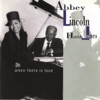
 Abbey Lincoln/Hank Jones
When There Is Love
1994 Verve 314519697
Original recording 1994
|
|
Abbey Lincoln’s singing is always striking, soulful and adventurous, but it is a relatively rare occurrence to hear her focus on standards. This duo album with the great Hank Jones on piano is an exception, and their reading of “I Should Care”’ is intimate and haunting.
|
 Thelonious Monk
Thelonious Himself
1991 Original Jazz Classics 254
Original recording 1957
|
|
Monk recorded this song on multiple occasions, and his angular but lyrical performance here gets right to the heart of the tune’s mixture of brightness and pathos.
|
 Bill Evans
How My Heart Sings!
1991 Original Jazz Classics 369
Original recording 1962
|
|
”I Should Care”’ is most often interpreted as a ballad, but it works quite well in a medium swing context. A great example of this is Bill Evans’ flowing performance here with Chuck Israels and Paul Motian.
|
|
 John Lewis
The Wonderful World of Jazz
1990, Atlantic 90979
Original recording, 1960
|
|
Lewis, the pianist and often composer for the Modern Jazz Quartet, has assembled an all-star cast for this session. His quiet reading of “I Should Care”’ is just one of the jewels in this classic jazz album.
|
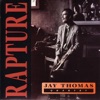
 Jay Thomas
Rapture
1996, Jazz Focus 13
|
|
The trumpet of multi-instrumentalist Thomas is smooth and languid on “I Should Care.” He’s ably accompanied by Travis Shook (p), Jon Wikon (d), and Phil Sparks (b).
|
|
 Hampton Hawes
Bird Song
2004, Water
Original recording, 1958, Orig. Jazz Classics 1035
|
|
Pianist Hawes delivers a passionate reading of “I Should Care”’ which flows along with plenty of embellishments.
|
 Mel Tormé
Tormé
2003, Verve
Original recording, 1958
|
|
Torme’s superb, melancholy vocals suit this Marty Paich arrangement to a tee. It is poignant without being overly sentimental.
|
|
|
|