|
|
|
| “What might be a mere buzz in lesser hands becomes restrained passion and detailed expression...” |
|
 |
|
- Stuart Broomer on Davis’s
“It Could Happen to You”
|
|
| |
In 1944 Dorothy Lamour and Fred MacMurray introduced “It Could Happen to You” in the Paramount musical comedy, And the Angels Sing.
|
| |
| |
|
| |
|
|
| |
| |
|
| |
|
The film tells the story of the Angel sisters, a quartet played by Lamour, Betty Hutton, Diana Lynn and Mimi Chandler, and their adventures with a bandleader played by Fred MacMurray. Other songs in the Van Heusen/Burke score include, “His Rocking Horse Ran Away,” “Bluebirds in My Belfry,” “For the Next Hundred Years,” “Knocking on Your Own Front Door,” “My Heart’s Wrapped Up in Gingham,” “When Stanislaus Got Married,” and “How Does Your Garden Grow?” Diana Lynn’s vocals were dubbed by Julie Gibson.
The first hit recording of “It Could Happen to You” was by Jo Stafford with Paul Weston and His Orchestra and entered the pop charts in July, 1944, rising to number ten. Two months later Bing Crosby’s rendition, with John Scott Trotter and His Orchestra, climbed the charts to number eighteen. Crosby’s recording was the B-side of another Van Heusen/Burke movie hit, “The Day after Forever,” from Going My Way, also 1944.
|
|
| |
|
| |
|
Jimmy Van Heusen’s use of a chromatically ascending bass line as a main theme produces a bright feeling, and, together with the relaxed melody, “It Could Happen to You” becomes a perfect vehicle for a casual, hip delivery.
|
| |
| |
|
| |
|
|
| |
| |
|
| |
|
Underscoring Van Heusen’s breezy mood, Johnny Burke’s phrases avoid sentimentality, warning those who might be easily seduced by love and referring to love only as “it.”
Hide your heart ...
Lock your dreams ...
It could happen to you
But Burke ends the song on a softer note, moving from direct advice to a supporting example,
All I did was wonder how your arms could be,
Then it happened to me.
|
|
|
|
More information on this tune... |
|
See the Reading and Research page for this tune for additional references. |
|
- Jeremy Wilson
|
|
| This section suggests definitive or otherwise significant recordings that will help jazz students get acquainted with
“It Could Happen to You.” These recordings have been selected from the Jazz History and
CD Recommendations sections.
|
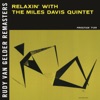
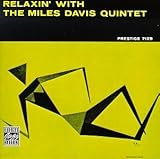
The influential Miles Davis Quintet of the 1950s provided one of the classic versions of “It Could Happen to You” in 1956 ( Relaxin' with the Miles Davis Quintet). Davis, John Coltrane and Red Garland all play delightful solos and the rhythm section of Garland, Paul Chambers and “Philly” Joe Jones is restrained but infectiously swinging. Jones also appears on Chet Baker’s version from two years later ( Chet Baker Sings It Could Happen to You). This is a definitive vocal performance for Baker, with a great interpretation of the melody and a skillful scat solo.
Noah Baerman - Jazz Pianist and Educator
|
|
Musical analysis of
“It Could Happen to You”
|
| Original
Key |
Eb major |
| Form |
A – B1 –
A – B2 |
| Tonality |
Primarily
major |
| Movement |
Scale-wise
ascending, followed by skips; generally
rising one octave before descending back
to the tonic with short upward skips on
the way down |
|
Comments
(assumed
background)
|
|
This is a laid-back song with a narrow range.
The harmonic progression is reminiscent
of “Memories
Of You” for the first five measures
(Van Heusen substitutes Gø7 and C7(b9) for
E˚7 and Aø7 and B7 forGb˚7). The next three
measures follow up with I – IV – III7 –
VI7, leading to the ii (Fm in the original
key) that starts out the first “B” section.
The first four measures of Section “B” are
ii7 – V7(sus4) – I, although Van Heusen
substitutes bVII7 (Db7) for the V7. In all
likelihood this was for coloristic reasons,
because this era (mid-to-late 1940s) marked
a period of harmonic experimentation on
the part of jazz and pop music artists.
The initial ii7 – V7 – I is followed by
vi – ii7 – V7 in the last four measures
of the first “B” section, returning the
song to the tonic at the beginning of the
second “A” section. The last six measures
of the song use an extended variation of
I – VI7 – ii7 – V7 – I, in which the composer
inserts a coloristic iii7(b5) between the
initial I and VI7, increasing the tension
before the final resolution and ending of
the song. |
|
K. J. McElrath - Musicologist for JazzStandards.com |
|
Vocalist and pianist Nat “King” Cole, under contract
to Capitol Records in 1950 along with the big band
of Stan Kenton, takes credit for one of the first
jazz recordings of this tune, as does
Erroll Garner with his version from the same
year. The next year, pianist Bud Powell and his
trio recorded their rendition for Blue Note.
Although Miles Davis’ 1956 album with this tune
is his first commercially recorded effort with it,
there is a broadcast of Davis doing the number in
1952, which ranks among the first recorded jazz
versions of this tune and makes an interesting comparison
to the later version.
Chris Tyle - Jazz Musician and Historian
|
Additional information for "It Could Happen to You" may be found in:
|
|
|
 Robert Gottlieb, Robert Kimball
Reading Lyrics
Pantheon
Hardcover: 736 pages
(Includes the following types of information: song lyrics.)
|
|
|
|
|
“It Could Happen to You” was included in these films:
- And the Angels Sing (1944,
Dorothy Lamour)
- Hannah and Her Sisters (1986,
Dick Hyman)
- New York Stories (1989) Segment
1: Life Lessons
- Michael (1996)
- The Hurricane (1999, Dinah
Washington)
- Anything Else (2003, Diana
Krall)
- How to Lose a Guy in Ten Days
(2003)
- The Prince & Me (2004)
And on stage:
- Swinging on a Star: The Johnny Burke
Musical (1995) Broadway musical
|
|
|
|
Comment Policy
- Your comments are welcome, including why you like
this tune, any musical challenges it presents, or additional background information.
- Jazz musicians, fans, and students of all ages use this website as an educational resource.
As such, off-topic, off-color, unduly negative, and patently promotional comments will be removed.
- Once submitted, all comments become property of JazzStandards.com.
By posting, you give JazzStandards.com permission to republish or otherwise distribute your comments in any format or other medium.
JazzStandards.com reserves the right to edit or remove any comments at its sole discretion.
|
|
| Click on any CD for more details at Amazon.com |
 Chet Baker
Chet Baker Sings It Could Happen to You
Ojc
Original recording 1958
|
|
This influential performance documents the early days of Baker’s relationship with the Riverside label and, as a result, with the East Coast players associated with that label. His all-star accompanists here include pianist Kenny Drew, bassist Sam Jones and drummer “Philly” Joe Jones. In addition to definitively interpreting the melody, Baker takes a brilliant scat solo that shows the almost eerie similarity between his scatting and his trumpet soloing.
|
|
 Miles Davis
Relaxin' with the Miles Davis Quintet
1991, Orig. Jazz Classics 190
Original recording, 1956, Prestige
|
|
This important album contains a snappy, upbeat version of the song. Davis, on muted trumpet, and John Coltrane, on tenor saxophone, are joined by the incomparable rhythm section of pianist Red Garland, bassist Paul Chambers and drummer Philly Joe Jones for one of a series of songs that would define the refined cool jazz sound
|
 Dinah Washington
What a Difference a Day Makes
2000, Polygram
Original recording, 1959
|
|
Vocalist Dinah Washington delivers the cautionary tale with elegance. Sweeping violins and a touch of doo-wop in the background vocals give the song added poignancy.
|
 Sonny Rollins
The Sound of Sonny
1991 Original Jazz Classics 29
Original recording 1957
|
|
Tenor saxophonist Sonny Rollins strips the song right down for one of his trademark solo runs. The sound is big and raw and powerful and fills every corner of the studio.
|
 Shirley Horn
Close Enough for Love
1990 Polygram Records 37933
Original recording 1989
|
|
Horn’s infectious interpretation of “It Could Happen To You” features some wonderful interplay with tenor saxophonist Buck Hill.
|
 Chick Corea
Origin: Live At The Blue Note
1998 Stretch 9018
|
|
This long, exploratory performance is a feature for Corea’s sextet, Origin. Each member of the group is given solo space and each of them shines.
|
 Nicholas Payton
From This Moment
1995, Polygram 527073
|
|
Nicholas Payton’s version of the song has a wonderful, old-school feel, but the quick-fingered trumpeter accents it with more than a few original sparks.
|
|
|
|