|
|
|
| “...Armstrong delivers an irresistible vocal and follows it up with some spunky trumpet playing.” |
|
 |
|
- Noah Baerman
|
|
| |
June Knight and Charles Walters introduced “Just One of Those Things” in the Broadway musical Jubilee, which opened on October 12, 1935, at the Imperial Theatre and ran for 169 performances. Jubilee was a political satire about a deposed king and queen forced to go incognito in their own country.
|
| |
| |
|
| |
|
|
| |
| |
|
| |
|
Jubilee was one of ten musicals opening that year, some of which included Jumbo, Porgy and Bess, and May Wine. Not one of these made a profit. The Great Depression was partially responsible for the show’s commercial failure, but more to blame were the mixed critical reviews and public reaction to Moss Hart’s script and Cole Porter’s lyrics which were full of inside jokes about their famous friends. This practice was not unusual for either writer. With regard to Porter, Robert Benchley once said that his lyrics often seemed to have been written with “an eye to pleasing perhaps eighteen people.” The end came when Jubilee’s star, Mary Boland, left for Hollywood.
Other songs included in Cole Porter’s score were “The Kling-Kling Bird on the Divi-Divi Tree,” “When Love Comes Your Way,” “Me and Marie,” “A Picture of Me Without You,” “Begin the Beguine,” “Mr. and Mrs. Smith,” and “Why Shouldn’t I?”
|
| |
| |
|
| |
|
Less than two months after the opening of Jubilee, the recording of “Just One of Those Things” by Richard Himber and His Orchestra (Stuart Allen, vocal) made the record charts, rising to number ten. Peggy Lee’s 1952 rendition (accompanied by The Gordon Jenkins Orchestra) rose to number fourteen.
|
|
| |
|
| |
|
|
|
|
|
More information on this tune... |
|
|
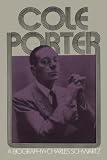 Charles Schwartz
Cole Porter: A Biography
Da Capo Press; 1st Pbk edition
Paperback: 365 pages
(Author Schwartz touches on the history of the song in his biography of the songwriter.)
|
|
|
|
See the Reading and Research page for this tune for additional references. |
|
- Jeremy Wilson
|
|
| This section suggests definitive or otherwise significant recordings that will help jazz students get acquainted with
“Just One of Those Things.” These recordings have been selected from the Jazz History and
CD Recommendations sections.
|
Louis Armstrong’s 1957 version of “Just One of Those Things” with Oscar Peterson ( Louis Armstrong Meets Oscar Peterson) is a delightful place to start when exploring this tune, faithful yet predictably full of spunk. The tune’s compatibility with burning up-tempo performances, meanwhile, is best observed on classic recordings by Bud Powell’s trio ( Complete Bud Powell on Verve) and by Max Roach’s quintet with Sonny Rollins ( Max Roach Plus Four).
Noah Baerman - Jazz Pianist and Educator
|
The lyrics to “Just One of Those Things” convey
an attitude of cool sophistication. The verse is
comic, and there is plenty of Porter’s trademark
inner rhyming in the refrain. In fact, this song
of lost love is anything but sentimental. The romance
is over but that’s no reason to show childish emotion:
Why not take the philosophical high road and reduce
the whole affair to a dismissive, colloquial phrase?
Porter’s music reflects the same lack of sentiment
with its up-tempo pace and intermittent bursts of
energy. It begs for a casual delivery. In a review
of the Porter musical, High Society, theater
critic Charles Isherwood comments, “[Daniel] McDonald
does sing pleasantly, but his earnest delivery of
“Just One of Those Things” is a lesson in how not
to handle a Cole Porter song … By contrast, for
a lesson in Porter perfection, there’s the delightful
John McMartin … Like
Fred Astaire, [James] Stewart and others, McMartin
proves with his insouciant, offhand delivery of
“I’m Getting Myself Ready for You” and “Say It With
Gin” that it’s not vocal prowess but elan that Porter
tunes require.” - JW
|
Musical analysis of
“Just One of Those Things”
|
| Original
Key |
D minor;
false key changes to Eb major and Cmajor
during the “B” section |
| Form |
A1 – A2 –
B – A3 |
| Tonality |
“A” is primarily
minor; “B” is primarily major |
| Movement |
“A” is generally
downward, interspersed with occasional upward
leaps. “B” has scale-wise and chromatic
movement upward in different ranges of the
melody with occasional upward leaps. |
|
Comments
(assumed
background)
|
|
This is one of the more challenging pieces
in the repertoire, with harmonic substitutions
that never quite resolve in an expected
way until the end. The song starts with
a i – ii7(b5) – V5, but instead of resolving
to the tonic, it goes to the relative major
(to which this song finally resolves at
the end), continuing in this key before
returning to the original key for the second
“A” section.
Modulating to the new key of the “B”
section, this relative major (F major in
the original) turns to parallel minor, becoming
the ii7 of the new key, which is a half-step
up from the initial tonic key (i.e., Eb
in the key of D minor). Eight measures later,
the new key lands on its own vii7 (corresponding
to the initial tonic, but unrecognizable
in this context), or aii7 of the next key
built on the seventh of the initial tonic
(in the original, C major). Porter follows
this with a descending progression that
ends on a common-tone diminished chord built
on the flatted third scale degree of the
key of the moment (Eb in the original).
This resolves to a ii7 – V7 in what the
ear expects to be F major (relative major
of the initial key). Instead, Porter surprises
us yet again by going directly back to the
initial key of D minor. (Some theorists
might regard the C major chord at this point
as a substitution for V7 or v.) The three
“A” sections are all subtly different; they
are identical except for the penultimate
phrases: “one of those bells,” followed
by “a trip to the moon,” and ending
with “it was great fun”. In each
case, each italicized word comes at a higher
pitch than its predecessor.
This all may seem intimidating at first
and may be part of the reason that bebop
pioneers were the first artists to explore
the possibilities of this piece in a jazz
context. Nevertheless, careful study of
this tune shows that the harmonic progression
does, indeed, follow most of the orthodox
“rules” of voice leading. The serious jazz
player should learn the head thoroughly,
analyze the changes for the strong guide-tone
lines present, and trust his/her aural sensibilities
of what sounds right.
|
|
K. J. McElrath - Musicologist for JazzStandards.com |
|
Pianist Garland Wilson (1909-1954) was not a
well-known figure in jazz, but his 1936 recording
of “Just One of Those Things,” made in London, shows
he was well-versed in the Harlem stride piano style
as he rips through the tune.
A splendid 1944 recording features the great
pianist
Teddy Wilson along with Coleman Hawkins (tenor
sax), John Kirby (bass) and Sid Catlett on drums---an
all-star group that gives Cole Porter’s song a first-class
treatment.
Wilson was on hand again for a session by the
Benny Goodman Sextet, including vibraphonist
Red Norvo, in 1945, and the following year Teddy
recorded the number with his own all-star octet.
Chris Tyle - Jazz Musician and Historian
 Coleman Hawkins
1944
Classic 842
|
|
|
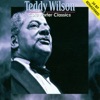
 Teddy Wilson
1946
Classics 997
|
|
|
|
|
Additional information for "Just One of Those Things" may be found in:
|
|
|
Charles Schwartz
Cole Porter: A Biography
Da Capo Press; 1st Pbk edition
Paperback: 365 pages
(1 paragraph including the following types of information: history.)
|
|
|
|
|
 Robert Kimball, Brendan Gill
Cole: A Biographical Essay
Overlook Press
Hardcover: 283 pages
(Includes the following types of information: song lyrics.)
|
|
|
|
|
 Robert Gottlieb, Robert Kimball
Reading Lyrics
Pantheon
Hardcover: 736 pages
(Includes the following types of information: song lyrics.)
|
|
|
|
|
 Gerald Mast
Can't Help Singin'
Overlook Press; Rei edition
Paperback: 400 pages
(1 paragraph including the following types of information: lyric analysis.)
|
|
|
|
|
“Just One of Those Things” was included in these films:
- Panama Hattie (1942, Lena
Horne)
- Night and Day (1945,
Ginny Simms)
- Lullaby Of Broadway (1951,
Doris Day)
- The Jazz Singer (1953, Peggy
Lee)
- Young at Heart (1955,
Frank Sinatra)
- Can-Can (1960, Maurice Chevalier)
- At Long Last Love (1975, Burt
Reynolds)
- De-Lovely (2004, Diana Krall)
|
|
|
|
Comment Policy
- Your comments are welcome, including why you like
this tune, any musical challenges it presents, or additional background information.
- Jazz musicians, fans, and students of all ages use this website as an educational resource.
As such, off-topic, off-color, unduly negative, and patently promotional comments will be removed.
- Once submitted, all comments become property of JazzStandards.com.
By posting, you give JazzStandards.com permission to republish or otherwise distribute your comments in any format or other medium.
JazzStandards.com reserves the right to edit or remove any comments at its sole discretion.
|
|
| Click on any CD for more details at Amazon.com |
 Max Roach
Plus Four
Polygram Records
Original Recording 1956
|
|
This recording documents drummer Roach’s triumphant return to the studio after the tragic deaths in a car accident of his trumpet player Clifford Brown and pianist Richie Powell. With Kenny Dorham and Ray Bryant on board in their places, the group unleashes a jaw-droppingly fast version of “Just One of Those Things,” featuring a particularly blazing solo turn from Sonny Rollins on tenor saxophone.
|
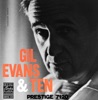
 Gil Evans
Gil Evans and Ten
Original Jazz Classics 346
Original recording 1957
|
|
Evans’ quirky arrangement and the swinging work of his band are noteworthy here, but the real star is soprano saxophonist Steve Lacy. Lacy, who would record his solo debut the following month, is the featured soloist here and already shows the unique style that would make him a major influence on his instrument.
|
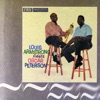
 Louis Armstrong
Louis Armstrong Meets Oscar Peterson
1997 Verve 539060
Original recording 1957
|
|
With expert backing from pianist Peterson and his quartet, Armstrong delivers an irresistible vocal and follows it up with some spunky trumpet playing.
|
 Bud Powell
Complete Bud Powell on Verve
Polygram Records
Original recording 1955
|
|
Powell is heard here still in his prime, ripping through “Just One of Those Things” in an up-tempo solo piano performance that shows his stunning dexterity and mastery of improvisation over chord changes.
|
 Cannonball Adderley
Things Are Getting Better
Ojc
Original Recording 1958
|
|
Saxophonist Adderley and vibraphonist Milt Jackson were two of the hardest-swinging players in jazz history, and the expectations of their collaboration are fulfilled wonderfully on their version of “Just One of Those Things.” The presence of Wynton Kelly, Percy Heath and Art Blakey certainly does not hurt either.
|
|
 Randy Weston
Solo, Duo & Trio
2000 Milestone Records 47085
Original recording 1950
|
|
These recently reissued, early recordings show the influence of Thelonious Monk and the Africanisms that Weston would develop fully during his years in Nigeria. “Just One of Those Things” is light as feather in tandem with bassist Sam Gill.
|
 Joanne Brackeen
Havin' Fun
1990, Concord 280
Original recording, 1985
|
|
In a wildly uptempo version with Cecil McBee (bass) and Al Foster (drums) Brackeen clusters chords and runs up and down the keys with abandon. She’s havin’ fun. A small complaint concerns the way several of the cuts fade out instead of coming to completion.
|
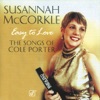
 Susannah McCorkle
Easy to Love: Songs of Cole Porter
1996, Concord 4696
|
|
The vocal/guitar combination on “Just One of Those Things” lends a heartbreaking air to the song. McCorkle sings straight-ahead and with wonderful accompaniment throughout.
|
|
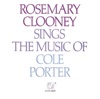
 Rosemary Clooney ...
Sings the Music of Cole Porter
1992, Concord 4185
Original recording, 1985
|
|
Ms. Clooney shows a deep understanding of Porter's music, both his rollicking sense of humor and his tender emotion. Backing the vocalist are Scott Hamilton (ts), Warren Vache (t), Jake Hanna (d), Nat Pierce (p), and Cal Tjader on vibes.
|
|
|
|