|
|
|
| “With nothing satisfactory on paper, Raksin read a ‘Dear John’ letter from his wife, and the haunting melody seemed to write itself.” |
|
 |
|
- JW
|
|
| |
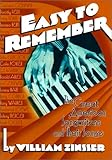
Conceived amidst conflict, the title theme for the 1944 Twentieth Century Fox film Laura was composed almost as an afterthought. According to author William Zinsser in his book, Easy to Remember: The Great American Songwriters and Their Songs, director Otto Preminger had chosen Duke Ellington’s “Sophisticated Lady” as a theme for Laura, but composer David Raksin felt it did not suit the character. Raksin was given the weekend to come up something new. By Sunday, with nothing satisfactory on paper, he read a “Dear John” letter from his wife, and the haunting melody seemed to write itself.
Shortly after Laura was released, Abe Olman of Robbins Music asked Johnny Mercer to write lyrics for Raksin’s theme. Although Mercer had seen the film, he confessed that he really didn’t remember the tune. Olman provided Mercer with the music and advised him that the title had to be “Laura.” After a few weeks, Mercer grew to love the song and completed the lyrics. In 1945 five separate recordings of “Laura” appeared on the pop charts with the Woody Herman and His Orchestra’s rendition becoming a million-seller hit:
- Woody Herman and His Orchestra (Woody Herman, vocal, #4)
- Johnnie Johnston (with Paul Baron and His Orchestra, #5)
- Freddy Martin and His Orchestra (#6)
- Jerry Wald and His Orchestra (Dick Merrick, vocal, #8)
- Dick Haymes (with Victor Young and His Orchestra, #9)
|
|
| |
|
| |
|
In 1946 “Laura” made it to number one on the Hit Parade for 14 weeks and five years later Stan Kenton and His Orchestra made it to #12, featuring Art Pepper’s alto sax.
|
| |
| |
|
| |
|
Laura, starring Gene Tierney, Clifton Webb, Dana Andrews, and Vincent Price has enjoyed great popularity and is considered one of the best-scripted and wittiest examples of the 1940’s and 1950’s film noir wave. It was nominated for five Academy Awards, including Best Actor (Webb), Best Director (Preminger), and Best Screenplay, and won for the category Best Cinematography, Black-and-White. Oddly enough, in retrospect, the score went unacknowledged.
The sophisticated dialogue and stylish atmosphere, in juxtaposition with the underlying themes of murder and betrayal, make the film particularly intriguing. In his book Great Hollywood Movies, Ted Sennett says of Laura, “...its principal fascination lies in the many perverse and distasteful implications that are concealed beneath its surface.”
Raksin’s theme and variations are played throughout the film and, with a few exceptions, constitute the soundtrack. Film critic Roger Ebert comments, “That Laura continues to weave a spell--and it does--is a tribute to style over sanity. No doubt the famous musical theme by David Raksin has something to do with it. The music lends a haunted, nostalgic, regretful cast to everything it plays under, and it plays under a lot.”
Indeed, in a self-conscious gesture, the film’s characters even refer to the soundtrack theme. Detective McPherson (Andrews) enters Laura’s apartment with her mentor Waldo Lydecker (Webb) and her fiancee Shelby Carpenter (Price). McPherson turns on the phonograph and plays “Laura.”
Lydecker: “Would you mind turning that off?”
McPherson: “Why, don’t you like it?”
Carpenter: “It was one of Laura’s favorites, not exactly classical, but sweet.”
Nearly two decades after winning the “Laura” debate with Preminger, Raksin further demonstrated his leadership skills becoming President of the Composers and Lyricist Guild of America (1962-70). In that capacity he took a delegation of American composers to Brazil for a popular song festival where, upon request, he sang “Laura” for an audience of 18,000, adding a Portuguese finale!
|
| |
| |
|
| |
|
When Olman asked Mercer to add lyrics to “Laura,” Mercer was faced with a double challenge. He would not only have to write quality lyrics for a complex and established song but also pen words that would perpetuate the weighty intrigue of a character with whom the public was already acquainted. Mercer created what many feel is an example of his finest work, immortalizing a tune that might otherwise have drifted into obscurity.
Mercer’s lyrics extend the feeling of mystery and intrigue in the introductory verse,
“You know the feeling of something half remembered,
Of something that never happened, yet you recall it well.”
...
and subsequently by describing Laura through a series of elusive attributes: a face in the misty light, footsteps down the hall, a floating laugh, and as a woman on a passing train. With no variations and just a sixty-two-word refrain, the lyrics are handled economically as well as effectively.
|
| |
| |
|
| |
|
|
|
|
|
More information on this tune... |
|
|
 George T. Simon
Big Bands Songbook
Barnes & Noble
Paperback
(Author/drummer Simon devotes four pages to the story behind the song and the musicians who have performed it. H also includes the sheet music.)
|
|
|
|
See the Reading and Research page for this tune for additional references. |
|
- Jeremy Wilson
|
|
| This section suggests definitive or otherwise significant recordings that will help jazz students get acquainted with
“Laura.” These recordings have been selected from the Jazz History and
CD Recommendations sections.
|
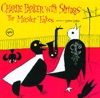
Erroll Garner’s 1945 reading of “Laura” ( 1945-1946) was a landmark recording of the tune and still sounds impossibly lush for a piano trio performance. That lushness carried over, as many of the most significant versions to follow were those featuring lush string backdrops, most significantly Charlie Parker’s version from 1950 ( Charlie Parker with Strings: The Master Takes). Julie London’s classic version from 1955 ( Julie Is Her Name, Vol. 1-2), accompanied by only bass and Barney Kessel’s guitar, is a wonderful starting point for vocal fans.
Noah Baerman - Jazz Pianist and Educator
|
|
Musical analysis of “Laura”
|
|
Original Key
|
Two flats, but with so much wandering tonality and irregular resolution as to make a key designation meaningless. Begins with a Gm9, with a tonality of F major ending on a Bb.
|
|
Form
|
A -B1 -A -B2
|
|
Tonality
|
Starts minor, alternating back and forth between minor and major before ending on major.
|
|
Movement
|
Primarily skips (3rd and 4ths), with liberal use of chromatic embellishing tones.
|
|
Comments (assumed background)
|
|
This is one of the most beautiful of the lush ballads emerging from the late 1940’s. There is strong Impressionist influence with constantly shifting keys, which nonetheless have a definite descending pattern. In the first three key changes (mm.1-12), each new key is a whole step lower than its predecessor. This makes aural sense, because each “I” chord of the moment turns minor, becoming a ii leading to V7 of the new key (bearing some relation and resemblance to the progression used in “How High The Moon”). In the fourth key change (mm.13-16), a “common-tone” modulation is used, in which the melody tone-the root tone of the moment-becomes the flatted 5th of a ii7chord leading to the V7 of the starting tonality of F major. The second time this happens (mm.25-26), the common tone chord is formed by the bass descending a minor third, forming a chord that functions as a ii7 for an entirely new key (in the original, Bb). While unusual and even exotic, the chord progressions use fairly standard modulations. The trick to learning this tune lies in paying attention to these modulations and trusting one’s ear.
|
|
K. J. McElrath - Musicologist for JazzStandards.com
|
|
Saxophonists seem to be the musicians who latched
on to this tune first, followed closely by a version
recorded by pianist
Erroll Garner, who had a number of firsts with
tunes of this genre. Don Byas is the saxophonist
who gets the credit for making the first recording
in 1945 for the short-lived indie label American.
Veteran soprano saxophonist Sidney Bechet’s version
from 1947 showed that he wasn’t daunted by more
current material than he normally performed.
Probably the most famous of the early recordings
is the one by alto saxophonist Charlie Parker, accompanied
by a string orchestra. Parker’s wonderful performance
on this album was a critical success and led to
many other “artist with strings” concept albums.
Chris Tyle - Jazz Musician and Historian
|
Additional information for "Laura" may be found in:
|
|
|
George T. Simon
Big Bands Songbook
Barnes & Noble
Paperback
(4 pages including the following types of information: anecdotal, song writer discussion, performers and sheet music.)
|
|
|
|
|
 Thomas S. Hischak
The Tin Pan Alley Song Encyclopedia
Greenwood Press
Hardcover: 552 pages
(1 paragraph including the following types of information: film productions, history and performers.)
|
|
|
|
|
 Robert Gottlieb, Robert Kimball
Reading Lyrics
Pantheon
Hardcover: 736 pages
(Includes the following types of information: song lyrics.)
|
|
|
|
|
“Laura” was included in these films:
- Laura (1946)
- Bird (1988, Charlie Parker,
saxophone; Barry Harris, piano; Chuck Berghofer,
bass; John Guerin, drums)
- The Spike Jones Story (1988,
Spike Jones and His City Slickers)
- Midnight in the Garden of Good and
Evil (1997, Kevin Mahogany)
And on stage:
- Dream: The Johnny Mercer Musical
(1997) Broadway revue
|
|
|
|
Comment Policy
- Your comments are welcome, including why you like
this tune, any musical challenges it presents, or additional background information.
- Jazz musicians, fans, and students of all ages use this website as an educational resource.
As such, off-topic, off-color, unduly negative, and patently promotional comments will be removed.
- Once submitted, all comments become property of JazzStandards.com.
By posting, you give JazzStandards.com permission to republish or otherwise distribute your comments in any format or other medium.
JazzStandards.com reserves the right to edit or remove any comments at its sole discretion.
|
|
| Click on any CD for more details at Amazon.com |
 Ran Blake and Jeanne Lee
Newest Sound Around
2004 BMG International 174805
Original recording 1961
|
|
Lee and Blake offer a sparse and truly haunting version of “Laura” on this groundbreaking album.
|
 Oscar Peterson
At Zardi's
1994 Pablo 20118
Original recording 1955
|
|
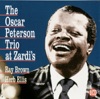
The bulk of this performance features a subtle, lyrical performance by Peterson with bassist Ray Brown and guitarist Herb Ellis. Peterson book-ends this with dramatic, ornate solo piano explorations at the beginning and end of the tune.
|
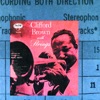
 Clifford Brown
Clifford Brown with Strings
Polygram Records 558078
Original recording, 1955
|
|
The relative merits of Neil Hefti’s string arrangements here are open to debate. Whatever your feelings about strings may be, however, Brown’s interpretation of the melody to “Laura” is definitive.
|
|
 Julie London
Julie Is Her Name Vol 1 & 2
1992 Capitol 99804
Original recording 1955
|
|
In a rare female vocal treatment of “Laura,”’ London gives it the sultry, intimate treatment that is her trademark. Since the lyric is written in third person, this works well. The CD contains London’s signature song, “Cry Me a River,”’ as well as several other standards.
|
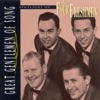
 Four Freshmen
Four Freshmen In Person/Voices & Brass
Collector's Choice
|
|
This rendition of “Laura” features the close, modern harmonies of the vocal group, the Four Freshmen, highlighted by a trombone choir conducted by arranger Pete Rugolo.
|
|
 Teddy Edwards Quartet
Good Gravy
1991 Orig. Jazz Classics 661
Original recording, 1961
|
|
The tenor saxophonist leads this tight quartet through a highly refined rendition of “Laura”’ that highlights bassist Leroy Vinegar’s exemplary playing.
|
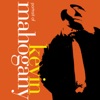
 Kevin Mahogany
Portrait Of Kevin Mahogany
2000, Warner Bros.
|
|
Vocalist Mahogany delivers an emotional reading of the song that is all the more haunting given Mahogany’s rich, evocative baritone.
|
 Charles Mingus
Mingus Three
1997, Blue Note 57155
Original recording, 1957
|
|
Bassist Mingus, pianist Hampton Hawes, and drummer Dannie Richmond perform a stripped down rendition of the tune that allows each musician ample room for thoughtful improvisation.
|
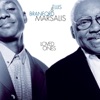
 Ellis and Branford Marsalis
Loved Ones
1996, Sony, 67369
Original recording, 1995, Columbia
|
|
“Laura” is the perfect vehicle for Branford’s soprano sax with its plaintive sound. In the liner notes, Branford acknowledges his borrowing from Charlie Parker’s version of “Just Friends” for his solo. The elder Marsalis provides lovely piano accompaniment.
|
|
|
|