|
|
|
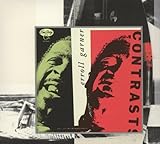
| “When I was sequencing this session I heard two of Erroll’s distinct facets: the romantic balladeer and the hard-driving, swinging guy. So I decided to call the album Contrasts.” |
|
 |
|
- Martha Glaser
|
|
| |
In 1954 the Erroll Garner Trio introduced the instrumental “Misty.” A year later Johnny Burke penned the lyrics, creating the song we know today. “Misty” remained relatively unknown until Johnny Mathis popularized the vocal version with his million-selling recording in 1959. Versions of “Misty” to make the pop charts include
- Error Garner Trio (1954, instrumental, #30)
- Johnny Mathis(1959, #12)
- Lloyd Price (1963, #21)
- Ray Stevens (1975, #14)
|
|
| |
|
| |
|
Although it was never a number one hit, “Misty” has been performed by hundreds of instrumentalists and vocalists. Ray Stevens, who is best known for novelty songs such as “Ahab the Arab,” won a Grammy Award for Best Arrangement with a hit recording he says came about by accident. During a rehearsal he and his band were fooling around and played “Misty” on a banjo, a fiddle, and a steel guitar. They liked the sound and recorded it, never expecting “Misty” would bring Stevens his second Grammy.
|
| |
| |
|
| |
|
There are several variations of the origin of “Misty.” One has Erroll Garner sitting on an airplane waiting for take off and looking out the window into the mist and observing a rainbow; another has him in the air flying from Chicago to New York; and a third simply says he was in an airplane thinking about his wife. Regardless, as a musician who could neither read nor write music, he hummed the tune to himself repeatedly while he hurried home to play his melody on the piano for transcription.
Paul McCartney has said he woke up with the melody to “Yesterday” in his head but felt he had heard it before so did not record it until verifying its originality with a number of friends. Once transcribed, Erroll Garner, like McCartney, wondered if “Misty” was a composition he had heard before but not remembered.
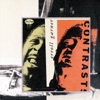
“Misty” was originally introduced via Erroll Garner’s Contrasts album on the EmArcy label in 1954. The album title was courtesy of Garner’s manager, Martha Glaser, who recalls, “When I was sequencing this session I heard two of Erroll’s distinct facets: the romantic balladeer and the hard-driving, swinging guy. So I decided to call the album Contrasts.”
The success of his ballad has created an interesting irony: “Misty” is not an imitation as Garner once feared it could be but rather a source for imitation by others. The inventive and briskly changing harmonic structure is often used as the basis for jazz improvisation, one famous example being Billy Eckstine’s “I Want to Talk about You.”
|
| |
| |
|
| |
|
Called “the ultimate love song,” Garner wrote “Misty” in the 32-bar A1-A2-B-A2 form with no verse. For lyricist Johnny Burke, fitting lyrics to the already-written composition was undoubtedly a bit constraining. With a title like “Misty,” the sentimental tone of the song was preordained. But within his constraints Burke found latitude, choosing an air of loving tenderness instead of sorrow or nostalgia. Loving and tender need not imply a lack of confidence, but Burke portrayed exactly that with his phrases, “I’m...helpless,” “I’m clinging,” “I can’t understand,” “I’m lost,” etc. Interestingly, this depiction of lovesick romance has not discouraged appreciative listeners, instrumentalists, or vocalists. “Misty” has become Garner’s best-known composition. ASCAP named it as one of the 25 most performed standards of the 20th Century, and no other song published since 1954 has been recorded by more jazz artists except for “Satin Doll” (1958), which was originally recorded as an instrumental in 1953.
“Misty” is also well known as the title song for the movie thriller, Play Misty for Me (1971), in which Clint Eastwood starred and made his directorial debut. Eastwood plays a late-night disc jockey who has a casual affair with one of his listeners. She in turn becomes his stalker, calling his request line several times each night, saying in her throaty voice, “Play ‘Misty’ for me.” Also featured in the film was Roberta Flack’s “The First Time Ever I Saw Your Face,” which became one of the biggest hits of the 1970’s.
|
|
|
|
More information on this tune... |
|
|
 Robert Gottlieb, Robert Kimball
Reading Lyrics
Pantheon
Hardcover: 736 pages
(This book features a short biography of Johnny Burke and nine pages of his lyrics, including those for “Misty.”)
|
|
|
|
See the Reading and Research page for this tune for additional references. |
|
- Jeremy Wilson
|
|
| This section suggests definitive or otherwise significant recordings that will help jazz students get acquainted with
“Misty.” These recordings have been selected from the Jazz History and
CD Recommendations sections.
|
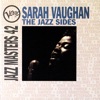
Erroll Garner’s original version of “Misty” ( Contrasts) is obviously of great historical significance, and it is still a musical tour de force, displaying his lush and unique approach to ballads. Sarah Vaughan, meanwhile, developed a strong affinity for “Misty,” evidenced by her many recordings of the tune, particularly her 1963 live recording of the tune from a performance in Denmark ( Verve Jazz Masters 42). And while the tune is still generally interpreted as a ballad, the hard-swinging Richard “Groove” Holmes recording of “Misty” ( Soul Message) was a sensation in 1965 and stands out as one of the landmark moments in the history of organ jazz.
Noah Baerman - Jazz Pianist and Educator
|
“Misty’s” distinctive melody is immediately recognizable by most music fans upon hearing just the first three notes. An allusion to the melody may be heard in Wes Montgomery’s “What’s New” on Smokin’ at the Half Note, beginning in measure eight and recurring several more times later in the recording. -JW
Take a look at the comments by Jim Clark on the musical analysis in the Musician’s Comments section, below.
|
Musical analysis of “Misty”
|
|
Original Key
|
Eb major (See Musicians’ Comments, below)
|
|
Form
|
A1 -A2 -B -A2
|
|
Tonality
|
Primarily major
|
|
Movement
|
Primarily skips and soaring leaps up and down; some step-wise movement in both directions
|
|
Comments (assumed background)
|
|
One of the most popular ballads among musicians in every genre, the melody soars over a range of nearly two octaves with many pitches falling on color tones or chord extensions (mainly the major seventh, the ninth and the eleventh). Use of both eighth-note and quarter-note triplet figures create internal contrast with the “straight eighths,” adding rhythmic interest (important in a slow-moving ballad). The chord progression of section “A” is actually quite similar to that of “Cherokee” (I -v7 -I7 -IV -iv -I- vi -ii7 -V7) until measure 6 (while the ii7 -V7 in measure six would work in the latter tune, its ii -iii7(b5) turnaround would clash badly with the melodic pitches of the present tune). The first ending uses a lovely delaying, circle-of-fifths cadence starting on III7 (G7(b5) in the original key) before returning to the tonic for the second “A.” Section “B” begins with a fairly orthodox harmonic progression- v -I7 -iv, in which the I7 functions as a V7of the new subdominant key (in the original key, Eb modulating to Ab). But then the IV chord (Ab) is followed by a minor 7th chord a half step higher. Aural experience tells our ears to expect this Am7, which is followed by a D7, to be a ii7 -V7 sequence to G major or G minor. Instead, Garner surprises us once again by a deceptive resolution to Cm, the vi of the original tonic of Eb. From there, it’s an easy modulation back to the tonic (but what a fascinating detour!)
|
|
K. J. McElrath - Musicologist for JazzStandards.com
|
|
Vocalist Dakota Staton never quite garnered the
popularity of vocalists like
Sarah Vaughan and Ella Fitzgerald. Nevertheless,
she was a talented singer, and her 1957 recording
of “Misty,” from one of her best selling albums,
attests to that fact.
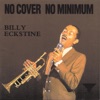
Billy Eckstine, whose 1940s big band boasted
some of the giants of bebop like
Dizzy Gillespie and Charlie Parker, maintained
a steady solo career until his death in 1993. His
version, a live performance from 1960, shows his
great vocal command and ability with a ballad.
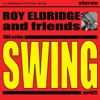
Following the popularity of Johnny Mathis’ 1959
hit, record producers rushed many cover versions
in 1960 and 1961. Swing era trumpeter Roy Eldridge’s
1960 version is a perfect example of his ability
to play a ballad.
Chris Tyle - Jazz Musician and Historian
|
Additional information for "Misty" may be found in:
|
|
|
Robert Gottlieb, Robert Kimball
Reading Lyrics
Pantheon
Hardcover: 736 pages
(Includes the following types of information: song lyrics.)
|
|
|
|
|
“Misty” was included in these films:
- Play Misty for Me (1971)
- Defending Your Life (1991,
Erroll Garner)
- Texas Tenor: The Illinois Jacquet
Story (1991)
- Manhattan Murder Mystery (1993,
Erroll Garner)
- Naked Gun 33-1/3 (1994, Johnny
Mathis)
- Ocean’s Eleven (2001, Liberace)
And on stage:
- Swinging on a Star: The Johnny Burke
Musical (1995) Broadway musical
And on television:
- Today Show (1962) theme music
for NBC morning news magazine
- The Muppet Show (1978, Liberace)
Episode 57
- My House in Umbria (2003)
HBO
|
|
|
|
Comment Policy
- Your comments are welcome, including why you like
this tune, any musical challenges it presents, or additional background information.
- Jazz musicians, fans, and students of all ages use this website as an educational resource.
As such, off-topic, off-color, unduly negative, and patently promotional comments will be removed.
- Once submitted, all comments become property of JazzStandards.com.
By posting, you give JazzStandards.com permission to republish or otherwise distribute your comments in any format or other medium.
JazzStandards.com reserves the right to edit or remove any comments at its sole discretion.
|
|
| Click on any CD for more details at Amazon.com |
 Erroll Garner
Contrasts
Polygram Records
Original recording 1954
|
|
This is Garner’s original recording of the tune that would become his best known work. His trio accompanies him with sensitivity and he makes good use of his signature techniques such as the guitar-like left hand chords and the playing of the ballad melody in broken octaves.
|
 Richard "Groove" Holmes
Soul Message
1995 Original Jazz Classics 329
Original recording 1965
|
|
Take a ballad or pop tune, play a greasy, swinging, double-time groove underneath the melody and add a “Charleston” rhythm with the guitar. This is what organist Holmes did with “Misty,” and the result was an irresistibly funky performance and a huge hit that even made the pop charts in 1965. This approach subsequently became a formula that countless other organists have used in creating swinging jazz organ interpretations of seemingly unlikely material.
|
|
 Sarah Vaughan
The Jazz Sides, Jazz Masters 42
Polygram 526817
Original recording, 1963
|
|
The live performance on The Jazz Sides took place in Copenhagen, and it is a treasure. Vaughan gives "Misty"' the beauty treatment with her trio although she throws in a few new turns so that it doesn't get maudlin. But her pianist, Kirk Stuart, is inspired to sing a chorus (great voice, by the way) and then together they go for broke, hamming it up with moans and sighs. Wish I'd been there.
|
 Lou Donaldson
A Man with a Horn
1999 Blue Note 21436
Original recording 1961
|
|
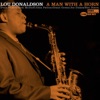
Alto saxophonist Lou Donaldson delivers a romantic and mellow reading of the song that features Grant Green on guitar and Jack McDuff at the organ.
|
 Joe Pass
Virtuoso No. 2
1990 Pablo 788
Original recording 1976
|
|
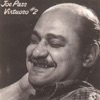
Pass gives a clinic in solo guitar ballad playing with his rendition of “Misty.” His lush interpretation begins in free time before imparting a gentle swing.
|
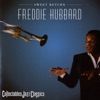
 Freddie Hubbard
Sweet Return
2001 Collectibles 6182
Original recording 1983
|
|
Hubbard’s skill with ballads is on display on this performance. He plays the flugelhorn here and is backed by an all-star band that includes pianist Joanne Brackeen, who gets a nice solo turn of her own.
|
 Ray Bryant
Meet Betty Carter and Ray Bryant/Little Susie
1995, Collectables 5676
Original recording, 1955
|
|
On the first of this 2-LP CD Bryant leads a trio with bright and concise piano work as drummer Philly Joe Jones and bassist Wendell Marshall maintain a very laid back tempo.
|
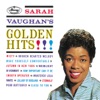
 Sarah Vaughan
Golden Hits
1990, Polygram 824891
Original recording, 1967, Mercury
|
|
The Golden Hits compilation opens with Vaughan’s definitive studio version of the song where she is backed by a lush arrangement that is both eloquent and engaging.
|
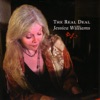
 Jessica Williams
The Real Deal
2004, Hep Jazz
|
|
Pianist Williams, in a solo setting, treats “Misty” first as a tender ballad, albeit laced with improvisations on the melody and time. The second time around she gives it the Garner touch with plenty of subtle and amusing quotes.
|
 Richard "Groove" Holmes
Misty
1996, Original Jazz Classics 724
Original recording, 1965
|
|
While certainly not for everyone, Holmes’ upbeat version of “Misty” filters out much of the melancholia. The organist swings through the song, infusing it with funk and heavy groove.
|
|
|
|