|
|
|
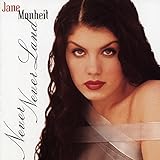
| “Exquisite phrasing and a rich, sultry voice make vocalist Monheit’s reading of ‘More Than You Know’ a treat. ” |
|
 |
|
- Ben Maycock
|
|
| |
Mayo Methot introduced “More Than You Know” in Great Day, a Broadway musical that opened at the Cosmopolitan Theatre on October 17, 1929, and ran for 36 performances.
|
| |
| |
|
| |
|
Although the musical was a flop, three of the Youmans/Eliscu/Rose songs were not. “More Than You Know,” “Great Day,” and “Without a Song,” became hits within weeks of the show’s closing. A recording of “Great Day,” by Paul Whiteman and His Orchestra, was a number one hit for two weeks, and its flip side, “Without a Song,” which was also to become a jazz standard, climbed the charts to the number six position.
“More Than You Know” was a number nine hit for Ruth Etting and enjoyed success with:
- Ruth Etting (1930, #9)
- Mildred Bailey (1937, #15)
- Perry Como (1946, #19)
- Martika (1989, #18)
Perry Como’s rendition was the B-side to his number one hit “Surrender.”
|
|
| |
|
| |
|
Great Day was a significant turning point in the life of Harold Arlen. Initially Arlen had earned a singing and acting role (Cokey Joe) in the production, but, when his part was cut, the show’s accompanist and arranger Fletcher Henderson asked Arlen to help him with music for the pit orchestra. When Henderson fell ill, Arlen took over playing piano for the dancers. Between dance numbers Arlen began picking out a song which, with lyricist Ted Koehler, would become “Get Happy” (1929), thus launching one of the best popular songwriting careers of all time.
Soon after the musical’s closing, MGM purchased the rights for Great Day. Despite the show having fizzled, the resulting recordings and sheet music sales had done quite well. Planned for release in 1930, and starring Joan Crawford, the film version of Great Day was given the axe in the middle of pre-production. The exact reason for the shutdown is not clear, but it is rumored that Crawford turned in a bad performance because she was angry with producer Irving Thalberg. Apparently Thalberg had given the lead role for The Divorcee (1930) to his wife, Norma Shearer, who went on to win that year’s Oscar for Best Actress.
The British RKO film Great Day (1945) is not related to the Broadway musical.
|
| |
| |
|
| |
|
|
| |
| |
|
| |
|
|
| |
| |
|
| |
|
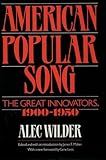
In describing Youmans’ “More Than You Know,” Alec Wilder, author of American Popular Song: The Great Innovators, 1900-1950, says, “It ranks among the best of the pop songs...” and that the verse is “nearly a song in itself ...clearly written with great care and affection.” Agreeing with Wilder is BBC Radio2 presenter (also, producer, writer, jazz musician, and film critic) Russell Davies:
Not every verse in the Great American Songbook is worth keeping - some of them are too far embedded in the plots of Broadway shows and the like. Others, almost too grippingly written, threaten to take on an independent identity of their own. Listening to the verse of “More Than You Know,” you could easily be persuaded that this was a quite different song called “I’m Growing Fonder of You.”
The prospect was not lost on Fats Waller, who in 1934 published “I’m Growing Fonder of You,” recorded that year by Kate Smith and by Ted Weems and His Orchestra featuring vocalist Fred Waldmar.
Regrettably, jazz vocalists and musicians often omit the verse to “More Than You Know.” It can, however, be heard by the following artists: Sarah Vaughan (How Long Has This Been Going On?), Ella Fitzgerald (Like Someone in Love), Rosemary Clooney (Girl Singer), and Stacey Kent (Close Your Eyes).
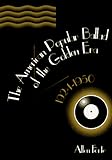
With regard to its harmonization, “More Than You Know” is more basic than many of the popular songs of the ‘30s, but, according to Allen Forte in The American Popular Ballad of the Golden Era, 1924-1950: A Study in Musical Design, the harmony for that era is “very much up-to-date and comparable to Gershwin’s of the same vintage.”
|
|
|
|
More information on this tune... |
|
See the Reading and Research page for this tune for additional references. |
|
- Jeremy Wilson
|
|
| This section suggests definitive or otherwise significant recordings that will help jazz students get acquainted with
“More Than You Know.” These recordings have been selected from the Jazz History and
CD Recommendations sections.
|
Billie Holiday, in one of her inspired collaborations with pianist and bandleader Teddy Wilson, made a classic recording of “More Than You Know” in 1939 ( The Quintessential Billie Holiday, Vol.7: 1938-1939). Sonny Rollins, accompanied by Thelonious Monk and others, performed a brilliant instrumental version in 1954 ( Moving Out) that stands out among modern instrumental renditions of the tune.
Noah Baerman - Jazz Pianist and Educator
|
|
Musical analysis of
“More Than You Know”
|
| Original
Key |
Ab major;
bridge temporarily changes key to C minor
and Eb major |
| Form |
A1 - A2 –
B – A3 |
| Tonality |
Major, except
for the first four measures of section “B” |
| Movement |
“A” is a
three-note ascending chromatic figure, followed
by a minor third skip upward. After a pentatonic
descent, the sequence repeats. “B” descends
step-wise an octave and then repeats the
sequence a minor third higher. |
|
Comments
(assumed
background)
|
| This is an excellent example of a very simple
and basic harmonic progression made to sound
very complex by use of a sophisticated,
chromatic melodic line and several embellishing
chords and substitutions. Stripped of these
elements, “A” is I – IV – V7–I, while “B”
is a simple I – V7 – I in two different
keys (the first actually being a minor i
– v – i). Because most of the important
melodic tones do not fall on chord extensions
or color tones, jazz artists have found
great opportunities to experiment with chord
substitutions and extended harmonies. |
|
K. J. McElrath - Musicologist for JazzStandards.com |
|
Two recordings from 1939 sparked a renewed interest
in “More Than You Know” from a decade earlier. In
an usual coincidence, both recordings have a musician
in common, but playing a different instrument on
each recording. The multi-instrumentalist was Benny
Carter.
Carter, on alto saxophone, solos on
Billie Holiday’s version from January, 1939.
Eleven months later Carter would record his own
arrangement of the tune, a feature for his marvelous
trumpet playing. One of Carter’s sidemen, the wry
trombonist Vic Dickenson, opined “It’s the greatest
trumpet solo he made. Maybe it’s the greatest trumpet
solo ever. Absolutely beautiful.” French jazz critic
Hughes Panassie concurred, calling it “one of the
most beautiful, inventive trumpet solos ever waxed.”
Not bad for a musician whose main instrument was
alto saxophone!
Chris Tyle - Jazz Musician and Historian
|
Additional information for "More Than You Know" may be found in:
|
|
|
 Thomas S. Hischak
The Tin Pan Alley Song Encyclopedia
Greenwood Press
Hardcover: 552 pages
(1 paragraph including the following types of information: Broadway productions, film productions, history and performers.)
|
|
|
|
|
 Robert Gottlieb, Robert Kimball
Reading Lyrics
Pantheon
Hardcover: 736 pages
(Includes the following types of information: song lyrics.)
|
|
|
|
|
“More Than You Know” was included in these films:
- Hit The Deck (1930)
- Hit the Deck (1955, Tony Martin,
The M-G-M Studio Orchestra)
- The Helen Morgan Story (1958)
- Funny Lady (1975, Barbra Streisand)
- The Fabulous Baker Boys (1989,
Michelle Pfeiffer)
- The Night We Never Met (1993,
Dr. John)
And on stage:
- Great Day! (1929, Mayo Methot)
- Ziegfeld (1988, Haydn Gwynne)
London
|
|
|
|
Comment Policy
- Your comments are welcome, including why you like
this tune, any musical challenges it presents, or additional background information.
- Jazz musicians, fans, and students of all ages use this website as an educational resource.
As such, off-topic, off-color, unduly negative, and patently promotional comments will be removed.
- Once submitted, all comments become property of JazzStandards.com.
By posting, you give JazzStandards.com permission to republish or otherwise distribute your comments in any format or other medium.
JazzStandards.com reserves the right to edit or remove any comments at its sole discretion.
|
|
| Click on any CD for more details at Amazon.com |
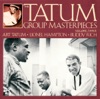
 Art Tatum/Lionel Hampton
The Tatum Group Masterpieces, Vol. 3
Pablo 2405426
Original recording 1955
|
|
Tatum, heard here in his noteworthy collaboration with Lionel Hampton and Buddy Rich, shows his knack for lush interpretation of ballads.
|
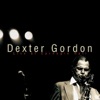
 Dexter Gordon
Live at Carnegie Hall: Complete
1998 Sony 65312
Original recording 1978
|
|
The concert documented here is best known for Gordon’s fiery battles with fellow tenor saxophonist Johnny Griffin. However, Gordon’s unique lyricism is not neglected at all, represented most notably by this long reading of “More Than You Know.”
|
|
 Sonny Rollins
Moving Out
1991, Original Jazz Classics 58
Original recording, 1954
|
|
Saxophonist Rollins’ playing is bold and moody on this atmospheric rendition of the song. Thelonious Monk at the piano, Tommy Potter on bass, and Art Taylor behind the drum kit add to the heavy ambience.
|
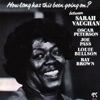
 Sarah Vaughan
How Long Has This Been Going On?
1992 Pablo 821
Original recording 1978
|
|
This beautiful, tender performance features Vaughan in a duet with the great pianist Oscar Peterson.
|
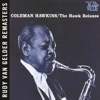
 Coleman Hawkins
The Hawk Relaxes
2006 Prestige 8106
Original recording 1961
|
|
Hawkins always found common ground with younger, forward-looking musicians, and he also had a very personal way of interpreting ballads. Both of these things are in evidence on his performance here, accompanied by a rhythm section that includes such modernists as bassist Ron Carter and drummer Andrew Cyrille.
|
 George Shearing, Carmen Mcrae
Two for the Road
Concord Records
Original Recording 1980
|
|
McRae and Shearing show a striking empathy here on a wonderfully lyrical and very emotional duet performance.
|
 Blossom Dearie
Blossom Dearie
1989, Polygram 837934
Original recording, 1956
|
|
Blossom Dearie gives the vocals a rest and instead lets the piano keys express the melancholia of the song. Guitarist Herb Ellis, bassist Ray Brown, and drummer Jo Jones round out the quartet.
|
 Shirley Scott Trio
Like Cozy
2001 Prestige Records 24258
Original recording 1960
|
|
Organist Shirley Scott, heard here on piano, leads the trio through a sophisticated bop rendition of the song. The mid-tempo reading is pushed along by the brushwork of drummer Arthur Edgehill.
|
 Jane Monheit
Never Never Land
2000 Silverline Records 284140
Original recording 2000
|
|
Exquisite phrasing and a rich, sultry voice make vocalist Monheit’s reading of “More Than You Know” a treat. The young singer is backed by a stellar group that includes guitarist Bucky Pizzarelli, bassist Ron Carter, and pianist Kenny Barron.
|
|
|
|