|
|
|
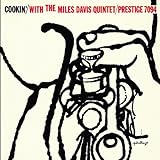
| “You haven’t heard ‘My Funny Valentine’ if you’ve missed this classic version with Miles on muted trumpet, backed by one of his most famous quintets...” |
|
 |
|
- Jon Luthro
|
|
| |
Mitzi Green introduced “My Funny Valentine” in the Broadway musical, Babes in Arms. Her character, Susie Ward, sang to Ray Heatherton whose character was (conveniently) named Valentine, “Val” White. The show opened at the Schubert Theater on April 14, 1937, and ran for 289 performances. “My Funny Valentine” subsequently went onto the recording charts in 1945, with Hal McIntyre and His Orchestra (Ruth Gaylor, vocal) taking it to number sixteen.
|
| |
| |
|
| |
|
|
|
| |
|
| |
|
Babes in Arms was the first “true” Rodgers and Hart musical. That is to say, this is the first time that they wrote the book (dialog) as well as the music and lyrics. Their storyline was the forerunner of the “Hey kids, let’s put on a show!” formula, which provided a format for a sequence of song and dance numbers while allowing the inclusion of a thin plot and some modest character development.
|
| |
| |
|
| |
|
|
| |
| |
|
| |
|
The show is also notable for choreographer George Balanchine’s “dream ballet” sequence, one of the first of its kind. Other songs in the original Babes in Arms production included, “Babes in Arms,” “I Wish I Were in Love Again,” “Where or When,” “The Lady Is a Tramp,” and “Johnny One Note.”
Babes in Arms was adapted to the big screen by MGM in 1939 and was the third in a series of nine movies starring Mickey Rooney and Judy Garland. Arthur Freed produced and Busby Berkeley directed this film, which retained some of the original plot but only the songs “Babes in Arms” and “Where or When” from the score.
“My Funny Valentine” has at one time or another been a specialty number for countless performers, including Frank Sinatra, Judy Garland, Miles Davis, and Chet Baker.
|
|
|
|
More information on this tune... |
|
|
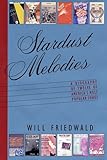 Will Friedwald
Stardust Melodies
Pantheon; 1st edition
Hardcover: 416 pages
(This book contains 25 pages on the song--its history, analyses of the music and lyric, performers, recordings, and information on the songwriters. “My Funny Valentine” is one of twelve thoroughly documented songs in the book.)
|
|
|
|
See the Reading and Research page for this tune for additional references. |
|
- Jeremy Wilson
|
|
| This section suggests definitive or otherwise significant recordings that will help jazz students get acquainted with
“My Funny Valentine.” These recordings have been selected from the Jazz History and
CD Recommendations sections.
|
Chet Baker and Miles Davis are the two trumpet players most closely associated with the cool jazz movement, though for Davis that is but one of the many subgenres in which he was a major influence. Both of these artists recorded “My Funny Valentine” on numerous occasions with moving and influential results. Baker recorded the tune several times instrumentally, but it is his first vocal version ( My Funny Valentine) that proved to be a landmark moment both for him and for the song. Davis, meanwhile, first recorded the song with his classic group of the 1950s ( Cookin’ With the Miles Davis Quintet), a performance that stands out as one of his most significant ballad performances. His 1964 Carnegie Hall performance ( My Funny Valentine) was also noteworthy, helping to signal the new sound of his groundbreaking 1960s unit.
Noah Baerman - Jazz Pianist and Educator
|
In 1927 Lorenz Hart took the novel approach of combining antiquated words with contemporary colloquialisms in “Thou Swell” from A Connecticut Yankee (1927), resulting in lines such as “I choose a sweet lollapalooza in thee.” In “My Funny Valentine” the rarely-sung verse repeats his previous approach with “thou’s” and “thy’s” and “doth” and “hast”; for example, “Thou knowest not my dim witted friend.” But the refrain does not include any archaic words or colloquialisms, with the exception of “my favorite work of art”.
Richard Rodgers’ refrain has a descending bass line, which William Zinsser (Easy to Remember: The Great American Songwriters and Their Songs) says, “is the foundation that holds up the whole song.” Its engaging melody is basically the repetition of a six-note phrase in the first four bars followed by variations on that theme. -JW
|
Musical analysis of
“My Funny Valentine”
|
| Original
Key |
C minor,
with a shift to relative major in “B”section |
| Form |
A – B – C
– D with a four-measure tag, although “B”,“C,”
and the tag share much of the same melodic
material with “A” |
| Tonality |
70% minor,
30% major (during the bridge and the tag) |
| Movement |
Ascending
scale-wise, then falling a bit before starting
upward again and then soaring by leaps into
the upper range; overall melody line is
a climbing one, reaching a climax at the
end just before the tag. |
|
Comments
(assumed
background)
|
| This is a very nicely constructed melody
that rises tentatively, then falls repeatedly,
only to rise a bit higher each time. The
harmonic progression of the “A” section
is led by a chromatically descending bass
line that changes each chord (somewhat reminiscent
of “In A Sentimental Mood” and “Blue Skies”). In the original key, it looks
like this: Cm – G7/B –Eb/Bb – Am7(b5) –
Ab – Eb/G – Fm – Eb – Dm7(b5). From
the last chord, it is an easy return to
C minor. On “B” the Fm becomes an Fm7(b5),
facilitating movement to the relative major
key. The bridge at “C” uses the I – vi –
ii7 – V7 progression of “Heart and Soul” and “Blue Moon” until modulating back to the minor
key using the viim7(b5)– V7/i sequence. |
|
K. J. McElrath - Musicologist for JazzStandards.com |
|
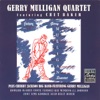
Although Chet Baker’s vocal version is one of
the best known renditions of this tune, Chet’s version
with Gerry Mulligan, from 1952 is one of his first
recording sessions and is a haunting version of
the tune, no doubt helped along by the acoustics
of the empty San Francisco Blackhawk nightclub.
Baker’s approach on this track is strangely reminiscent
of Clifford Brown.
Yet another version by Baker/Mulligan, a live
date from 1953 (complete with clinking glasses,
no less), is two minutes longer than the ’52 version
and features Baker in a more expansive and looser
mode.
Chris Tyle - Jazz Musician and Historian
|
Additional information for "My Funny Valentine" may be found in:
|
|
|
Will Friedwald
Stardust Melodies
Pantheon; 1st edition
Hardcover: 416 pages
(25 pages including the following types of information: history, lyric analysis, music analysis, performers, recordings and song writer discussion.)
|
|
|
|
|
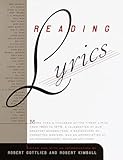 Robert Gottlieb, Robert Kimball
Reading Lyrics
Pantheon
Hardcover: 736 pages
(Includes the following types of information: song lyrics.)
|
|
|
|
|
 Gary Giddins
Visions of Jazz: The First Century
Oxford University Press; New Ed edition
Paperback: 704 pages
(2 paragraphs including the following types of information: music analysis and performers.)
|
|
|
|
|
“My Funny Valentine” was included in these films:
- Gentlemen Marry Brunettes
(1955, Jeanne Crain, dubbed by Anita Ellis)
- Pal Joey (1956, Kim Novak)
- Waiting to Exhale (1995, Chaka
Khan)
- The Talented Mr. Ripley (1999,
Matt Damon)
- The Company (2003, appearing
four times: by Elvis Costello, Chet Baker, the
Kronos Quartet, and the piano/cello duet of
Marvin Laird and Clay Ruede)
And on the small screen:
- Cold Feet (1997-2003, British
TV series which aired in the United States on
the Bravo network, Chet Baker)
|
|
|
|
Comment Policy
- Your comments are welcome, including why you like
this tune, any musical challenges it presents, or additional background information.
- Jazz musicians, fans, and students of all ages use this website as an educational resource.
As such, off-topic, off-color, unduly negative, and patently promotional comments will be removed.
- Once submitted, all comments become property of JazzStandards.com.
By posting, you give JazzStandards.com permission to republish or otherwise distribute your comments in any format or other medium.
JazzStandards.com reserves the right to edit or remove any comments at its sole discretion.
|
|
| Click on any CD for more details at Amazon.com |
 Bill Evans, Jim Hall
Undercurrent
Blue Note Records
|
|
This is Bill Evans’ first full-length recording after the death of his valued bassist Scott LaFaro. He finds a highly interactive and stimulating partner in guitarist Hall, and the two romp with abandon through a surprisingly up-tempo version of this song.
|
 Miles Davis
My Funny Valentine
Sony 93593
Original recording 1964
|
|
By 1964 Davis was going in an increasingly modern direction and was demanding greater flexibility and interaction from his band. The rhythm section of Herbie Hancock, Ron Carter and Tony Williams was very much up to the task, as evidenced by their epic version of one of Miles’ signature tunes.
|
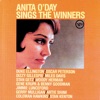
 Anita O'Day
Sings the Winners
Polygram Records
Original Recording 1957
|
|
O’Day gives this song a dark edge, toying with the melody as an instrumentalist might.
|
 Chucho Valdes
Live at the Village Vanguard
2000 Blue Note 20730
|
|
The brilliant Cuban pianist Valdes finds the Latin soul within this standard, finding a perfect balance between fire and lyricism.
|
|
 Bobby Timmons
This Here Is Bobby Timmons
1991, Orig. Jazz Classics #104
Original recording, 1960
|
|
Timmons sets a classical mood in his introduction and closing to “My Funny Valentine.”’ In between, bassist Sam Jones and drummer Jimmy Cobb help swing it. The trio also takes us for a ride through some of Timmons’ own well-known compositions.
|
 Jacky Terrasson
Smile
2003, Blue Note
|
|
This is a wonderful, free take on “My Funny Valentine” with Sean Smith (b) and Eric Harland (d). The pianist’s version of the album’s title cut alone is worth the price of admission.
|
|
 Gerry Mulligan
What Is There to Say?
1994, Sony 52978
Original recording, 1958
|
|
Art Farmer opens this haunting version of the song on trumpet with the baritone saxophonist weaving lines behind him before improvising his own solo on bari and then switching roles. This CD is a marvelous example of Mulligan’s “piano-less”’ quartet.
|
|
 Miles Davis
Cookin'
Original Jazz Classics 128
Original recording, 1956
|
|
You haven’t heard “My Funny Valentine”’ if you’ve missed this classic version with Miles on muted trumpet, backed by one of his most famous quintets: Red Garland (p), Paul Chambers(b), Philly Joe Jones (d), and John Coltrane (ts), who sits this one out. Another classic recording that is a must for jazz fans.
|
 Chet Baker
My Funny Valentine
1994, Blue Note 28262
Original recording, Pacific Jazz, 1954
|
|
This compilation includes Baker’s initial vocal on “My Funny Valentine,”’ which became one of the trumpeter’s signature songs. The fragility of his voice, his beautiful trumpet tone, and his youthful good looks made women swoon. If you’re unfamiliar with Chet, this is a good place to start.
|
|
|
|