|
|
|
| “All of the repeated notes flatten the melody, which transfers the emphasis to the harmonies and the Latin beat, all bonuses for a dancer like Astaire.” |
|
 |
|
- JW
|
|
| |
On November 29, 1932, Gay Divorce opened at the Ethel Barrymore Theatre. The show marked a departure for star Fred Astaire as it was his first appearance without his sister Adele. That night, teamed instead with Claire Luce, Astaire introduced Cole Porter’s “Night and Day.” Gay Divorce would continue for another 247 performances, distinguishing itself as Fred Astaire’s last Broadway appearance.
|
| |
| |
|
| |
|
Today most people believe that Astaire introduced “Night and Day” during the 1934 RKO film The Gay Divorcee. While the film retained much of original plot, it contained none of Porter’s score except for “Night and Day.” The slight change in title was requested by the Hays Office which insisted that divorce could not be gay but a divorcee might well be.
Fred Astaire’s recording of “Night and Day” was an instant hit, climbing the pop charts within weeks of the show’s opening. It would remain in the number one position for ten weeks. In all, five recordings of “Night and Day” would become charting hits, and two of those, by the Eddy Duchin Orchestra and Frank Sinatra, would make second appearances as reissues. “Night and Day” was the first of over 100 hits Sinatra would record under his own name.
- Leo Reisman and His Orchestra (1932, Fred Astaire, vocal, #1)
- Eddy Duchin and His Central Park Casino Orchestra (1933, instrumental, #2)
- Eddy Duchin and His Orchestra (1934, instrumental, #13) (reissue)
- Charlie Barnet and His Orchestra (1940, instrumental, #24)
- Frank Sinatra (1942, with Axel Stordahl and His Orchestra, #16)
- Frank Sinatra (1944, #15) (reissue)
- Bing Crosby (1946, #21)
|
|
| |
|
| |
|
Ginger Rogers replaced Claire Luce for the film version while Erik Rhodes and Eric Blore both retained their Broadway roles from Gay Divorce. Although Astaire and Rogers had appeared together in Flying Down to Rio (1933), The Gay Divorcee would be the first movie in which they received top billing. The Gay Divorcee received five Academy Award nominations and became the formulaic basis for subseqent Astaire/Rogers films.
|
| |
| |
|
| |
|
The farcical plot revolves around a woman (Ginger Rogers) who wants a divorce, her aunt who arranges for a correspondent, and a suitor (Fred Astaire) who is mistaken for the correspondent. Compensating for the plot were the song and dance numbers, which delighted audiences. Clive Hirschhorn, in his book Hollywood Musicals, comments, “...although the couple spent only about ten minutes of the film’s 107 minutes dancing, they were ten minutes of heaven...” Highlights also included Con Conrad and Herb Magidson’s “The Continental,” which won the first Academy Award for best song, and an eighteen-year-old Betty Grable singing and dancing with Edward Everett Horton to Mack Gordon and Harry Revel’s “Let’s K-nock K-nees.”
According to David Ewen in Great Men of American Popular Song, “The idea of using a persistent note in the verse (B flat) came to Porter during a visit to Morocco where he heard the steady, even beat on a tom-tom from a distance.” Porter even alludes to the origin in the opening lyrics, “Like the beat, beat, beat, of the tom-tom; When the jungle shadows fall...” Will Friedwald gives a very different account in Stardust Melodies, in which he tells of Porter visiting friends in Newport. On a rainy night, the hostess, Mrs. Vincent Astor, exclaimed about a broken drainpipe, “...This drip-drip-drip is driving me mad.” Porter raced to the piano to finish his song. And in the verse Porter also alludes to this origin, “Like the drip, drip, drip, of the rain drops...”
|
| |
| |
|
| |
|
Night and Day was also the title for the 1946 Warner Brothers film biography of Cole Porter. If one overlooks the miscasting of Cary Grant and forgives the strength of fiction over fact, there are some enjoyable songs.
|
|
|
|
More information on this tune... |
|
|
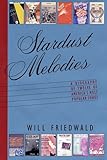 Will Friedwald
Stardust Melodies
Pantheon; 1st edition
Hardcover: 416 pages
(Friedwald thoroughly investigates the song, offering 33 pages dealing with its history, music and lyric analyses, the performers, recordings and anecdotes. The book also covers eleven other popular songs in depth.)
|
|
|
|
See the Reading and Research page for this tune for additional references. |
|
- Jeremy Wilson
|
|
| This section suggests definitive or otherwise significant recordings that will help jazz students get acquainted with
“Night and Day.” These recordings have been selected from the Jazz History and
CD Recommendations sections.
|
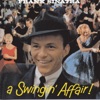
The tune “Night and Day” is very much associated with Frank Sinatra, so exploring his versions of the song will invariably help anybody’s understanding of it. Some of these recordings have limited jazz relevance, though his 1957 big band version ( A Swingin’ Affair!) is quite swinging and has inspired generations of modern interpreters of the tune. Among instrumentalists, the convention in many circles has developed into arranging the melody statements (and sometimes the whole tune) so that the first half of each A-section (and sometimes the bridge as well) is played with a Latin feel, before “releasing” into a swing feeling. Bill Evans helped to popularize this approach with his trio version from 1958 ( Everybody Digs Bill Evans), and he revisited it several times, notably on his cutting-edge 1964 collaboration with Stan Getz ( Stan Getz and Bill Evans).
Noah Baerman - Jazz Pianist and Educator
|
With a 48-bar, A-A-B-C form (16 bars in each
A section) the A sections open with the “hook” phrase,
“Night and Day” or “Day and Night,” and close with
“Night and Day.” In each case the melody is just
the same, one note either played or held for two
and one-half measures. And in between the openings
and closings of the A sections are additional full
measures of repeated notes. The effect of all the
repetition is the flattening of the melody, which
transfers the emphasis to the harmonies and the
Latin beat, all bonuses for a dancer like Astaire
and jazz improvisationalists. -JW
|
Musical analysis of
“Night and Day”
|
| Original
Key |
Eb major |
| Form |
A1 – A2 –
B |
| Tonality |
Major throughout |
| Movement |
It descends
primarily via steps and small skips, then
leaps back up to its starting point. |
|
Comments
(assumed
background)
|
|
The beauty of the opening harmonic progressions
lies in the initial V7 which is preceded
by a major seventh chord a half step higher
(in the original, Bma7-Bb7). This is purely
an embellishment; the melody would work
just as well without it but would sound
quite bland. The consequent eight measure
phrase uses a descending progression that
was quite remarkable for its time: #ivø7
– iv – I(3rd in bass) – biii˚ - ii – V7
– I (in the original key, this is Am7(b5)
– Abm – Eb/G – Gb˚7 – Fm7 – Bb7 –Eb). This
chord progression has been used
subsequently as an “outro” for so many
tunes by so many jazz players
(particularly big band arrangers) that
it has nearly become a cliche.
The “B” section contains another surprise
when it leaps up to the bIII chord, going
back and forth between it and the tonic
I chord. This particular harmonic progression
was later used frequently in the film scores
of biblical epics, but Porter’s use of it
in a popular song context seems to be unique.
|
|
K. J. McElrath - Musicologist for JazzStandards.com |
|
The big bands of trombonist Tommy Dorsey (1937)
and clarinetist
Benny Goodman (1939) had interesting arrangements
of Cole Porter’s 1932 opus, which maintained its
popularity through the Swing Era. With his first
attempt at band-leading in 1937, clarinetist Artie
Shaw and the group he called “New Music” recorded
a version featuring Shaw with a string section and
rhythm. Although musically interesting, Shaw soon
opted for a regular “brass and reeds” big band.
1944 was a banner year for “Night and Day,” with
three small combos recording the tune for indie
labels. Although there are great versions by tenor
saxophonist Coleman Hawkins and clarinetist Edmond
Hall, the standout is pianist Mary Lou Williams’
group with trumpeter Bill Coleman.
Chris Tyle - Jazz Musician and Historian
 Coleman Hawkins
1944
Classic 842
|
|
|
 Mary Lou Williams
1944
Classics 814
|
|
|
|
|
Additional information for "Night and Day" may be found in:
|
|
|
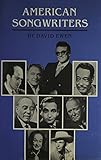
 David Ewen
Great Men of American Popular Song
Prentice-Hall; Rev. and enl. ed edition
Unknown Binding: 404 pages
(1 paragraph including the following types of information: history and music analysis.)
|
|
|
|
|
 Alan Lewens
Popular Song: Soundtrack of the Century
Watson-Guptill Publications
Paperback: 192 pages
(1 page including the following types of information: history, performers, style discussion and song writer discussion.)
|
|
|
|
|
Will Friedwald
Stardust Melodies
Pantheon; 1st edition
Hardcover: 416 pages
(33 pages including the following types of information: history, lyric analysis, music analysis, performers, recordings and song writer discussion.)
|
|
|
|
|
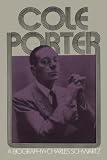 Charles Schwartz
Cole Porter: A Biography
Da Capo Press; 1st Pbk edition
Paperback: 365 pages
(3 paragraphs including the following types of information: history and performers. 1 paragraph including the following types of information: lyric analysis.)
|
|
|
|
|
 Robert Kimball, Brendan Gill
Cole: A Biographical Essay
Overlook Press
Hardcover: 283 pages
(Includes the following types of information: song lyrics.)
|
|
|
|
|
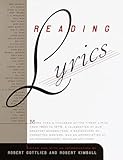 Robert Gottlieb, Robert Kimball
Reading Lyrics
Pantheon
Hardcover: 736 pages
(Includes the following types of information: song lyrics.)
|
|
|
|
|
 Gerald Mast
Can't Help Singin'
Overlook Press; Rei edition
Paperback: 400 pages
(3 paragraphs including the following types of information: history, lyric analysis and music analysis.)
|
|
|
|
|
“Night and Day” was included in these films:
- The Gay Divorcee (1934, sung
by Fred Astaire; danced by Fred Astaire, Ginger
Rogers)
- The Singing Marine (1937)
- Now, Voyager (1942)
- Action in the North Atlantic
(1943, Julie Bishop dubbed by Martha Mears)
- The Hard Way (1943, instrumental)
- Reveille with Beverly (1943,
Frank Sinatra)
- Lady on a Train (1945, Deanna
Durbin)
- Night and Day (1946)
- Desk Set (1957, Katherine
Hepburn)
- Evil under the Sun (1982)
- Once upon a Time in America
(1984)
- Radio Days (1987)
- September (1987, Art Tatum,
Ben Webster, Red Callender, Bill Douglass)
- The Rocketeer (1991)
- Jumanji (1995)
- Le Jour et la nuit aka Day and Night
(1997, Ella Fitzgerald)
- Dream for an Insomniac (1998,
Frank Sinatra)
- The Life and Times of Hank Greenberg
(1998, Fred Astaire)
- What Women Want (2000, The
Temptations)
- De-Lovely (2004, John Barrowman,
Kevin Kline)
And on stage:
- Gay Divorce (1932, Fred Astaire)
- Gay Divorce (1933, Fred Astaire,
Claire Luce) London revival
- Cole (1974, 1: instrumental,
2: Kenneth Nelson) London
- Happy New Year (1980, John
McMartin, Michael Scott)
- A Swell Party (1991, Angela
Richards) London revue
And on television:
- Ford Star Jubilee: You’re the Top
(1956, George Chakiris, Sally Forrest)
CBS
- The Muppet Show (1981, The
Mummies) Episode 112
- Highlander (1995, Tamara Gorski)
Canadian TV, Season 3, Episode 11: "Vendetta"
- Friends (1997, Frank Sinatra)
NBC sitcom Season 4, Episode 4 "The One with
the Ballroom Dancing"
- Chocolate com Pimenta (2003,
Ella Fitzgerald, Buddy Bregman Orchestra) Brazilian
TV
|
|
|
|
Comment Policy
- Your comments are welcome, including why you like
this tune, any musical challenges it presents, or additional background information.
- Jazz musicians, fans, and students of all ages use this website as an educational resource.
As such, off-topic, off-color, unduly negative, and patently promotional comments will be removed.
- Once submitted, all comments become property of JazzStandards.com.
By posting, you give JazzStandards.com permission to republish or otherwise distribute your comments in any format or other medium.
JazzStandards.com reserves the right to edit or remove any comments at its sole discretion.
|
|
| Click on any CD for more details at Amazon.com |
 Stan Getz with Bill Evans
Stan Getz & Bill Evans
Polygram Records
Original recording 1964
|
|
This fiery recording is an all-time classic interpretation of “Night and Day” and displays the modern side of Getz’s playing. The band includes pianist Evans and drummer Elvin Jones in their only recorded meeting with one another.
|
 Bill Evans
Everybody Digs Bill Evans
Original Jazz Classics 68
Original recording, 1958, Riverside Records
|
|
Pianist Bill Evans, bassist Sam Jones and drummer Philly Joe Jones deliver a spirited version of the song, as entertaining as it is technically brilliant. Jones is particularly engaging as he plays with variations on a theme and adds some Latin spice.
|
 Frank Sinatra
A Swingin' Affair
1998 Capitol 960882
Original recording 1957
|
|
Sinatra recorded this tune many times throughout his career, but this version is one of the brashest and certainly one of the most swinging.
|
 Joe Henderson
Inner Urge
2004 Blue Note 92422
Original recording 1964
|
|
This performance shows definitively how well-suited this tune is to modern jazz performances. Henderson is in peak form and the band features John Coltrane sidemen McCoy Tyner on piano and Elvin Jones on drums.
|
|
 Adam Makowicz
A Tribute to Art Tatum
2000, VWC 4108
Original recording, 1997
|
|
Makowicz was inspired to pursue jazz as a child in Poland when he heard Tatum on Willis Conover’s radio program, “Voice of America.” Makowicz has the technique to elevate this tribute to the level of the master. It’s hard to believe that only two hands are playing “Night and Day.” He includes another version in his solo concert in the Maybeck Recital Hall Series, Vol. 24.
|
|
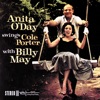
 Anita O'Day
Anita O'Day Swings Cole Porter with Billy May
Polygram Records
Original recording 1959
|
|
The always energetic singer is her usual highly inventive self on this track. She spends the song playing cat-and-mouse with the orchestra and with the melody, lagging behind and then rushing joyously ahead.
|
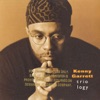
 Kenny Garrett
Trilogy
1995, Warner Bros. Records 45731
|
|
Alto saxophonist Garrett is all over the map with this bop rendition. Through his sharp improvisation he seems to, at times, channel the likes of Dexter Gordon or John Coltrane while still maintaining unique freshness.
|
|
|
|