|
|
|
| “I looked at the notes of the chords as I played the progression and noticed they formed a melody ... [with a] Latin, even oriental feeling.” |
|
 |
|
- Dizzy Gillespie
|
|
| |
Dizzy Gillespie wrote “Night in Tunisia” in 1942 while he, alongside Charlie Parker, was a member of the Earl Hines Band. Shortly thereafter, Gillespie, Parker, Sarah Vaughan, and Billy Eckstine left Hines to form what came to be known as the first “bebop big band” under the leadership of Eckstine. It was Sarah Vaughan who introduced “Interlude” as it was called before being renamed “Night in Tunisia.” With Charlie Parker and Dizzy Gillespie as sidemen, Vaughan made that first recording on December 31, 1944, for the Continental label.
|
| |
| |
|
| |
|
|
| |
| |
|
| |
|
According to Dizzy Gillespie’s To Be or Not to Bop: Memoirs of Dizzy Gillespie, he was sitting at the piano playing chord progressions when he noticed the notes of the chords formed a melody with a Latin/oriental feel. Adding a bebop-style rhythm to the melody, Gillespie came up with “Night in Tunisia.” When played, this “mixture introduced a special kind of syncopation in the bass line,” a jazz pioneering step away from the traditional regular 4-beat bass. During the videotaped concert performance, “A Night in Tunisia,” Gillespie discusses how he composed this “anthem to bebop,” introducing Afro-Cuban rhythms to mainstream American jazz. He does concede, however, that “Manteca” was the “definitive breakaway from the old beat.”
|
| |
| |
|
| |
|
The publication credits list John Gillespie and Frank Paparelli on the instrumental version and add Jon Hendricks on the version with lyrics. Although Frank Paparelli is given credit for the composition in both cases, Gillespie claims that his contribution was transcribing the piece for publication.
|
| |
| |
|
| |
|
While Jon Hendricks had originally written lyrics for the tune in 1942, some forty years later he would revisit the song. Using both lyrics and vocals he was able to reproduce the sound and feel of the original instrumentation and this vocalese version of the song, retitled “Another Night in Tunisia,” won a Grammy award for “Best Vocal Arrangements for Voices.” Jon Hendricks would also write all of the lyrics to the 1985 Manhattan Transfer album Vocalese, which received 12 Grammy nominations.
Although the song is sometimes titled “A Night in Tunisia” the proper title is “Night in Tunisia.” The song appears as the title track of 30 CD’s and is included in over 500 currently available CD’s. And in January of 2004, The Recording Academy added the Dizzy Gillespie & His Sextet’s 1946 Victor recording of “Night in Tunisia” to its Grammy Hall of Fame.
The similarly titled “Tunisian Fantasy” was produced by Lalo Schifrin, pianist and arranger for the Dizzy Gillespie Band from 1960 to 1962. |
|
|
|
| This section suggests definitive or otherwise significant recordings that will help jazz students get acquainted with
“Night in Tunisia.” These recordings have been selected from the Jazz History and
CD Recommendations sections.
|
There are so many important recordings of “Night In Tunisia” that it is challenging to narrow down the most significant. Ultimately, the definitive versions are those which come from the giants of the bebop era. Dizzy Gillespie’s “Interlude,” ( Ken Burns JAZZ Collection: Sarah Vaughan) the original version of “Night in Tunisia,” features Sarah Vaughan and is irresistible. Charlie Parker’s 1946 version with Miles Davis on trumpet ( Complete Dial Sessions Master Takes) is a hugely influential recording and features a solo break that ranks among Parker’s shining moments. Finally, Bud Powell’s trio version with Max Roach on drums ( The Amazing Bud Powell, Vol. 1) is both a definitive version of the tune and a definitive moment in Powell’s career.
Noah Baerman - Jazz Pianist and Educator
|
|
Musical analysis of
“Night in Tunisia”
|
| Original
Key |
D minor |
| Form |
A1 – A1 –
B – A2 with 16 measure tag |
| Tonality |
Minor throughout |
| Movement |
A short,
sharp arpeggiated figure moves upward, followed
by another leap upward. It descends by a
leap before bouncing back up a step. “B”
descends with a skip and three steps before
leaping back up. Generally, the melodic
contour is very jagged and restless. |
|
Comments
(assumed
background)
|
|
Melodically, this is a challenging piece.
Most of the melody notes fall on color tones
and chord extensions, and the tune moves
very quickly using exotic intervals in both
directions. Harmonically, the piece is less
complex. “A” is simply V7 – i – V7 – i,
with an altered Neopolitan chord being used
as a tri-tone substitution for V7 most of
the time. The chord progression of “B” is
a standard one as well: a cycle-of-fifths
variation alternates minor and major 7th
chords starting on v7(b5) (functioning as
a ii chord of III) and descends to III before
dropping a half-step to the ii7(b5) of i.
This is identical to the harmonic progression
of the “B” section of “Alone Together” (in the original key, Am7
– D7(b9) – Gm – Gm7(b5) – C7(b9) – F). |
|
K. J. McElrath - Musicologist for JazzStandards.com |
|
Dizzy Gillespie’s first two recordings of this
number are a contrast; the first, in December, 1944,
featured vocalist Sarah Vaughan and the second,
a month later, was with Boyd Raeburn’s Orchestra.
Raeburn hired Gillespie as a special guest for
an appearance at New York’s Apollo Theater and the
following day recorded Dizzy playing his arrangement
of “Night in Tunisia.” The Raeburn band, considered
to be ahead of its time, was filled with talented
players including tenor saxophonist Al Cohn, bassist
Oscar Pettiford, baritone saxophonist Serge Chaloff
and drummer Shelly Manne.
A year later, Gillespie recorded the tune again
with his small band including tenor saxophonist
Don Byas and vibist Milt Jackson (who later became
an integral part of the Modern Jazz Quartet).
Chris Tyle - Jazz Musician and Historian
|
Additional information for "Night in Tunisia" may be found in:
|
|
|
 Gary Giddins
Visions of Jazz: The First Century
Oxford University Press; New Ed edition
Paperback: 704 pages
(1 paragraph including the following types of information: music analysis and jazz solo transcription.)
|
|
|
|
|
“Night in Tunisia” was included in these films:
- Dizzy Gillespie: A Night in Tunisia
(1990)
- Dizzy Gillespie - A Night in Chicago
(1993)
|
|
|
|
Comment Policy
- Your comments are welcome, including why you like
this tune, any musical challenges it presents, or additional background information.
- Jazz musicians, fans, and students of all ages use this website as an educational resource.
As such, off-topic, off-color, unduly negative, and patently promotional comments will be removed.
- Once submitted, all comments become property of JazzStandards.com.
By posting, you give JazzStandards.com permission to republish or otherwise distribute your comments in any format or other medium.
JazzStandards.com reserves the right to edit or remove any comments at its sole discretion.
|
|
| Click on any CD for more details at Amazon.com |
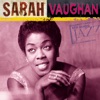
 Sarah Vaughan
Ken Burns JAZZ Collection: Sarah Vaughan
Polygram Records
Original recording 1946
|
|
This original version of the tune (here called “Interlude”) is a showcase for Vaughan’s total control of melody, rhythm and phrasing, already evident here at age 20.
|
 Charlie Parker
Complete Dial Sessions Master Takes
Definitive/Disconforme SL
Original recording 1947
|
|
Parker takes a short but burning solo on this early Los Angeles recording of “Night in Tunisia.” His legendary solo break alone is worth the price of admission.
|
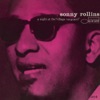
 Sonny Rollins
Night at the Village Vanguard
Blue Note Records
Original Recording 1957
|
|
Here we are treated to two piano-less trios and two renditions of “A Night in Tunisia,” both recorded on a single day at New York’s Village Vanguard. Rollins displays nearly unlimited soul, passion and creativity on these lengthy explorations.
|
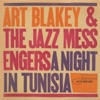
 Art Blakey and the Jazz Messengers
A Night In Tunisia
2005 Blue Note 64474
Original recording 1960
|
|
Blakey made numerous excellent recordings of this tune, but none were more exciting than this one featuring the tenor saxophone of Wayne Shorter and the trumpet of Lee Morgan. The solos are fiery, and the closing cadenzas by Shorter and Morgan are breathtaking.
|
 Art Pepper
Friday Night at the Village Vanguard
1992 Original Jazz Classics 695
Original recording 1977
|
|
Alto saxophonist Pepper shares a venue (the Village Vanguard) and a drummer (Elvin Jones) with the Sonny Rollins recording of 20 years earlier. The sound is quite different, but Pepper also manages to find a deep wellspring of passion and creativity here. Pianist George Cables is also featured prominently.
|
|
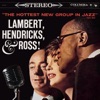
 Lambert, Hendricks & Ross
The Hottest New Group in Jazz
1996 Legacy Recordings 64933
Original recording 1959
|
|
LH&R recorded two versions of “Night in Tunisia”’ with Hendricks’ lyrics in March, 1962. Ross sang lead on the first version which was later released as an additional track. The alternate take with Hendricks singing lead is previously unreleased.
|
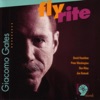
 Giacomo Gates
Fly Rite
1998, Sharp Nine Records 1011
|
|
Gates is in the tradition of vocalese master Eddie Jefferson who wrote these lyrics to “Night in Tunisia.”
|
|
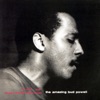
 Bud Powell
Amazing Bud Powell, Vol. 1
2001 Blue Note 32136
Original recording 1951
|
|
This later reissue includes “Night in Tunisia”’ and an alternate take which were not on the 1989 CD release. The early and influential bop pianist covers his own compositions and a few standards in trio and quintet settings.
|
 Dexter Gordon
Our Man in Paris
Blue Note Records
Original recording 1963
|
|
Bebop saxophonist Gordon pulls out all the stops on this track. His solo on “Night in Tunisia”’ is considered one of his finest performances ever recorded.
|
 Ella Fitzgerald
Clap Hands Here Comes Charlie!
1989, Verve 835646
Original recording, 1961
|
|
Fitzgerald swings with an uncharacteristically small group. On such a song as “Night in Tunisia”’ this intimacy leads to intensity.
|
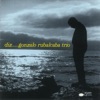
 Gonzalo Rubalcaba
Diz
Blue Note Records
|
|
On this tribute album the Cuban pianist leads the song even farther into Latin territory. Rubalcaba’s improvisation and dexterity take the song to loftier heights.
|
|
|
|