|
|
|
| “Crosby’s gamble paid off handsomely. His recording was featured on the radio show Your Hit Parade for over 13 weeks.” |
|
 |
|
- JW
|
|
| |
Although under contract with Paramount Pictures at the time, Bing Crosby was occasionally allowed to make films with other studios. In 1936 Crosby took a chance and not only starred but invested some of his own money in the Columbia Pictures film, Pennies from Heaven.
|
| |
| |
|
| |
|
Pennies from Heaven was based on Katharine Leslie Moore’s novel, “The Peacock Feather” and adapted for the screen by Jo Swerling (Blood and Sand, Lifeboat, Leave Her to Heaven, It’s a Wonderful Life, Guys and Dolls). The story can be best described as a convoluted sequence of events. Before the plot is resolved the characters find themselves alternately in prison, on welfare, under arrest, in the hospital, or sent to an orphanage. The suggestion seems to be that no matter how bad things get all will turn out in the end, a message that struck a chord with a depression-weary audience.
While the film’s plot was right for the times, it was also musical numbers such as “Skeleton in the Closet” with Louis Armstrong that made it a modest success with filmgoers. It was the title song that garnered the movie’s only Academy Award nomination. Unfortunately it would lose out to “The Way You Look Tonight” by Jerome Kern and Dorothy Fields.
Crosby’s gamble paid off handsomely. His recording of “Pennies from Heaven,” with Jimmy Dorsey and His Orchestra, was featured on the radio show Your Hit Parade for over 13 weeks. On the pop charts, “Pennies from Heaven” also did well:
In 1936
And in 1937
|
|
| |
|
| |
|
The songwriting team of Johnny Burke and Arthur Johnston wrote a number of songs, although Burke more often collaborated with Jimmy Van Heusen and Johnston with Sam Coslow.
|
| |
| |
|
| |
|
|
| |
| |
|
| |
|
Presumably Burke’s lyrics were written to evoke a sense of optimism in difficult times, assuring the listener that when it rains, “There’ll be pennies from heaven for you and me.” The introductory verse, however, casts a shadow across the optimistic chorus. It warns that we may pay penance for our ancestors’ lack of appreciation of the better things in life. Storms may bring us fortune, but with that fortune we must buy what we used to get for free.
In 1978 a six-part British Drama Series Pennies from Heaven aired on BBC-TV starring Bob Hoskins and Cheryl Campbell. Written by Dennis Potter, the story is even darker than the original, replacing the prison, welfare, orphanage, and hospital with infidelity, rape, murder, and prostitution. The avant-garde production drew critical and popular acclaim for its innovative use of song and dance numbers to depict the desires of the characters and society.
The 1981, MGM film, Pennies from Heaven, is a lavish adaptation of Dennis Potter’s BBC series starring Steve Martin and Bernadette Peters. It received widely mixed reviews and did little business at the box office.
|
|
|
|
More information on this tune... |
|
See the Reading and Research page for this tune for additional references. |
|
- Jeremy Wilson
|
|
| This section suggests definitive or otherwise significant recordings that will help jazz students get acquainted with
“Pennies from Heaven.” These recordings have been selected from the Jazz History and
CD Recommendations sections.
|
The two definitive vocal recordings of “Pennies From Heaven” were made just months apart in the mid-1930s. Billie Holiday’s brilliant 1936 performance with Teddy Wilson ( The Billie Holiday Collection) was followed in early 1937 by Jimmy Rushing’s irresistible interpretation, backed by the Count Basie Orchestra ( The Complete Decca Recordings). Over twenty years later, Shirley Scott and Eddie “Lockjaw” Davis reinvented “Pennies From Heaven” as a hard-swinging organ jazz tune ( Smokin’).
Noah Baerman - Jazz Pianist and Educator
|
|
Musical analysis of
“Pennies from Heaven”
|
| Original
Key |
C major |
| Form |
A1 – B –
A2 – C |
| Tonality |
Major throughout |
| Movement |
Primarily
steps and small, arpeggiated skips; repeated
notes |
|
Comments
(assumed
background)
|
| Originally, the harmonic progression was
quite simple: I – II7 – V7 – I in the first
“A” section and I7 – IV – VI7 – II7 – V7
in the “B” section. In the second “A,” the
second II7 is replaced by IV, which leads
into the iv – I – II7 – ii7 – V7 ending.
Today jazz players are more inclined to
use extended harmonies and chord substitutions.
For example, the simple progression in the
beginning is elaborated into I – iii – biii˚7
(vii˚7/V) – ii7 – V7(b9), while the secondary
dominant is preceded by a minor 7th
chord a fifth higher (Gm7 – C7 – F, rather
than just C7 – F, for example), or the use
of vi in place of or preceding II7. |
|
K. J. McElrath - Musicologist for JazzStandards.com |
|
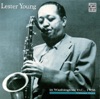
Many jazzmen have pet tunes that they enjoy playing
regularly. Looking through a discography, one might
find an artist recording several versions of a number
over the span of a career. Such was the case with
Lester Young and the tune “Pennies from Heaven.”
Lester was on board with the Count Basie band
for their first recording session for Decca Records
in 1937, when they laid down a swinging version
of tune. The record was primarily a feature for
vocalist Jimmy Rushing and Young was not featured.
However, he started playing the tune with his own
group in the 1940s, recording a version in 1950
and then twice in 1956 on a series of live recordings
made of his quartet in Washington, D.C.
Chris Tyle - Jazz Musician and Historian
|
Additional information for "Pennies from Heaven" may be found in:
|
|
|
 Robert Gottlieb, Robert Kimball
Reading Lyrics
Pantheon
Hardcover: 736 pages
(Includes the following types of information: song lyrics.)
|
|
|
|
|
“Pennies from Heaven” was included in these films:
- Pennies from Heaven (1936,
Bing Crosby)
- Cruisin’ Down the River (1953,
Dick Haymes)
- From Here to Eternity (1954)
- Picnic (1956, instrumental)
- Pepe (1960,
Bing Crosby)
- Pennies from Heaven (1981, Arthur
Tracy with Vernal Bagneris lip-synching)
- Angela’s Ashes (1995,
Billie Holiday)
- Corrina, Corrina (2000,
Billie Holiday)
|
|
|
|
Comment Policy
- Your comments are welcome, including why you like
this tune, any musical challenges it presents, or additional background information.
- Jazz musicians, fans, and students of all ages use this website as an educational resource.
As such, off-topic, off-color, unduly negative, and patently promotional comments will be removed.
- Once submitted, all comments become property of JazzStandards.com.
By posting, you give JazzStandards.com permission to republish or otherwise distribute your comments in any format or other medium.
JazzStandards.com reserves the right to edit or remove any comments at its sole discretion.
|
|
| Click on any CD for more details at Amazon.com |
 Billie Holiday
The Collection
2004 Sony 61538
Original recording 1938
|
|
This performance documents the early years of Holiday’s fruitful collaboration with pianist and bandleader Teddy Wilson. Holiday’s performance is typically relaxed, and there is an irony to her delivery of the exaggeratedly optimistic lyric.
|
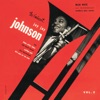
 J.J. Johnson
The Eminent J.J. Johnson, Vol. 2
Blue Note Records 32144
Original recording 1955
|
|
Johnson shows himself to have reached full maturity as a trombonist, arranger and bandleader by the time of this 1955 performance. The company he keeps here certainly helps matters as well, as his quintet features saxophonist Hank Mobley, pianist Horace Silver, bassist Paul Chambers and drummer Kenny Clarke.
|
 Eddie Lockjaw Davis, Shirley Scott
Smokin
Ojc
|
|
Over time, this tune wound up becoming a mainstay of groups build around organ and tenor saxophone. This finger-popping recording by saxophonist Davis and organist Scott had a lot to do with popularizing the tune in that context.
|
|
 Frank Sinatra/Count Basie
Sinatra/Basie
1990, Warner Bros. 1008
Original recording, 1962, Reprise
|
|
Two heavyweights of swing get together for an inspired session. Sinatra sounds genuinely inspired and Basie pulls out all the stops.
|
 Oscar Peterson Trio
On the Town
Verve 314543834
Original recording, 1958
|
|
The incomparable trio of Peterson at piano, Herb Ellis on guitar, and Ray Brown on bass struts through a live version of the song.
|
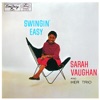
 Sarah Vaughan
Swingin' Easy
1992 Polygram 14072
Original recording 1954
|
|
Vaughan presents a confident, sly performance here, with tight yet unpredictable backing by the trio of Jimmy Jones, Richard Davis and Roy Haynes.
|
 Dave Brubeck Quartet
At Carnegie Hall
2001 Legacy Recordings 61455
Original recording 1963
|
|
Considered one of the finest live recordings in any musical genre, this album features an intense delivery of the song. The quartet is tight-knit and the energy is infectious.
|
 Joel Frahm
Sorry No Decaf
1999, Palmetto 2043
|
|
Saxophonist Frahm delivers a quirky new take on the song that allows the quartet to explore without losing the inherent personality of the original.
|
|
|
|