|
|
|
| “The critically acclaimed lyrics are clever, hip, and slangy...” |
|
 |
|
- JW
|
|
| |
Early in 1953, Duke Ellington left Columbia Records to sign with Capitol Records, a company he felt would more effectively promote his music. On April 6, the band had their first Capitol recording session, producing “Satin Doll,” “Without a Song,” and “Cocktails for Two.” “Satin Doll,” with its Ellington piano solo, was a modest hit, entering the pop charts in June and rising to number twenty-seven.
|
|
| |
|
| |
|
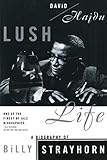
Although Ellington originally wrote the melody for “Satin Doll,” in his biography of Billy Strayhorn, Lush Life: A Biography of Billy Strayhorn, David Hajdu says, “Strayhorn fleshed out an Ellington riff sketch with harmony and lyrics ...” and titled it “Satin Doll,” Strayhorn’s pet name for his mother. Strayhorn’s lyrics were not considered commercially viable, and five years later, lyricist and cofounder of Capitol Records, Johnny Mercer wrote new lyrics, resulting in the song we know today.
|
| |
| |
|
| |
|
|
| |
| |
|
| |
|
|
| |
| |
|
| |
|
Whether the “Satin Doll” is Strayhorn’s mother or not is up for speculation. In the Mercer Ellington/Stanley Dance biography, Duke Ellington in Person: An Intimate Memoir, Mercer suspects Beatrice “Evie” Ellis or Evie Ellington, Duke’s common-law wife, is the mystery woman. Mercer is quoted as saying, “... she disclosed that ‘Satin Doll’ was really written for her...” Mercer then supports her claim saying, “...Pop would always be leaving notes in the house addressing her affectionately as “Dearest Doll,” “Darling Doll,” and so on.”
As a rule, Billy Strayhorn is credited with assisting Ellington with the music but not contributing to the Johnny Mercer lyrics. In the early 1990’s, however, a copyright infringement case (Tempo Music vs. Famous Music) was brought against the Strayhorn Estate by the Ellington Estate. Basically the Ellington Estate felt that because Strayhorn’s contribution to the music was only the harmonization of Ellington’s melody and that harmonic progressions are not sufficient to constitute copyrightable expression, the Strayhorn Estate should receive proceeds only from versions published with lyrics.
The court ruled in favor of the Strayhorn Estate, saying, “While we agree that melody generally implies a limited range of chords which can accompany it, a composer may exercise creativity in selecting among these chords...”
Beyond the legal implications to jazz musicians, who routinely reuse harmonic progressions, the above phrase, “should receive proceeds only from versions published with lyrics,” implied the Ellington Estate believed Strayhorn contributed to the Johnny Mercer lyrics, a fact also stated in the book Beyond Category: The Life and Genius of Duke Ellington by John Edward Hasse.
Among Ellington compositions, “Satin Doll” is unique in that it was not written with a particular soloist in mind, Ellington himself taking the introductory piano solo in the 1953 recording. Further differentiating “Satin Doll” from many other Ellington top jazz standards are the critically acclaimed lyrics. Johnny Mercer’s (and Billy Strayhorn’s) words are clever, hip, and slangy, almost beyond belief.
|
|
|
|
More information on this tune... |
|
See the Reading and Research page for this tune for additional references. |
|
- Jeremy Wilson
|
|
| This section suggests definitive or otherwise significant recordings that will help jazz students get acquainted with
“Satin Doll.” These recordings have been selected from the Jazz History and
CD Recommendations sections.
|
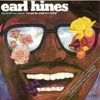
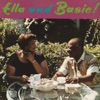
Not surprisingly, Ellington’s swinging original recording of “Satin Doll” ( Ken Burns JAZZ Collection: Duke Ellington) stands out as the most significant version of the tune. Earl Hines, meanwhile, had a special relationship with the tune. He recorded it frequently in his later years, highlighted by a 1973 solo piano performance in New York ( Live at the New School). As for vocal renditions, Ella Fitzgerald recorded the tune multiple times and had a particularly special knack for deliviering the swinging melody and silly lyrics. Her recording with Count Basie’s band ( Ella & Basie) is an exceptional one.
Noah Baerman - Jazz Pianist and Educator
|
|
Musical analysis
of “Satin Doll”
|
|
Original Key |
C
major with temporary false key changes
to F major and G major during the
bridge |
|
Form |
A
– A – B – A |
|
Tonality |
Primarily
major |
|
Movement |
Almost
completely stepwise; only occasional
skips |
|
Comments
(assumed
background)
|
| The repetitive “A” section melody
sounds suspiciously as if it began
life as a “riff” or background figure
that section players use as accompaniment
to a soloist (similar to an ostinato).
Section “B” is a bit more developed,
based on a scale pattern that descends
a fourth and then ascends back up
a fourth.
The chord progression of “A”
is interesting because it starts
out with a harmonic sequence often
used as a “turnaround” at the end
of a tune–ii7 – V7 – ii7 – VI7.
The fifth and sixth measures of
“A” almost defy analysis. If a composer
following the classical rules of
voice leading had written the harmonic
progression here, it would have
been II7 (or ii7) – V7(#9)– I (D7
or Dm7 – G7(#9) – Cma7 in the original).
Instead, the chords used seem completely
coloristic and yet disguise the
voice-leading function definitely
present when looked at closely.
In the fifth measure, the first
chord written is Am7(b5)/Eb (which
could have been written as an Ebø7–and
actually is), which proceeds to
the D7 – the II7 we would expect
to find there. The next chord, however,
is Abm9, which resolves to Db9.
Under normal circumstances, one
would think of this as a ii7 – V7
– I in Gb, but really what has happened
is that the Abm9 has been an embellishment
of the “Neapolitan” chord (in the
key of C, a Db7) which is nothing
more than a tri-tone substitution
for V7. Indeed, proper voice-leading
technique is still present, albeit
disguised almost beyond recognition.
Section “B” is more orthodox
sounding: ii7 – V7 – I in F and
G major. Transition back to section
“A” is accomplished by dropping
the middle three voices of the G7
chord a half-step, creating a vii˚7/ii
in the original tonic key of C major. |
|
K. J. McElrath - Musicologist for JazzStandards.com |
|
Pianist Earl Hines placed an ad in
Downbeat magazine wishing Duke Ellington
a happy 70th birthday, but in small print
was written “remember, I wrote ‘Satin Doll’.”
It seems Hines never explained the details
about his “composition,” but he did record
it several times, including a tribute album
of all Ellington numbers.
In the 1950s and ‘60s Ellington alto
saxophonist
Johnny Hodges recorded many sessions
for Verve records. One would think that
playing “Satin Doll” every night with Duke’s
band would put a sideman like Hodges off
of the tune. But in 1958 Johnny did a masterful
version of the opus, taken at a slightly
slower-than-normal tempo. Hodges stretches
out in his typical, elegant way, an approach
very different from his boss’.
The Complete Verve
Johnny Hodges Small Group Sessions.
Mosaic #200. Available through www.mosaicrecords.com
Chris Tyle - Jazz Musician and Historian
|
Additional information for "Satin Doll" may be found in:
|
|
|
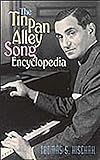 Thomas S. Hischak
The Tin Pan Alley Song Encyclopedia
Greenwood Press
Hardcover: 552 pages
(1 paragraph including the following types of information: Broadway productions, history and performers.)
|
|
|
|
|
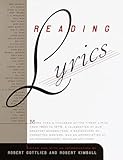 Robert Gottlieb, Robert Kimball
Reading Lyrics
Pantheon
Hardcover: 736 pages
(Includes the following types of information: song lyrics.)
|
|
|
|
|
“Satin Doll” was included in these films:
- Jo Jo Dancer, Your Life is
Calling (1986, The film
includes a stripper character named
“Satin Doll” played by Paula Kelly)
- White Hunter, Black Heart
(1990, Kevin Mahogany)
And on Broadway:
- Sophisticated Ladies
(1981, Terri Klausner and P.J. Benjamin)
- Dream (1997, Susan
Misner, a Johnny Mercer revue)
|
|
|
|
Comment Policy
- Your comments are welcome, including why you like
this tune, any musical challenges it presents, or additional background information.
- Jazz musicians, fans, and students of all ages use this website as an educational resource.
As such, off-topic, off-color, unduly negative, and patently promotional comments will be removed.
- Once submitted, all comments become property of JazzStandards.com.
By posting, you give JazzStandards.com permission to republish or otherwise distribute your comments in any format or other medium.
JazzStandards.com reserves the right to edit or remove any comments at its sole discretion.
|
|
| Click on any CD for more details at Amazon.com |
 Duke Ellington
Ken Burns JAZZ Collection: Duke Ellington
Sony
Original recording 1934
|
|
There is no question that Ellington was an immensely sophisticated bandleader and composer. This original performance of “Satin Doll” is a reminder that he and his band were exceptionally swinging as well.
|
 Earl Hines
Live at the New School
Chiaroscuro Records
Original Recording 1973
|
|
It is a challenge to single out one Earl Hines recording of “Satin Doll,” given the depth of his relationship to the song. One classic version is this playful solo piano recording from his amazing late-career renaissance.
|
 Ella Fitzgerald
Ella and Basie
1997 Polygram 539059
Original recording 1963
|
|
These sessions mark the first of numerous collaborations between Fitzgerald and Basie. Basie always had a knack for playing the music of his rival, Ellington, and Fitzgerald shows with her relaxed vocals why she, too, was such an important interpreter of Ellington’s material.
|
|
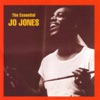
 Jo Jones
The Essential Jo Jones
1995 Vanguard 101
Original recording 1958
|
|
Drummer Jones presents one for the ages with this tight, swinging version of “Satin Doll” in a trio with bassist Tommy Bryant and pianist Ray Bryant.
|
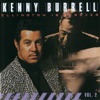
 Kenny Burrell
Ellington Is Forever, Vol. 2
Fantasy
Original recording 1975
|
|
Burrell, a definitive interpreter of Ellingtonia, teams up with vocalist Ernie Andrews here for a joyous “Satin Doll.”
|
 Oscar Peterson and Clark Terry
Oscar Peterson & Clark Terry
1994 Original Jazz Classics 806
Original recording 1975
|
|
A duo of Clark Terry and Oscar Peterson playing a happy tune like “Satin Doll” would seem to be a formula for cheerful music, and their masterful 1975 performance lives up to those expectations.
|
 Wes Montgomery
Wes Montgomery Trio
1991 Original Jazz Classics 34
Original recording 1959
|
|
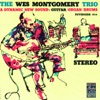
On the first of his many classic recordings for the Riverside label, Montgomery teams up with organist Melvin Rhyne for a swinging, understated version of “Satin Doll” that shows Montgomery’s innovative style to already be well-developed.
|
 Jimmy Smith
Organ Grinder Swing
2000, Polygram
Original recording, 1965
|
|
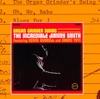
“Satin Doll”’ gets the Smith treatment as the Hammond organist swings with a measure of bluesy attitude thrown in. Drummer Grady Tate and guitarist Kenny Burrell round out the trio on one of Smith’s most revered sessions.
|
 McCoy Tyner
Nights of Ballads and Blues
1997, GRP 221
Original recording, 1963, Impulse!
|
|
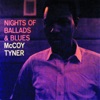
Pianist Tyner is inventive yet economical on this laid-back trio outing. Stepping away from his regular gig as a Coltrane sideman, he impresses in subtle ways, rendering the song with heavy yet unruffled emotion.
|
 Victor Feldman
The Arrival of Victor Feldman
1998 Original Jazz Classics 268
Original recording, 1958
|
|
While pianist Feldman is leader here it is the interplay with bassist Scott LaFaro and drummer Stan Levey that is in the spotlight. While endlessly playful, the trio takes their improvisation seriously, and the result is breathtaking.
|
 Dr. John
Duke Elegant
2000 Blue Note 23220
Original recording 2000
|
|
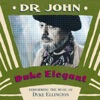
Pianist and growler Dr. John puts his indelible mark on the Ellington song, taking it downtown for a little New Orleans earthiness and spice.
|
|
|
|