|
|
|
| “Guitarist Mundell Lowe and bassist George Duvivier provide a gentle, unobtrusive backdrop for Vaughan to deliver a bittersweet rendition of the ballad.” |
|
 |
|
- Ben Maycock
|
|
| |
Duke Ellington and His Orchestra introduced “Sophisticated Lady” with a 1933 recording that featured solos by Toby Hardwick (alto sax), Barney Bigard (clarinet), Lawrence Brown (trombone), and Ellington (piano). The recording entered the pop charts on May 27 and stayed there for 16 weeks, rising to number three. The flip side of the record, “Stormy Weather,” enjoyed nearly the same fortune, rising to number four. Ted Koehler and Harold Arlen’s “Stormy Weather” had been introduced by Leo Reisman and His Orchestra (Harold Arlen, vocal) earlier that year, and Duke Ellington’s cover was just one of many that year.
|
| |
| |
|
| |
|
|
| |
| |
|
| |
|
|
| |
| |
|
| |
|
Other recordings of “Sophisticated Lady” to make the recording charts include:
|
|
| |
|
| |
|
As with many Ellington songs, “Sophisticated Lady” started out as an instrumental and was subsequently fitted with lyrics by Irving Mills and Mitchell Parish, a staff writer for Mills Publishing at the time.
|
| |
| |
|
| |
|
|
| |
| |
|
| |
|
The origin of the melody for “Sophisticated Lady” is often a point of contention. Lawrence Brown takes credit for creating the first eight bars and gives recognition to Toby Hardwick for the release. Other accounts give the majority of the credit to Hardwick. In his Ellington biography, Reminiscing in Tempo: A Portrait of Duke Ellington, Stuart Nicholson reports, “The composer credits originally showed Ellington, Hardwick, Brown, and Mills.” When the song was published, however, Hardwick and Brown were given no credit, and as a result, no royalties.
This was not unusual. Musicians were often paid a flat fee for compositions when the future potential was unknown. And most of these works never became hits. But “Sophisticated Lady” proved to be one of Ellington’s most popular and lucrative compositions.
In Beyond Category: The Life and Genius of Duke Ellington, author John Edward Hasse comments that in 1961 Ellington earned about $79,000 in royalties, much of that from recordings of Ellington standards by himself and other artists, especially “Don’t Get Around Much Anymore,” “Sophisticated Lady,” “Satin Doll,” and “C-Jam Blues.” Adjusted for inflation, that would translate to over $400,000 in 2004.
|
| |
| |
|
| |
|
According to William Zinsser in his book, Easy to Remember: The Great American Songwriters and Their Songs, the song “Laura” was born out of a disagreement between composer David Raksin and director Otto Preminger. Preminger wanted to use “Sophisticated Lady” as a theme in the film Laura, but Raksin felt it was wrong for the movie and wrote “Laura” in a weekend as a replacement.
The 1976 Natalie Cole hit, “Sophisticated Lady (She’s A Different Lady),” is unrelated.
|
|
|
|
More information on this tune... |
|
|
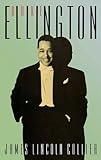 James Lincoln Collier
Duke Ellington
Oxford University Press, USA
Hardcover: 352 pages
(Ellington biographer Collier offers a musical analysis of the song.)
|
|
|
|
See the Reading and Research page for this tune for additional references. |
|
- Jeremy Wilson
|
|
| This section suggests definitive or otherwise significant recordings that will help jazz students get acquainted with
“Sophisticated Lady.” These recordings have been selected from the Jazz History and
CD Recommendations sections.
|
Duke Ellington’s original version of “Sophisticated Lady” ( Ken Burns JAZZ Collection: Duke Ellington) is still beautiful and, yes, sophisticated today even though it was recorded all the way back in 1933. This is the place to begin with this tune, and it shows that his mastery of orchestration and texture manifested early in his career. Another definitive version, albeit a less well-known one, comes from the 1970s series of solo piano tributes to Ellington recorded by pianist Earl Hines ( Earl Hines Plays Duke Ellington). Like Ellington, Hines was ahead of his time dating back to the 1920s, and the stunning richness of his harmonies here show that his forward-thinking remained, as well as showing some of the harmonic possibilities for the tune. The melody is very complicated to sing, so it is not surprising that a definitive vocal rendition comes from the effortless voice of Sarah Vaughan ( After Hours).
Noah Baerman - Jazz Pianist and Educator
|
|
Musical analysis of “Sophisticated Lady”
|
|
Original Key
|
Ab major (“A” sections) and G major (“B” section) on Ellington’s 1933 recording
|
|
Form
|
A -A -B -A
|
|
Tonality
|
Major throughout
|
|
Movement
|
The “A” sections arpeggiate upward and descend chromatically. The “B” section consists of leaps in both directions, ranging from a 3rd to a 7th.
|
|
Comments (assumed background)
|
|
For a song that is one of Ellington’s most angelic, it is devilishly difficult-particularly for the vocalist. It begins with a standard ii7 -V7 -I progression; however, the pickup note and its harmony are a half-step higher. The chord progression then leaps up a minor 6th (in the original key, from Bbm7 to Gb7) before descending chromatically to the V7 and resolving to I. The second part of A is another standard harmonic progression, I -VI7 -II7 - V7 resolving to I, but the composers cleverly disguise this by a chromatic descent from I to VI7.
The “B” section uses the fairly standard I -VI7 -ii - V7 progression (“I Could Write A Book,” “I’ll Take Manhattan,” “At Long Last Love,” “Indiana,”et. al.) followed by its common variation, I -biiº - ii - V7. One of the most difficult aspects of this piece is the modulations. The modulation between “A” and “B,” going from the original key into one a half-step lower, is unusual enough. It is, however, approached with use of orthodox voice-leading chords which make sense to the ear. Going from “B” back to the original key for that final “A” is a different story; it is a direct key change with no modulation. The only hint comes two measures before, when the I chord turns into a 7th chord with a flatted ninth, but, after resolving, the harmony drops a whole step in order to get back into the original key of the “A” section. Generally, successful performance of this tune requires excellent aural skills and a great deal of study.
|
|
K. J. McElrath - Musicologist for JazzStandards.com
|
|
Duke Ellington and Otto Hardwick’s sophisticated
song from 1933 was a hit following its introduction.
Two bands considered to be Ellington rivals, those
of Don Redman and Jimmie Lunceford, recorded the
tune in 1933 and 1934, respectively, while the great
jazz trio of the Boswell Sisters did a superb job
also in 1934. Two rather unusual recordings were
by harmonica player Larry Adler in 1935 and the
Washboard Rhythm Kings (a small combo using washboard
instead of drums) in 1933. On his first recording
session in 1933, the virtuosic jazz pianist Art
Tatum did a memorable version. Although Tatum’s
style at the time reflected the influence of “Fats”
Waller and Earl Hines, he was beginning to incorporate
the breathtaking runs which would later be his trademark.
Chris Tyle - Jazz Musician and Historian
|
Additional information for "Sophisticated Lady" may be found in:
|
|
|
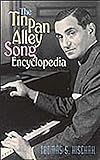 Thomas S. Hischak
The Tin Pan Alley Song Encyclopedia
Greenwood Press
Hardcover: 552 pages
(1 paragraph including the following types of information: Broadway productions, history and performers.)
|
|
|
|
|
James Lincoln Collier
Duke Ellington
Oxford University Press, USA
Hardcover: 352 pages
(3 paragraphs including the following types of information: music analysis.)
|
|
|
|
|
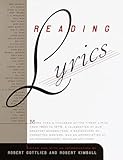 Robert Gottlieb, Robert Kimball
Reading Lyrics
Pantheon
Hardcover: 736 pages
(Includes the following types of information: song lyrics.)
|
|
|
|
|
“Sophisticated Lady” was included in these films:
- Paris Blues
(1961)
- The Natural (1984,
instrumental)
- Sophisticated Lady
(1989, Profile of singer Adelaide
Hall)
- Ulee’s Gold (1997,
Billie Holiday)
- Curse of the Jade Scorpion
(2001, Duke Ellington and His
Orchestra)
On Broadway “Sophisticated Lady”
was included in:
- Bubbling Brown Sugar
(1976, Chip Garnett, Vernon
Washington)
- Sophisticated Ladies
(1981, danced by Gregory Hines)
- Stardust (1987, Michele
Bautier)
|
|
|
|
Comment Policy
- Your comments are welcome, including why you like
this tune, any musical challenges it presents, or additional background information.
- Jazz musicians, fans, and students of all ages use this website as an educational resource.
As such, off-topic, off-color, unduly negative, and patently promotional comments will be removed.
- Once submitted, all comments become property of JazzStandards.com.
By posting, you give JazzStandards.com permission to republish or otherwise distribute your comments in any format or other medium.
JazzStandards.com reserves the right to edit or remove any comments at its sole discretion.
|
|
| Click on any CD for more details at Amazon.com |
 Duke Ellington
Ken Burns JAZZ Collection: Duke Ellington
Sony
Original recording 1934
|
|
The original recording of this tune is a classic example of early Duke Ellington balladry. This recording features Ellington’s lush ensemble scoring along with lyrical contributions from numerous individuals in the band, including trombonist Lawrence Brown, saxophonist Otto Hardwicke, clarinetist Barney Bigard and Ellington himself on piano.
|
 Thelonious Monk
Plays Duke Ellington
Riverside 201
Original recording 1955
|
|
Monk always had an emotionally compelling way with a ballad, and the sophisticated harmonies of this tune prove to be an ideal fit for his style.
|
 Earl Hines
Earl Hines Plays Duke Ellington
1996 New World 361
Original recording 1971
|
|
Earl Hines was one of the great interpreters of Ellington’s material, and this recording displays how ahead of his time Hines was in his use of rich, modern harmonies.
|
 Dexter Gordon
Dexter Gordon At Montreux
With Junior Mance
(1991 Prestige 7861) Original recording 1970
|
|
Gordon displays both lyricism and intensity on this in-depth live exploration of “Sophisticated Lady.”
|
 Duke Ellington
Solos, Duets and Trios
1990 RCA 2178
Original recording 1940
|
|
Jimmy Blanton revolutionized the bass and was one of the first bop-leaning soloists on any instrument. Hearing him take the lead on this duet with Ellington is proof of his remarkable command of the bass as a melodic instrument, and he treats us to some of his bowing as well.
|
|
 Sarah Vaughan
After Hours
1997, Blue Note 55468
Original recording, 1955
|
|
The singer is superb in this small group performance. Guitarist Mundell Lowe and bassist George Duvivier provide a gentle, unobtrusive backdrop for Vaughan to deliver a bittersweet rendition of the ballad.
|
 James Carter
J.C. On The Set
1994 Sony 66149
|
|
Horn man Carter picks up the baritone sax for this brooding version of the Ellington tune on an album JazzTimes called “one of the outstanding debuts of this year--or just about any other...”
|
|
|
|