|
|
|
| “...after gradually varying the melody and the words, adding new ideas more extensively in the third chorus, she moves into a beautifully blues-oriented coda.” |
|
 |
|
- Leonard Feather
|
|
| |
As popular improvisational vehicles, many songs did not endure the transition from the loose Dixieland style of the “Roaring Twenties” to the smooth swing sound of the 1930’s. They were unceremoniously dropped from jazz musicians’ catalogs, performances and recordings, and, over time, relegated to period collections and specialty bands. There are, however, a handful of songs written in the mid-twenties or earlier that have persisted as the topmost jazz standards: WC Handy’s “St. Louis Blues” (1914) and George and Ira Gershwin’s “The Man I Love” (1924) and “Oh, Lady Be Good” (1924).
The song with more endurance than any of the aforementioned, though, is “Sweet Georgia Brown,” which has been recorded by Count Basie, Eddie Condon, Dave Brubeck, Benny Carter, Sonny Criss, Herb Ellis, Ella Fitzgerald, Stan Getz, Dizzy Gillespie, Stephane Grappelli, Coleman Hawkins, Gene Krupa, Charlie Parker, Oscar Peterson, Bud Powell, Django Reinhardt, Sonny Stitt, Art Tatum, Mel Torme, Anita O’Day, Ben Webster, and Lester Young, to name a few.
“Sweet Georgia Brown” was immediately popular. Ben Bernie and His Orchestra’s hit recording stayed on the pop charts for 13 weeks, resting in the number one slot for five weeks in a row. Also charting with the song in 1925 were Isham Jones and His Orchestra, rising to number five, and Ethel Waters, reaching number six. In 1932, a Bing Crosby recording of “Sweet Georgia Brown” (accompanied by Isham Jones and His Orchestra) reached the number two position for three weeks. A Brother Bones and His Shadows recording reached number ten in 1949 and would later gain fame and recognition as the anthem for the Harlem Globetrotters, complete with whistled chorus.
|
| |
| |
|
| |
|
|
|
| |
|
| |
|
|
| |
| |
|
| |
|
|
| |
| |
|
| |
|
Georgia Brown was a devil-sent vamp in the 1940 Broadway hit Cabin in the Sky. George Balanchine choreographed the musical play with the help of Katherine Dunham, who played Georgia. Starring Ethel Waters and with a score by Vernon Duke and John La Touche, Cabin in the Sky opened on October 25,1940, at the Martin Beck Theatre and ran for 156 performances. The 1943 film adaptation of Cabin in the Sky also starred Ethel Waters, Lena Horne, and Eddie “Rochester” Anderson with appearances by Louis Armstrong and Duke Ellington. But neither production featured the song “Sweet Georgia Brown.”
|
|
|
|
More information on this tune... |
|
|
 Henry Martin
Enjoying Jazz
Schirmer Books
Paperback: 302 pages
(The author devotes one page to the analyses of the music and lyric.)
|
|
|
|
See the Reading and Research page for this tune for additional references. |
|
- Jeremy Wilson
|
|
| This section suggests definitive or otherwise significant recordings that will help jazz students get acquainted with
“Sweet Georgia Brown.” These recordings have been selected from the Jazz History and
CD Recommendations sections.
|
“Sweet Georgia Brown” has become known primarily as a vehicle for blazing up-tempo performances. Nat “King” Cole’s 1945 trio version ( Nat King Cole Trio: Instrumental Classics) is a standout version in this vein, showing off Cole’s often underappreciated piano skills. Meanwhile, Bud Powell’s version from 1950 ( Jazz Giant) is even faster and proved to be one of the primary examples of the style that made him such a dominant influence on the development of jazz piano.
Noah Baerman - Jazz Pianist and Educator
|
Many jazz standards seem to possess a magic,
some quality that makes them work yet defies analysis.
This is not the case with “Sweet Georgia Brown”
as musicologists and performers are quick to point
out its appeal and its difficulties. With an A-B-A-C
form “Sweet Georgia Brown” is at once familiar as
well as challenging. Chord progressions based on
the “circle of fifths” define the first 16 bars,
and the song takes some surprising harmonic detours.
“Sweet Georgia Brown” seems to have been designed
with jazz improvisation in mind, and there has been
no shortage of improvisers. Jackie McLean based
his “Donna” on “Sweet Georgia Brown” and Miles Davis
recorded it as “Dig” (1951). On Monk’s Dream
(1962),
Thelonious Monk included only one new composition,
“Bright Mississippi,” which is also based on the
chord changes of “Sweet Georgia Brown.”
The verse of the song is rarely sung as it merely
paraphrases what’s coming in the chorus, its lines
having no punch. The soft-pedaling stops there,
however, as the chorus is one lively declaration
after another describing Georgia. While not as mean
as “Hard Hearted Hannah,” Georgia’s loaded with
appeal and doesn’t mind casualties. When the fellows
sigh and die, she cools them down and knocks them
dead. -JW
|
Musical analysis of
“Sweet Georgia Brown”
|
| Original
Key |
Ab major |
| Form |
A1 – A2 or
A – B – A – C, depending on whether it’s
divided into sixteen-bar or eight-bar phrases |
| Tonality |
Primarily
major |
| Movement |
Generally
upward by steps with intermittent skips
downward, creating a jumpy, “jagged” ascent |
|
Comments
(assumed
background)
|
|
The melodic line is challenging, requiring
a fair amount of dexterity to perform properly.
Harmonically, this goes through almost every
key imaginable, but, since the changes are
arranged in a circle of fifths (“A”) or
in a i – V7 – i context (“B”), they are
not difficult to follow. Even the chromatically
descending progression in the final four
measures of the song is used so commonly
as a “turnaround” (especially in Dixieland)
that it should be part of every performer’s
repertoire. |
|
K. J. McElrath - Musicologist for JazzStandards.com |
|
From its composition in 1925, “Sweet Georgia
Brown” was a jazz musician’s favorite. It was recorded
many times, but Red Nichols’ recording of 1930 stands
out, not only musically but historically, for the
session included four musicians who became prominent
band leaders later in 1930s:
Benny Goodman,
Glenn Miller, Gene Krupa and Jack Teagarden.
Cornetist Nichols, not the jazziest of players,
always surrounded himself with exceptional talent
and featured them prominently, as is the case with
“Sweet Georgia Brown.” Goodman and pianist Joe Sullivan
get a chorus apiece, but there’s a special “bluesy”
coda by trombonist Jack Teagarden, utilizing just
the slide section of the instrument played into
a highball glass, an effect he became famous for.
Chris Tyle - Jazz Musician and Historian
|
Additional information for "Sweet Georgia Brown" may be found in:
|
|
|
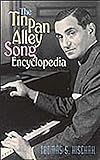 Thomas S. Hischak
The Tin Pan Alley Song Encyclopedia
Greenwood Press
Hardcover: 552 pages
(1 paragraph including the following types of information: film productions, history, performers and style discussion.)
|
|
|
|
|
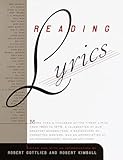 Robert Gottlieb, Robert Kimball
Reading Lyrics
Pantheon
Hardcover: 736 pages
(Includes the following types of information: song lyrics.)
|
|
|
|
|
Henry Martin
Enjoying Jazz
Schirmer Books
Paperback: 302 pages
(1 page including the following types of information: lyric analysis and music analysis.)
|
|
|
|
|
“Sweet Georgia Brown” was included in these films:
- Widow from Chicago (1930)
- Bring on the Girls (1937,
Jerry Goff and Jack Kerr)
- Waterfront (1939)
- Dangerously They Live (1942)
- Broadway(1942)
- Follow the Boys (1944, Louis
Jordan Orchestra)
- Young Man with a Horn (1950)
- Harlem Globe Trotters (1951)
documentary
- The Helen Morgan Story (1957,
Cara Williams)
- Some Like It Hot (1959)
- Jazz on a Summer’s Day (1959,
Anita O’Day, documentary)
- American Pop (1981)
- To Be or Not to Be (1983,
Mel Brooks and Anne Bancroft)
- The Fabulous Baker Boys (1989)
- Crimes and Misdemeanors (1989,
Coleman Hawkins All Stars)
- Oscar (1991,
Bing Crosby)
- The Babe (1992, Orbert Davis
and The Speakeasys)
- Sweet and Lowdown (1999, dubbed
on guitar for Sean Penn by Howard Alden)
And on Broadway:
- Bubbling Brown Sugar (1976,
Lonnie McNeil, Vivian Reed, Newton Winters)
|
|
|
|
Comment Policy
- Your comments are welcome, including why you like
this tune, any musical challenges it presents, or additional background information.
- Jazz musicians, fans, and students of all ages use this website as an educational resource.
As such, off-topic, off-color, unduly negative, and patently promotional comments will be removed.
- Once submitted, all comments become property of JazzStandards.com.
By posting, you give JazzStandards.com permission to republish or otherwise distribute your comments in any format or other medium.
JazzStandards.com reserves the right to edit or remove any comments at its sole discretion.
|
|
| Click on any CD for more details at Amazon.com |
 Django Reinhardt
All Star Sessions
2001 Blue Note 20591
Original recording 1937
|
|
This classic track doesn’t feature Django as a soloist but is nonetheless an exciting performance. It features Coleman Hawkins on tenor saxophone and Benny Carter showing off his skill on the trumpet.
|
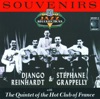
 Django Reinhardt
Souvenirs
Polygram Records
Original Recording 19
|
|
On this track, recorded about nine months after the session with Coleman Hawkins, Django and Stephane really get to let loose and show their influential soloing styles.
|
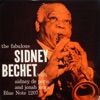
 Sidney Bechet
Fabulous Sidney Bechet
2001 Blue Note 30607
Original recording 1953
|
|
Bechet more than holds his own on this spirited, up-tempo meeting with such younger players as trumpeter Jonah Jones and bassist Walter Page.
|
 Nat "King" Cole
Nat King Cole Trio: Instrumental Classics
Blue Note Records 98288
Original recording 1945
|
|
Cole and guitarist Oscar Moore show off their virtuosity and creativity on this romping performance.
|
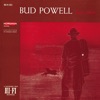
 Bud Powell
Jazz Giant
Polygram Records
|
|
Powell takes this tune at a dizzying tempo and gives us a good example of the improvisational style that set the standard for jazz pianists for years to come.
|
 Dave McKenna
Solo
1994 Chiaroscuro Records 119
Original recording 1956
|
|
McKenna tackles “Sweet Georgia Brown” with his typical combination of walking bass and flowing right hand. The result is infectiously swinging.
|
|
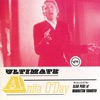
 Anita O'Day
Ultimate Anita O'Day
1999, Verve
Original recording, 1958
|
|
The performances for this compilation were selected and annotated by fellow vocalist Alan Paul of the Manhattan Transfer. “Sweet Georgia Brown”’ became a signature song for O’Day who opens it here with a Native American rhythm and takes it through several tempo changes.
|
|
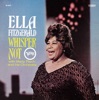
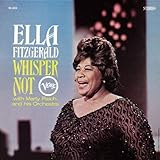
 Ella Fitzgerald
Whisper Not
2002 Verve 314589478
Original recording 1966
|
|
A tremendously entertaining performance by an incredible vocalist. Fitzgerald begins delicately, drawing the listener into a momentum that does not give up until the explosive ending.
|
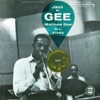
 Matthew Gee
Jazz By Gee!
1996, Original Jazz Classics 1884
Original recording, 1957
|
|
Trombonist Gee and his group give everything they’ve got in this rousing, dizzying version of the song.
|
|
|
|