|
|
|
| “Vocalist Armstrong delivers a sincere ‘Sweet Lorraine’ as Peterson’s quartet supports him with grace and depth.” |
|
 |
|
- Ben Maycock
|
|
| |
Written in 1928, ”Sweet Lorraine” found modest popularity with a recording by Rudy Vallee and his Heigh-Ho Yale Collegians. In that same year clarinetist Jimmie Noone’s Apex Club Orchestra made an instrumental recording of the song for the Vocalion label. Further recordings were made Isham Jones and His Orchestra (1932), and jazz violinist Joe Venuti (1933).
|
| |
| |
|
| |
|
It was Teddy Wilson and His Orchestra’s 1935 Brunswick recording, however, that made the pop charts for one week in October, rising to number seventeen. For Teddy Wilson it would be one of the first of dozens of hits he would produce in the 1935-1937 time frame.
|
| |
| |
|
| |
|
|
|
| |
|
| |
|
“Sweet Lorraine” was Clifford Burwell’s only hit composition. He worked as a pianist for several popular bands including Rudy Vallee and His Connecticut Yankees.
|
| |
| |
|
| |
|
Mitchell Parish is best known for penning the lyrics to “Star Dust” in 1929, but “Sweet Lorraine” was his first hit.
|
| |
| |
|
| |
|
The endurance of “Sweet Lorraine”as a favorite among jazz performers may be attributed, at least in part, to Nat “King” Cole, who kept the song in the limelight with his popular recordings. Cole’s fondness for “Sweet Lorraine” began as a Chicago teenager listening to clarinetist Jimmie Noone play. This was undoubtedly sometime after Noone’s group was called “Jimmie Noone’s Apex Club Orchestra,” as the Apex Club was raided and closed down for serving alcohol during prohibition in 1930. Nat was 13.
“Sweet Lorraine” would play a memorable part in Cole’s transition from piano player to vocalist. The legend, which also reveals the source of his royal nickname, is told by Leslie Gourse in the liner notes for The Nat ‘King’ Cole Trio: The MacGregor Years, 1941-1945. Initially Cole’smain interest was piano, but in 1938, while performing in a Los Angeles nightclub, a tipsy customer asked him to sing, and Cole refused.
The customer insisted. Bob Lewis, the club owner, told Nat to sing-or else. So Nat sang “Sweet Lorraine” ...[and the] customer and everyone else liked the way Nat sang. Bob Lewis put a tinsel crown on Nat’s head and said, “I crown you Nat ‘King’ Cole.”
|
|
|
|
More information on this tune... |
|
- Jeremy Wilson
|
|
|
Musical analysis of
“Sweet Lorraine”
|
| Original
Key |
F major,
with a modulation to Bb major during the
bridge |
| Form |
A - A - B
- A |
| Tonality |
Major |
| Movement |
85% ascending
step-wise with downward skips not exceeding
a major 3rd |
|
Comments
(assumed
background)
|
|
This melody is extremely motivic and uses
the same pattern. The “A” motif consists
of an ascending scale, followed by a skip
of a downward third, from which the pattern
repeats. In the “B” section (bridge), the
motif is a simple scale moving up a fourth
by step, then returning. This makes for
a tune that “stays in the ear” and is easy
to learn.
Harmonically the “circle of fifths” is
used extensively, bearing some resemblance
to, among others, “Somebody Else Is Taking
My Place,” “Charleston,”
and “All of Me.” The I chord is followed
by either a VI7 chord (“A” section) or a
III7. In either case, the progression cycles
back to the tonic key in a predictable fashion.
This tune should pose few problems for
the experienced performer. The novice will
find familiarity with scale patterns and
the circle of fifths to be useful.
|
|
K. J. McElrath - Musicologist for JazzStandards.com |
|
The period of the late 1930s and early ‘40s was
a time of great interest in jazz. A number of indie
record companies appeared, allowing their artists
a freedom rarely granted by the big companies. In
1940, the Hot Record Society produced an album featuring
New Orleans jazz veteran Sidney Bechet along with
Chicago jazz stalwart Muggsy Spanier. The rhythm
section consisted of ex-Ellington
bassist Wellman Braud and guitarist Carmen Maestren
(from Tommy Dorsey’s band), an unusual combination.
The recordings came out in a 12” 78 rpm album,
a novelty for jazz music at that time. Their version
of “Sweet Lorraine” is memorable not so much for
solo work but for the wonderful interplay between
the instrumentalists, who created a beautiful, mellow
ensemble sound rarely heard from a pickup group.
Chris Tyle - Jazz Musician and Historian
|
Additional information for "Sweet Lorraine" may be found in:
|
|
|
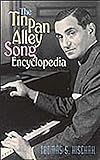 Thomas S. Hischak
The Tin Pan Alley Song Encyclopedia
Greenwood Press
Hardcover: 552 pages
(1 paragraph including the following types of information: history, performers and style discussion.)
|
|
|
|
|
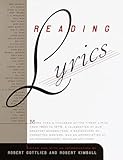 Robert Gottlieb, Robert Kimball
Reading Lyrics
Pantheon
Hardcover: 736 pages
(Includes the following types of information: song lyrics.)
|
|
|
|
|
“Sweet Lorraine” was included in these films:
- Something’s Gotta Give (2003,
Stephane Grappelli)
And on stage:
|
|
|
|
Comment Policy
- Your comments are welcome, including why you like
this tune, any musical challenges it presents, or additional background information.
- Jazz musicians, fans, and students of all ages use this website as an educational resource.
As such, off-topic, off-color, unduly negative, and patently promotional comments will be removed.
- Once submitted, all comments become property of JazzStandards.com.
By posting, you give JazzStandards.com permission to republish or otherwise distribute your comments in any format or other medium.
JazzStandards.com reserves the right to edit or remove any comments at its sole discretion.
|
|
| Click on any CD for more details at Amazon.com |
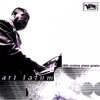
 Art Tatum
20th Century Piano Genius
1996 Polygram 31763
Original recording 1955
|
|
This 2-CD set features two solo piano renditions of “Sweet Lorraine.”’ The tempo ranges from a relaxed medium swing on one version to a brighter tempo on the other, but both versions are irresistible and feature Tatum at his most swinging.
|
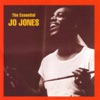
 Jo Jones
The Essential Jo Jones
1995 Vanguard 101
Original recording 1958
|
|
”Papa Jo”’ leads his trio (with brothers Ray Bryant on piano and Tommy Bryant on bass) through a tight and infectiously swinging “Sweet Lorraine.”’
|
 Benny Carter and Oscar Peterson
Benny Carter Meets Oscar Peterson
1990 Pablo 2310926
Original recording 1986
|
|
Alto saxophonist Carter was 79 years young when he met up with Peterson for this relaxed, soulful rendition of “Sweet Lorraine.”’
|
 Stephane Grappelli
Shades of Django
Polygram Records
|
|
Grappelli takes “Sweet Lorraine”’ at a relaxed medium tempo and his irrepressible sense of swing proves to be a perfect fit for the tune.
|
 Cassandra Wilson
Blue Skies
2002 Winter & Winter 919018
Original recording 1988
|
|
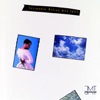
It is unusual to hear a female vocalist interpret this song, but Wilson does a fabulous job in this slow duo exploration with pianist Mulgrew Miller.
|
|
 Kenny Barron Trio
Lemuria-Seascape
2001, Candid Records
Original recording, 1991, Black Lion Productions Ltd
|
|
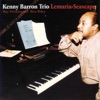
”Sweet Lorraine”’ succumbs to pianist Barron’s gentle touch, while bassist Ray Drummond and drummer Ben Riley give her a little nudge.
|
 Nat King Cole
Complete After Midnight Sessions
Blue Note Records
|
|
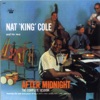
This is Cole’s jazziest vocal album, featuring his trio--John Collins (g) and Charlie Harris (b)--with guests Lee Young (d), Willie Smith (as), Harry Edison (tp), Stuff Smith (v), and Juan Tizol (tb). They cover three of the top standards, including one of Cole’s signature songs, “Sweet Lorraine.”
|
|
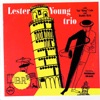
 Lester Young
The Lester Young Trio
Polygram Records 21650
Original recording 1946
|
|
Though this CD was issued under Lester Young’s name, Young is nowhere to be heard on this tune; this is one of four tunes on the album that instead features the tenor saxophone of a very young Dexter Gordon along with the trumpet of Harry “Sweets” Edison. The bandleader here is Nat “King” Cole; although Cole was known for his vocal renditions of “Sweet Lorraine,” he sticks to the piano here.
|
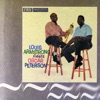
 Louis Armstrong
Louis Armstrong Meets Oscar Peterson
1997 Verve 539060
Original recording 1957
|
|
The old guard meets the new guard with surprisingly touching results. Vocalist Armstrong delivers a sincere “Sweet Lorraine”’ as Peterson’s quartet supports him with grace and depth.
|
|
|
|