|
|
|
| Tatum’s legendary recording brought “Tea for Two” into the jazz canon ... |
|
 |
|
- Chris Tyle
|
|
| |
“Tea for Two” was introduced by Louise Groody and John Barker in the Broadway musical, No, No, Nanette, which opened on September 16, 1925, at the Globe Theater and ran for 321 performances. The song was known to the public well before its official introduction, as the pre-Broadway run of No, No, Nanette was so successful in Chicago that its producer, Harry Frazee, let it play there for over a year.
|
| |
| |
|
| |
|
|
| |
| |
|
| |
|
The Benson Orchestra of Chicago was the first to see their recording of “Tea for Two” on the pop charts. Their instrumental rendition was recorded in August of 1924 and entered the charts the following January, rising to number five. That same month a Marion Harris recording climbed the charts to number one and held that position for three weeks. All told, the charting hits were:
- The Benson Orchestra of Chicago (1925, instrumental, #5)
- Marion Harris, (1925, #1)
- Ben Bernie and His Orchestra (1925, instrumental, #10)
- Ipana Troubadours (1930, #15)
- Teddy Wilson and His Orchestra (1937, instrumental, #18)
- Art Tatum (1939, instrumental, #18)
- Tommy Dorsey and His Orchestra, led by Warren Covington (1958, as “Tea for Two Cha Cha”, instrumental, #7)
|
|
| |
|
| |
|
Also starring Charles Winniger, No, No, Nanette is about a wealthy Bible manufacturer accompanying his ward (Nanette) and her girl friends to Atlantic City for a weekend. Problems arise when her boyfriend, her father’s girlfriends, his wife, and lawyer arrive unexpectedly.
The show’s score, by composer Vincent Youmans and lyricists Irving Caesar and Otto Harbach, produced a second jazz standard, “I Want to Be Happy” (lyrics by Caesar).
For those familiar with baseball history, Harry Frazee, former owner of the Boston Red Sox, is said to have financed No, No, Nanette using the proceeds of his $100,000 sale of Babe Ruth to the New York Yankees in 1919. Red Sox fans have long blamed the transaction for the demise of their franchise, calling it “The Curse of the Bambino.”
According to Glenn Stout, author of Yankees Century: 100 Years of New York Yankees Baseball, “Frazee has become a malevolent figure like other local symbols of evil such as the Boston Strangler, Bucky ‘Bleeping’ Dent, and Don Zimmer.” Stout goes on to say that, while it’s a nice story, Frazee did not use the $100,000 to finance his play. Frazee was, at that time, embroiled in an assortment of complex legal and financial struggles, but they did not involve his theatrical interests. If anything, he intended to use the money for his ongoing lawsuits, or possibly new ball players.
No, No, Nanette was adapted to the big screen in 1930 and again in 1940, both films, at best, mediocre. In the 1950 Doris Day vehicle entitled Tea for Two, little of the No, No, Nanette story line was retained, but for Day fans it is considered one of her better musicals.
In 1971 No, No, Nanette was revived as No, No, Nanette - The New 1925 Musical. The successful show opened January 19, 1971, at the 46th Street Theatre, ran for 861 performances and won four Tony awards including Best Actress for Helen Gallagher. The revival is also remembered for bringing tap dancing star Ruby Keeler back to the stage after 30 years.
For his lyric’s “hook phrase,” Irving Caesar used the term “Tea for Two,” originally an 18th Century English street cry. A vendor wanting to attract business would lower the price of a pot of tea from thruppence to tuppence by shouting, ‘tea for two.’ In the 19th century, when Victorian ladies and gentlemen would meet in the afternoon for tea, the order of “Tea for Two” was often an early sign of courting.
There are a number of stories relating how Youmans came up with the melody for “Tea for Two.” Some have him so overjoyed with his creation that he got Caesar out of bed to write the lyrics. But, according to David Ewen in his book, All the Years of American Popular Music, “Tea for Two” was written many years before, while Youmans was still in the Navy. All accounts do agree, however, that when he presented the melody to Caesar, Youmans wanted a lyric then and there. Caesar wrote what he thought was a “dummy lyric,” promising to write the real one the next day. Apparently Youmans and Caesar reconsidered in the morning and retained the quaint lyrics with what Philip Furia in his book The Poets of Tin Pan Alley: A History of America’s Great Lyricists calls “the tritest of rhymes,” the ee-oo pair.
|
| |
| |
|
| |
|
|
| |
| |
|
| |
|
|
|
|
|
More information on this tune... |
|
See the Reading and Research page for this tune for additional references. |
|
- Jeremy Wilson
|
|
| This section suggests definitive or otherwise significant recordings that will help jazz students get acquainted with
“Tea for Two.” These recordings have been selected from the Jazz History and
CD Recommendations sections.
|
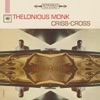
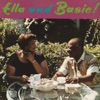
“Tea For Two” is most closely associated with a pair of pianists who are both huge influences on other jazz musicians but who couldn’t be much more different from one another. Art Tatum recorded the tune several times, beginning with a performance from his landmark 1933 session ( Piano Starts Here). The technical and harmonic innovations here continue to inspire (and at times intimidate) musicians to this day. Meanwhile, Thelonious Monk on two occasions recorded his own influential, sparse and harmonically quirky arrangement of “Tea for Two.” The second of these recordings ( Criss-Cross) is irresistible. Among vocal versions, Ella Fitzgerald’s version with Count Basie’s band ( Ella & Basie) is charming and provides a more straightforward approach to the tune.
Noah Baerman - Jazz Pianist and Educator
|
Although sentimental, operetta-like
lyrics were fading in popularity
in the early 1900’s, they had not
completely fallen from favor by
1924, especially in Broadway musicals.
But by the middle 1900’s, songs
like “Tea for Two,” thought to be
corny and dated, were relegated
to novelty tune status. A case in
point, “Tea for Two” was the number
Doc Severinsen’s Band would play
while Johnny Carson broke into a
soft-shoe dance when a joke or skit
failed.
Saving the song from extinction,
and responsible for its popularity
as a jazz standard, is the repetitive
and energetic nature of Youmans’
composition. Its refrain is almost
entirely dotted quarter and eighth
notes; its narrow range is just
over one octave; and the bridge
is almost not a bridge, repeating
the main theme in a different key.
William Zinsser comments on “Tea
for Two” and other Youmans songs
in his book
Easy to Remember: The Great American
Songwriters and Their Songs
saying,
By all the laws of music
those songs should be monotonous. But
they’re full of life. Their very
repetitiveness propels them forward, giving
them a nervous momentum…
This coupling of energy and repetition
provides an excellent basis, a unified
composition, upon which jazz musicians
can perform embellishments and improvisations. -JW
|
Musical analysis of
“Tea for Two”
|
| Original
Key |
Ab major
with false key change to C major during
second “A” section |
| Form |
A1 – A2 –
A3 – B |
| Tonality |
Major throughout |
| Movement |
Almost entirely
in thirds, with a step-wise descent in mm.
1-4 of “B” |
|
Comments
(assumed
background)
|
|
Melodically repetitive, the harmonic progression
is a fairly undemanding vehicle for improvisation.
In its most basic form (without the embellishing
chords originally written by Youmans), it’s
a ii7 –V7 – I progression in two different
keys until section “B,” which is basically
no more than ii7 – VI7 (V7/ii) – ii7 repeated
several times until a final I –iii˚7 – ii7
turnaround. In reality, Youmans uses several
chord substitutions that make the original
score much more interesting than the way
it is usually played these days. It is worth
the time to track down the original version
when learning this tune. |
|
K. J. McElrath - Musicologist for JazzStandards.com |
|
No discussion of this tune would be complete
without crediting Art Tatum, the man who would inspire
generations of jazz musicians with his brilliant
treatment of “Tea for Two.” Although Tatum’s piano
solo recording shared last place with
Teddy Wilson in the pop chart recordings list, it has turned out to be one of
the most famous and influential recordings in jazz
history. Tatum had been playing “Tea for Two” for
years before the recording. It was the song he played
in 1931 at his first cutting session (competition
between bands or musicians) with
Fats Waller and James P. Johnson. That evening,
one man after another took turns, each topping the
other until, with some coaxing from Waller, Tatum
took a seat and played his “Tea for Two.” When he
was done you could hear a pin drop. The gentlemen
had met their match!
Tatum’s legendary recording brought “Tea for
Two” into the jazz canon, but that was not all it
accomplished. His use of substitute chords, popularized
by his 1939 recording in which he completely
transforms the third chorus, would have a profound
and lasting effect on the way jazz musicians improvise
on popular songs.
Renowned jazz pianist Michel Camilo remembers
hearing Tatum’s “Tea for Two” on the radio at age
fourteen. As a result the classically trained youth
decided to become a jazz musician. “I found out
that was called jazz, and I fell in love with it.
Then I found out that was improvisation, which for
me is instant composition.”
Jazz historian Joe Mosbrook, in his Jazzed
in Cleveland series (www.cleveland.oh.us/wmv_news)
tells how Oscar Peterson first met Tatum at the
Cleveland club, Val’s in the Alley.
[Peterson recounts,] “We had a beer or two and
I said, `Hey, man, I’d like to hear you play!’ Tatum
said, `You play first.’” Peterson said he was young
and eager, so he did. “When I finished, Tatum told
me, `Hey, I like your style very much.’” Tatum asked
him what he wanted to hear. Peterson said, “Something
like `Tea For Two.’” “I couldn’t believe what I
was hearing, said Peterson, “I’m about six foot
four and I was leaning against the piano and my
legs just went to water. By the time he got through
three more numbers, I couldn’t take it anymore….”
Art Tatum’s 1939 recording of “Tea for Two”
was inducted into the Grammy Hall of Fame in
1986.
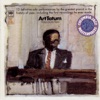
The grand master’s collection of standards,
Piano Starts Here, illustrates the unmatched
clarity and speed of his playing and contains his
1933 rendition of “Tea for Two.” -JW
The Quintette of the Hot Club of France, the
group that starred Belgian-gypsy guitarist Django
Reinhardt and French violinist Stephane Grappelli,
recorded a sublime rendition of “Tea for Two” in
May, 1939.
Reinhardt and Grappelli open the proceedings
on the verse, out-of-tempo. This is a version of
the tune without fireworks, taken at a medium tempo,
perfect for dancing at a Montmartre cabaret. Django’s
solo is magical, perhaps one of his best, especially
the second-half where he repeatedly hits a single
note, allowing it to resonate, then improvises a
few bars. Grappelli follows him in a solo borrowing
some ideas from the virtuoso American jazz violinist
Joe Venuti. The tune ends with a shortened version
of the verse, as before out-of-tempo, with just
Django and Stephane. Jazz musique par excellence.
Chris Tyle - Jazz Musician and Historian
|
Additional information for "Tea for Two" may be found in:
|
|
|
 David Ewen
Great Men of American Popular Song
Prentice-Hall; Rev. and enl. ed edition
Unknown Binding: 404 pages
(2 paragraphs including the following types of information: history.)
|
|
|
|
|
 Alan Lewens
Popular Song: Soundtrack of the Century
Watson-Guptill Publications
Paperback: 192 pages
(1 page including the following types of information: history, performers, style discussion and song writer discussion.)
|
|
|
|
|
 Robert Gottlieb, Robert Kimball
Reading Lyrics
Pantheon
Hardcover: 736 pages
(Includes the following types of information: song lyrics.)
|
|
|
|
|
“Tea for Two” was included in these films:
- No, No, Nanette (1930)
- No, No, Nanette (1940)
- Tea for Two (1950, Doris Day,
Gordon MacRae)
- Young Man with a Horn (1950,
instrumental)
- With a Song in My Heart (1952,
Susan Hayward dubbed by Jane Froman, Robert
Wagner)
- The Court-Martial of Billy Mitchell
(1955)
- Sincerely Yours (1955, Liberace)
- Show Biz Bugs (1957, Milt
Franklyn) Bugs BUnny cartoon
- Jazz on a Summer’s Day (1960,
Anita O’Day)
- Oscar (1991, Fred Waring and
His Pennsylvanians)
- The Mambo Kings (1992, Mambo
All-Stars)
- Forget Paris (1995)
And on stage:
- No, No, Nanette (1925) Broadway
musical
- No, No, Nanette (1971) Broadway
revival
- No, No, Nanette (1973) London
revival
And on television:
- No, No, Nanette (1951) NBC
Musical Comedy Time
- The Muppet Show (1979, Rowlf,
Lew Zealand) Sseason 3, Episode 62
- Sex and the City (2002, Nancy
Shane) HBO TV series, Season 4, Episode 63,
"Change of a Dress"
|
|
|
|
Comment Policy
- Your comments are welcome, including why you like
this tune, any musical challenges it presents, or additional background information.
- Jazz musicians, fans, and students of all ages use this website as an educational resource.
As such, off-topic, off-color, unduly negative, and patently promotional comments will be removed.
- Once submitted, all comments become property of JazzStandards.com.
By posting, you give JazzStandards.com permission to republish or otherwise distribute your comments in any format or other medium.
JazzStandards.com reserves the right to edit or remove any comments at its sole discretion.
|
|
| Click on any CD for more details at Amazon.com |
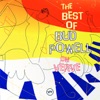
 Bud Powell
Complete Bud Powell on Verve
Polygram Records
Original recording 1955
|
|
Powell was very influenced by Art Tatum, who had earlier made a technically stunning recording of "Tea for Two."' Powell's version, in a trio with Ray Brown and Buddy Rich, is also stunning, but in a very different way. After he introduces the tune by himself in free time, he brings Brown and Rich for a romp at breakneck speed that puts the focus on Powell's flowing right hand lines.
|
 Tommy Dorsey
1939
2002 Classics 1237
Original recording 1939
|
|
Shortly after Dorsey's death, his "ghost band"' had a big hit with the "Tea for Two Cha-Cha."' This early recording, anchored by the swinging drums of Dave Tough, is where it all started.
|
|
 Thelonious Monk
Criss-Cross
2003, Sony
Original recording, 1963, Legacy
|
|
Pianist Monk is at his slyest on two takes of the song. Both tracks are highly imaginative with touches of humor and a vibrant splash of ragtime. Bassist John Ore and drummer Frankie Dunlop are the perfect foils for Monk's improvisations.
|
 Ella Fitzgerald
Ella and Basie
1997 Polygram 539059
Original recording 1963
|
|
Fitzgerald, backed by the typically swinging Basie band, offers a charming and relaxed version of "Tea for Two."'
|
 Lester Young, Oscar Peterson Trio
Lester Young with Oscar Peterson Trio
Verve
|
|
"Tea for Two"' in the hands of tenor saxophonist Lester Young is bouncy and sharp. The incomparable 'trio' that accompanies him is made up of Oscar Peterson at the piano, Ray Brown on bass, Barney Kessel on the guitar and J.C. Heard on the drums.
|
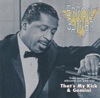
 Erroll Garner
That's My Kick & Gemini
1994, Telarc 83332
Original recording, 1967, Octave Records
|
|
Hand drums set a highly rhythmic pace before pianist Garner comes in--on harpsichord! The unusual Latin setting seems oddly right for the ancient instrument. Switching to piano for the mid-section, Garner keeps it swinging very hard and fills in the harmony. He closes the tune on harpsichord with insistent, Monkish single lines.
|
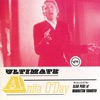
 Anita O'Day
Ultimate Anita O'Day
1999, Verve
Original recording, 1958
|
|
O'Day blazes through an up-tempo take of "Tea for Two" that stands in stark contrast to her more relaxed performance of the tune in the 1940s as a member of Gene Krupa's band.
|
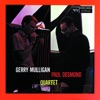
 Gerry Mulligan
The Original Quartet With Chet Baker [2-CD SET]
Blue Note Records
Original recording 1953
|
|
This classic cool jazz performance centers around baritone saxophonist Mulligan's clever arranging and his interplay with trumpet star Chet Baker.
|
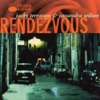
 Jacky Terrasson/Cassandra Wilson
Rendezvous
1997 Blue Note 55484
Original recording 1997
|
|
Pianist Terrasson and vocalist Wilson combine to deliver an almost unrecognizable version of “Tea for Two.” Under their care the song is slow and melancholic.
|
|
|
|