|
|
|
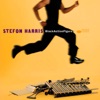
| “Vibraphonist Stefon Harris delivers an exciting rendition ... the song was nominated for the 2000 Grammy Award for Best Jazz Instrumental Solo.” |
|
 |
|
- Ben Maycock
|
|
| |
In 1936 Isham Jones and His Orchestra introduced “There Is No Greater Love” as the B-side to their recording “Life Begins When You’re in Love” from the film, The Music Goes ‘Round. Both sides featured Woody Herman vocals and were modest hits, appearing on the pop charts in April of 1936 for one week and rising to number 20.
|
| |
| |
|
| |
|
|
|
| |
|
| |
|
Beginning in 1920, Isham Jones and His Orchestra had produced over seventy hit songs, including eight number one recordings, many of which Jones composed. “There Is No Greater Love” was their last hit before the bandleader changed the band’s name to Isham Jones’ Juniors that same year. Within months of the name change, Jones decided to take time off for composing, turning over the band’s leadership to saxophonist, clarinetist, and vocalist Woody Herman. This would be the beginning of Herman’s career as a bandleader, one that would last for the next fifty years. Jones subsequently returned to band leading but recorded only two more hit songs. “There Is No Greater Love” would also be the last of several major hits for lyricist Marty Symes.
|
| |
| |
|
| |
|
|
| |
| |
|
| |
|
|
|
|
|
More information on this tune... |
|
|
 George T. Simon
Big Bands Songbook
Barnes & Noble
Paperback
(Simon devotes four pages to anecdotes, the artists who have performed the song, and biographical notes on the songwriter. He also includes the sheet music.)
|
|
|
|
- Jeremy Wilson
|
|
| This section suggests definitive or otherwise significant recordings that will help jazz students get acquainted with
“There Is No Greater Love.” These recordings have been selected from the Jazz History and
CD Recommendations sections.
|
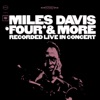
“There Is No Greater Love” has a storied history as a ballad, and Dinah Washington’s 1954 recording ( Dinah Jams) is a classic example of this. These days, though, the tune is more often played at medium to bright tempos and with a swing feeling. The most influential recordings in this style are by Miles Davis with two of his influential quintets. His 1955 version ( The New Miles Davis Quintet) is relaxed and amazingly swinging. His 1964 version ( Four & More) also swings hard, but is even more noteworthy for the rhythmic quirks that foreshadow that band’s subsequent innovations.
Noah Baerman - Jazz Pianist and Educator
|
“There Is No Greater Love” was written in the
popular 32-bar, A-A-B-A form and is not difficult
for vocalists as it requires only an octave and
a half range. Jazz vocalist recordings have generally
been by females, including Betty Carter,
Billie Holiday, Dee Dee Bridgewater, Dinah Washington,
and
Sarah Vaughan. One exception is Jimmy Scott
on
Falling in Love Is Wonderful, originally
released in 1963 and re-released on CD in 2003.
Marty Symes’ lyrics are straightforward and romantic,
simply declaring the strength of one’s affection
in the first and last A sections, “There is no greater
love … than what I feel for you” and then describing
the thrill and appreciation of love in the second
A section and the bridge.
Symes further chooses a simple rhyming scheme
and an economical vocabulary. He end-rhymes the
second and fourth bar of every section, the eight
rhymed words picked from a pool of just five words:
A – you and
true
A – me and me
B – known and alone
A – true and
you
-JW
|
Musical analysis of
“There Is No Greater Love”
|
| Original
Key |
Bb major;
false key change to G minor during the bridge |
| Form |
A1 – A2 –
B – A2 |
| Tonality |
“A” sections
are major; “B” is minor. |
| Movement |
“A” consists
of descending steps, followed by a downward
fourth, which are answered by two upward
leaps of a fifth. “B” moves primarily upward;
the melody outlines the harmony of the moment. |
|
Comments
(assumed
background)
|
|
This is a highly motivic tune, tightly structured
and showing the composer to have had some
classical training. The motif of three descending
seconds (steps) followed by a downward fourth
occurs twice in “A” and once in “B.” The
motif used in the consequent phrase of “A”
consists of an upward fifth and two steps
downward, repeated twice, with the second
repetition beginning where the first one
ended. It is a good example of given “licks”
played in different keys over different
changes.
Harmonically the “A” sections are more
interesting than the “B,” which simply goes
back and forth between V7and i. “A” starts
out as if it were to be a blues, I – IV7.
Instead of returning to I, however, the
IV chord is followed by a III7, leading
into the cycle of fifths that returns to
the tonic (delayed during the first “A”).
Some performers play a bVII(#11) chord instead
of the III7, adding some exotic color to
the harmonic progression (in the original
key, Bb – Eb7 – Ab7(#11) – G7).
|
|
K. J. McElrath - Musicologist for JazzStandards.com |
|
Duke Ellington’s 1935 version of this tune,
although historically the first jazz version, is
basically a standard dance orchestra rendition except
for a fine alto saxophone solo by
Johnny Hodges.
During the 1930s, ‘40s and ‘50s the tune was
most frequently recorded as a ballad, but it underwent
a change to a medium-to-up tempo swinger following
a 1958 session under the leadership of West Coast
bop trombonist Frank Rosolino. This recording also
features the wonderful playing of tenor saxophonist
Harold Land and a nonpareil rhythm section of pianist
Victor Feldman, bassist Leroy Vinnegar and drummer
Stan Levey.
Chris Tyle - Jazz Musician and Historian
|
Additional information for "There Is No Greater Love" may be found in:
|
|
|
George T. Simon
Big Bands Songbook
Barnes & Noble
Paperback
(4 pages including the following types of information: anecdotal, performers, song writer discussion and sheet music.)
|
|
|
|
|
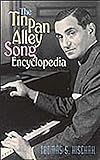 Thomas S. Hischak
The Tin Pan Alley Song Encyclopedia
Greenwood Press
Hardcover: 552 pages
(1 paragraph including the following types of information: history and performers. 1 paragraph including the following types of information: history and performers.)
|
|
|
|
|
“There Is No Greater Love” was included in these films:
- The Music Goes ‘Round (1936,
Isham Jones and His Orchestra)
|
|
|
|
Comment Policy
- Your comments are welcome, including why you like
this tune, any musical challenges it presents, or additional background information.
- Jazz musicians, fans, and students of all ages use this website as an educational resource.
As such, off-topic, off-color, unduly negative, and patently promotional comments will be removed.
- Once submitted, all comments become property of JazzStandards.com.
By posting, you give JazzStandards.com permission to republish or otherwise distribute your comments in any format or other medium.
JazzStandards.com reserves the right to edit or remove any comments at its sole discretion.
|
|
| Click on any CD for more details at Amazon.com |
 Miles Davis
The New Miles Davis Quintet
1990 Original Jazz Classics 6
Original recording 1955
|
|
Miles Davis shows off his new band on this lyrical ballad performance. The rhythm section of Red Garland, Paul Chambers and “Philly” Joe Jones would go on to be extremely important in creating the sound of hard bop. John Coltrane rounded out this quintet, though he sits out on “There Is No Greater Love.”
|
 Miles Davis
Four and More
2005 Sony 93595
Original recording 1964
|
|
As he did in his 1955 recording, Davis uses this tune to show off a new rhythm section that would prove to be tremendously influential. In this instance it is Herbie Hancock, Ron Carter and Tony Williams who anchor the tune, with a brighter, swinging tempo and no shortage of surprises.
|
 Circle
Paris Concert
2001 ECM Number
Original recording 1971
|
|
“No Greater Love” is a vehicle here for the groundbreaking but under-recorded avant-garde quartet Circle, featuring Anthony Braxton on saxophone, Chick Corea on piano, Dave Holland on bass and Barry Altschul on drums. The creativity and interplay are breathtaking at times, yet the musicians maintain a significant sensitivity to the tune.
|
|
 Dinah Washington
Dinah Jams
Polygram Records
|
|
Singer Washington sends a chill up the spine on this crisp, live session. She's all brass and passion in front of an all-star band that includes the likes of Richie Powell, Clifford Brown and Max Roach.
|
 Stan Getz with Kenny Barron
People Time
Music
|
|
Recorded just three months before Getz passed away, this lightly swinging duo performance shows that he was playing soulfully and creatively right up until the end.
|
 Sonny Rollins
Way Out West
2000 Original Jazz Classics 337
Original recording 1957
|
|
In keeping with the theme of the album Rollins' saxophone is expressive and exspansive, while bassist Ray Brown and drummer Shelly Manne fill in the background with a plodding western shuffle.
|
 Mccoy Tyner, Elvin Jones, Art Davis
Inception
Grp Records
|
|
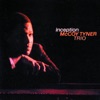
Pianist Tyner steps out from behind John Coltrane and leads his group in a mid-tempo swing of the song. Tyner's sound is brilliant in front of the stalwart rhythm of bassist Art Davis and drummer Elvin Jones.
|
 Jimmy Scott
Falling in Love Is Wonderful
2003, Wea/Warner
Original recording, 1962
|
|
Out of print for 40 years, this superb display of Scott's vocal styling is set against the orchestral arrangements of Marty Paich and Gerald Wilson under the musical direction of Ray Charles. Scott means every word he sings, and his phrasing has set the standard for jazz singers. (Import only)
|
 Stefon Harris
Black Action Figure
1999, Blue Note
|
|
Vibraphonist Stefon Harris delivers an exciting rendition of “There Is No Greater Love.” Inspired, frenetic, and wildly original, the song was nominated for the 2000 Grammy Award for Best Jazz Instrumental Solo.
|
|
|
|