|
|
|
“... on Verve Jazz Masters 6 Ella Fitzgerald sings a 350-plus word version that lasts nearly seven and one half minutes.” |
|
 |
|
- JW
|
|
| |
Singer/actress Dorothy Dickson introduced “These Foolish Things” in the 1936 British musical comedy Spread it Abroad. A modest hit, the production opened at London’s Saville Theater on the first of April and ran for 209 performances. French actor Jean Sablon was originally chosen to sing “These Foolish Things,” but the death of King George V in January meant the show was delayed. In the meantime Sablon took a position starring in the American radio series “The Magic Key.”
|
| |
| |
|
| |
|
Dorothy Dickson never did record the song, but it still became a major hit in the United States with no fewer than five recordings making the top 20 that summer (see the visitor’s comment below). Benny Goodman’s rendition, featuring vocalist Helen Ward, was first on the charts, holding the number one position for two weeks. All told, in 1936, the song appeared by:
- Benny Goodman and his Orchestra (Helen Ward, vocal, #1)
- Teddy Wilson and His Orchestra (Billie Holiday, vocal, #5)
- Nat Brandywynne and His Stork Club Orchestra (Buddy Clark, vocal, #6)
- Carroll Gibbons and His Orchestra (#8)
- Joe Sanders and His Orchestra (#17)
|
|
| |
|
| |
|
In short time Jean Sablon did get an opportunity to sing the song, and in 1936 he recorded “These Foolish Things” as “Ces Petites Choses.” In 1947 Red Ingle and the Natural Seven recorded the novelty number “Them Durn Fool Things,” based on “These Foolish Things,” which rose to number twenty-six.
With a book and lyrics by Herbert Farjeon and music by William Walker, Spread it Abroad had an excellent cast including Dorothy Dickson, Ivy St. Helier, Nelson Keys, Walter Crisham, Tessa Deane, Lyle Evans, and Michael Wilding, the future husband of Elizabeth Taylor.
|
| |
| |
|
| |
|
|
| |
| |
|
| |
|
|
| |
| |
|
| |
|
|
|
|
|
More information on this tune... |
|
|
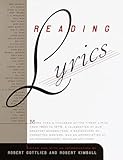 Robert Gottlieb, Robert Kimball
Reading Lyrics
Pantheon
Hardcover: 736 pages
(This book contains anecdotes and the lyric for “These Foolish Things” as well as other lyrics by Maschwitz.)
|
|
|
|
See the Reading and Research page for this tune for additional references. |
|
- Jeremy Wilson
|
|
| This section suggests definitive or otherwise significant recordings that will help jazz students get acquainted with
“These Foolish Things.” These recordings have been selected from the Jazz History and
CD Recommendations sections.
|
While there are many important instrumental versions of “These Foolish Things,” particularly those by Lester Young (With the Oscar Peterson Trio) and Thelonious Monk (Thelonious Monk Trio (20 Bit Mastering)), the truly definitive jazz version of the tune comes from a vocalist. Billie Holiday’s version from 1936 (The Quintessential Billie Holiday, Vol.2: 1936) is an all-time classic, displaying the depth of her musical relationship with pianist/bandleader Teddy Wilson (who himself had a strong relationship with the tune) and showing her remarkable ability to inject lightheartedness and pathos into the same performance.
Noah Baerman - Jazz Pianist and Educator
|
“These Foolish Things” is a song about memories, presented as a list. The introductory verse begins by mentioning a love affair from the past, then the lead-in to the refrain declares, “and still those little things remain, that bring me happiness or pain.” The refrain then follows an A1-A2-B-A2 form where every A section starts by listing the “things,” such as “the winds of March that make my heart a dancer,” and closes with “these foolish things remind me of you.” A core set of lyrics is nearly always sung. There also are seldom-heard lyrics that are included in longer recitations, and frequently vocalists may sing a stanza or two of their own. On her Verve Jazz Masters 6 CD, Ella Fitzgerald sings a 350-plus word version that lasts nearly seven and one half minutes. -JW
|
Musical analysis of
“These Foolish Things”
|
| Original
Key |
Eb major,
turning to G minor and Bb major during the
bridge |
| Form |
A1 – A2 –
B – A2 |
| Tonality |
Primarily
major; brief shift to minor during first
four measures of “B” |
| Movement |
Primarily
step-wise with several skips down and up
or vice-versa; occasional upward leaps of
a sixth or downward of a fifth. |
|
Comments
(assumed
background)
|
|
For a ballad, this could almost be described
as a “bouncy” melody, making full use of
the entire range of a tenth. The chord progression
is I – vi – ii – V7, similar to “Heart And Soul” and “I Got Rhythm.” But it resolves differently
when the V chord turns minor, becoming a
ii/IV. The IV is followed by VI7 going to
ii. In the original key, this is Bbm7– Eb7
– Ab – C7 – Fm. This sequence does not resolve
to the tonic key until the second time through
“A.” Transition into the minor key during
the “B” section is accomplished by dropping
the tonic chord a half step which easily
resolves to the key of iii (G minor, in
the original). From there, it is a simple
matter to return to the tonic via the circle
of fifths. |
|
K. J. McElrath - Musicologist for JazzStandards.com |
|
Teddy Wilson was a fabulous pianist who had an unerring sense for material and talent. He never played a bad note or made a record that wasn’t, in musicians’ parlance, “tasty.” He recorded “These Foolish Things” with Billie Holiday on vocal and Ben Webster on tenor saxophone. Wilson recorded a solo version a few years later and continuedto play it throughout his career. It has become an integral part of many jazz musicians’ repertoires; the list of artists who recorded it is staggering. Saxophonists seem to have a special fondness for it, from swing-era players like Don Byas and Lester Young, bebop masters Stan Getz and Art Pepper, to modern-day players Harry Allen and Scott Hamilton (who play in a more swing-era oriented style).
Chris Tyle - Jazz Musician and Historian
|
Additional information for "These Foolish Things" may be found in:
|
|
|
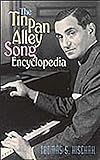 Thomas S. Hischak
The Tin Pan Alley Song Encyclopedia
Greenwood Press
Hardcover: 552 pages
(1 paragraph including the following types of information: film productions, history, performers and style discussion.)
|
|
|
|
|
Robert Gottlieb, Robert Kimball
Reading Lyrics
Pantheon
Hardcover: 736 pages
(Includes the following types of information: song lyrics.)
|
|
|
|
|
“These Foolish Things” was included in these films:
- Tokyo Joe (1949, Florence
Marly)
- Daddy Nostalgie aka Daddy Nostalgia
aka These Foolish Things (1990, Jane
Birkin, voice; Jimmy Rowles, piano, voice; Philip
Catherine, guitar; Louis Sclavis & Jacques Di
Donato, clarinets; Jean-Charles Capon, cello;
Ron Carter, bass)
- Traces of Red (1992, Dinah
Washington)
- In the Line of Fire (1993)
- Clean Slate (1994, Oleta Adams)
- Deja Vu (1997, Frank Sinatra)
- Playing by Heart (1999, Chet
Baker)
- Joe Gould’s Secret (2000,
Lester Young)
And on stage:
- Spread It Abroad (1936, Dorothy
Dickson, Walter Crisham) London revue
- Blues in the Night (1982)
Broadway revue
|
|
|
|
Comment Policy
- Your comments are welcome, including why you like
this tune, any musical challenges it presents, or additional background information.
- Jazz musicians, fans, and students of all ages use this website as an educational resource.
As such, off-topic, off-color, unduly negative, and patently promotional comments will be removed.
- Once submitted, all comments become property of JazzStandards.com.
By posting, you give JazzStandards.com permission to republish or otherwise distribute your comments in any format or other medium.
JazzStandards.com reserves the right to edit or remove any comments at its sole discretion.
|
|
| Click on any CD for more details at Amazon.com |
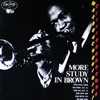
 Clifford Brown and Max Roach
More Study In Brown
1990 Polygram 14637
Original recording 1954
|
|
The Brown/Roach Quintet always had away with ballad, and this slow-paced performance is no exception. What is an exception is that the horns are not featured on this one, thus focusing the spotlight on pianist Richie Powell and the seldom-featured bassist George Morrow.
|
 Kenny Burrell
The Artist Selects
2005 Blue Note 31436
Original recording 1958
|
|
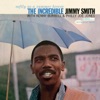
Guitarist Kenny Burrell takes center stage on this slow, blues-drenched performance. Alongside Burrell are drummer Philly Joe Jones and organist Jimmy Smith, under whose name this performance was originally issued.
|
 Erroll Garner
Campus Concert/Feeling Is Believing
1998 Telarc 83390
Original recording 1962
|
|
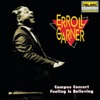
After a rubato introduction, pianist Garner takes “These Foolish Things”’ at a playful medium swing tempo on this infectious performance.
|
|
 Stephane Grappelli/Michel Petrucciani
Flamingo
1996, Dreyfus 36580
|
|
With excellent assists from drummer Roy Haynes and bassist George Mraz, this violin/piano duo delights us with several standards. Violinist Grappelli’s sweet reading of the melody of “These Foolish Things” is followed by pianist Petrucciani’s lovely improvisation.
|
|
 Chet Baker
Chet is Back
2003, RCA
Original recording, 1962
|
|
The energy is high as trumpeter Baker gives a nice, clear, lyrical reading of the song. Recorded in Italy, the album is considered some of Baker’s finest work, and it is interesting to note the involvement of Ennio Morricone as arranger on additional cuts.
|
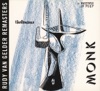
 Thelonious Monk Trio
Thelonious Monk Trio
2001, Prestige
Original recording, 1954, Original Jazz Classics
|
|
Within the trio setting Monk allows the listener a mere glimpse into his genius as he strips “These Foolish Things”’ down to reconfigure it in his own distinctive voice. It is a reverent rendition from a modern jazz master.
|
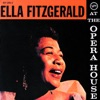
 Ella Fitzgerald
At the Opera House
1990 Polygram 31629
Original recording 1957
|
|
This track captures perfectly all the energy and charm of a live Ella Fitzgerald performance. The Oscar Peterson trio swings at a relaxed tempo as she delivers a stirring and thoughtful rendition.
|
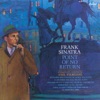
 Frank Sinatra
Point of No Return
2002, Capitol
Original recording, 1962
|
|
Sinatra takes the listener to an after-hours club to drown his sorrows. Wonderfully moody with a touch of weariness, Sinatra captures the mood perfectly.
|
|
|
|