|
|
|
| “This CD has Duke’s personnel backing vocalist Sherrill. The whole crew swings like mad.” |
|
 |
|
- Jon Luthro
|
|
| |
First, a little background information on ASCAP and its function is useful since that Society played a role in how this song was introduced. The American Society of Composers, Authors and Publishers was founded in 1914 for the collection of royalties for the broadcast or public performance of music. In March, 1940, ASCAP proposed a new contract calling for a 100 percent increase in radio’s rates over the previous year.
Anticipating this increase, the broadcasting industry countered by forming its own licensing organization called BMI (Broadcast Music Incorporated). By the end of 1940, 650 broadcasters had signed up with BMI and only about 200 radio stations continued to use the ASCAP catalog. By the end of 1941, ASCAP and the broadcasting industry had negotiated a new contract, but the interim ban had a significant effect on popular music.
In 1941, while all this was going on, Duke Ellington was playing at the Casa Manana in Los Angeles and had a nightly broadcast. Due to the ASCAP strike he could not air his compositions, so he turned to his son, Mercer, and to Billy Strayhorn, neither of whom belonged to ASCAP. The strike turned out to be a great opportunity for both Strayhorn and the younger Ellington, during which time Strayhorn wrote such songs as “Take the ‘A’ Train,” “Johnny Come Lately,” “Chelsea Bridge,” “Day Dream,” and “After All.” Mercer wrote, among others, “Things Ain’t What They Used to Be,” “Blue Serge,” and “Moon Mist.”
|
| |
| |
|
| |
|
Originally a slow blues composition, “Things Ain’t What They Used to Be” is most often performed as an instrumental, sometimes with an increased tempo and occasionally as a vocal with Ted Persons’ lyrics. If you haven’t heard the lyrics, listen to the Amazon clip for our Joya Sherrill CD recommendation.
Over the years, “Things Ain’t What They Used to Be” became one of the most frequently played compositions for the Ellington band. In Duke Ellington: A Listener’s Guide, Eddie Lambert says that “long versions (of jazz compositions) featuring extended solos became popular as a result of the success of the tenor extravaganzas by such musicians as Illinois Jacquet and Flip Philips with Norman Granz’s Jazz at the Philharmonic.” The Ellington band would play long versions of “Things Ain’t What They Used to Be,” often featuring a Johnny Hodges solo at least once, and even twice, nightly until the 1970’s.
|
| |
| |
|
| |
|
|
|
|
|
| This section suggests definitive or otherwise significant recordings that will help jazz students get acquainted with
“Things Ain't What They Used to Be.” These recordings have been selected from the Jazz History and
CD Recommendations sections.
|
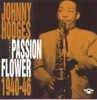
Duke Ellington recorded “Things Ain’t What They Used to Be” ( This One’s for Blanton) repeatedly throughout his career with his orchestra and in smaller configurations, but the Johnny Hodges 1941 recording ( Passion Flower, 1940-1946) with Ellington on piano stands out as being particularly significant both musically and historically.
Noah Baerman - Jazz Pianist and Educator
|
|
Musical analysis of
“Things Ain’t What They Used to Be”
|
| Original
Key |
C major |
| Form |
A – B; two
different “riffs” over the standard 12-bar
blues |
| Tonality |
Major throughout |
| Movement |
“A” is upward
arpeggiated; “B” is more rhythmic, confining
melodic movement to the leading tone and
tonic (the latter being the common tone
between IV and I). |
|
Comments
(assumed
background)
|
|
This works well as a melody on its own as
well as a “riff” background for soloists.
The busy nature of “A” (triplet eighth and
quarter notes moving over the range of an
octave) would be difficult to harmonize
in the heat of a jam session, but the “B”
melody with its narrow range and common
tones (in the original key, A and C) lends
itself well to practice in this area.
The harmonic progression, as stated above,
is a basic 12-bar blues, but, traditionally,
a iv (minor) chord is used in measure 6,
while the V7 chord in mm. 9-10 should be
played as minor up to the last beat before
measure 11 (or substitute the bVII chord).
The reason is that the melody in these two
bars contains both the root tone and the
flatted 7th, neither of which
normally occurs in a V7 leading chord (mm.
9-10 are identical in “A” and “B”).
|
|
K. J. McElrath - Musicologist for JazzStandards.com |
|
Soulful alto saxophonist Johnny Hodges was a mainstay of the Duke Ellington Orchestra for almost 40 years. In a session for RCA Victor in July, 1941, Hodges led his own small group of Ellington musicians for the premier recording of “Things Ain’t What They Used to Be.”
Atlhough Mercer Ellington is credited as composer of this 12-bar blues, in all likelihood Hodges came up with the melody and Duke arranged it for the big band. But Hodges’ first recording of the tune is, in some ways, the definitive treatment. Taken at a slower tempo than with Ellington’s band, it is a relaxed, atmospheric version conjuring up images of an after-hours, musicians-only session.
Chris Tyle - Jazz Musician and Historian
|
“Things Ain't What They Used to Be” was included in these films:
|
|
|
|
Comment Policy
- Your comments are welcome, including why you like
this tune, any musical challenges it presents, or additional background information.
- Jazz musicians, fans, and students of all ages use this website as an educational resource.
As such, off-topic, off-color, unduly negative, and patently promotional comments will be removed.
- Once submitted, all comments become property of JazzStandards.com.
By posting, you give JazzStandards.com permission to republish or otherwise distribute your comments in any format or other medium.
JazzStandards.com reserves the right to edit or remove any comments at its sole discretion.
|
|
| Click on any CD for more details at Amazon.com |
 Booker Little
Booker Little 4 and Max Roach
Blue Note Records
|
|
This hard-swinging recording, issued on an album by the young, brilliant trumpeter Little, is a sort of summit meeting of up-and-coming jazz talent from Memphis. The featured soloist is the brilliant, underrated alto saxophonist Frank Strozier, and other noteworthy soloists include Phineas Newborn, Jr. on piano and George Coleman on tenor saxophone.
|
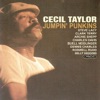
 Cecil Taylor
Jumpin' Punkins
2000 Artists Only 79013
Original recording 1961
|
|
The straight-ahead tradition collides head-on with the future during this fascinating performance. The music here spotlights avant-garde piano genius Taylor’s jarring, dissonant playing alongside a diverse cast including Archie Shepp on tenor saxophone, Clark Terry on trumpet, Roswell Rudd on trombone and Steve Lacy on soprano saxophone.
|
 Marian McPartland
Reprise
1999 Concord 4853
Original recording
|
|
The great pianist and radio personality McPartland found her voice as a modern jazz musician as the pianist in the house band at New York’s Hickory House in the mid-1950s. Recorded more than 40 years later, this album documents a reunion with her Hickory House collaborators, bassist Bill Crow and drummer Joe Morello. The music swings hard and McPartland explores her deep relationships with the song and with Crow and Morello.
|
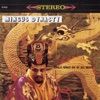
 Charles Mingus
Mingus Dynasty
Sony
Original recording 1959
|
|
Bassist, composer and bandleader Mingus stands out as one of the definitive interpreters of the Ellington songbook. This gritty take on “Things Ain’t What They Used to Be” is evidence of that and of how much he learned from Duke Ellington in the development of his own voice as an arranger and orchestrator.
|
 Oscar Peterson
Oscar Peterson Plays the Duke Ellington Song Book
1999 Verve 559785
Original recordings 1952 and 1959
|
|
The brilliant pianist offers two great trio versions of “Things Ain’t What They Used to Be” on this compilation. Both are hard-swinging yet relaxed and both feature bassist Ray Brown. Guitarist Barney Kessel completes the trio on the earlier version, while the later version features drummer Ed Thigpen.
|
 Ella Fitzgerald
Things Ain't What They Used To Be
2006 Collectibles 7771
Original recording 1970
|
|
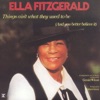
At a time when vocalist Fitzgerald was experimenting with rock repertoire, this joyful performance affirmed her enduring devotion to straight-ahead jazz. The band is hard-swinging, as is the arrangement by the great Gerald Wilson.
|
|
 Dorothy Donegan
Live at the Floating Jazz Festival
1994, Chiaroscuro 318
|
|
Donegan was a master technician, trained as a classical pianist. She might start out playing “Rhapsody in Blue” and then break into boogie woogie. She was a wild woman on stage, and if you counted 15 subtle quotes in a song, you can be sure there were 30. She’ll knock you out.
|
|
 Duke Ellington and Ray Brown
This One's for Blanton
1994 Label 810
Original recording 1972
|
|
Because of Duke Ellington’s brilliance as a composer and bandleader, it is easy to lose sight of his capability as a pianist. This delightful duet with bassist Ray Brown is characteristically playful and exceptionally hard-swinging.
|
|
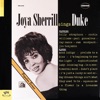
 Joya Sherrill
Sings Duke
1999, Polygram
|
|
This CD has Duke's personnel backing vocalist Sherrill. The whole crew swings like mad. The other songs are a true pleasure as well, and we may well see "definitive versions"' from this source.
|
 Johnny Hodges ...
At Sportpalast Berlin
1993, Pablo 2620102
Original recording, 1961 (2 CD-Set)
|
|
This is an exciting live recording and includes Lawrence Brown (tb), Harry Carney (bari sax), Ray Nance (crnt, v, vcl), Sam Woodyard (d), Aaron Bell (b), and Al Williams (p).
|
|
|
|