|
|
|
| “Between the joyous singing of Armstrong and the buoyant accompaniment of Oscar Peterson’s group, one can only imagine the willow weeping tears of joy!” |
|
 |
|
- Noah Baerman
|
|
| |
“Willow Weep for Me” was introduced by vocalist and whistler Muzzy Marcellino performing with Ted Fio Rito and His Orchestra. Their October, 1932, Brunswick recording entered the pop charts December 3, 1932, and rose to number seventeen. On December 17 Paul Whiteman and His Orchestra’s Victor recording with singer Irene Taylor entered the charts and was more favorably received, rising to number two. Over thirty years later in 1964 “Willow Weep for Me” reemerged on the pop charts, this time by the British duo Chad and Jeremy.
|
| |
| |
|
| |
|
|
| |
| |
|
| |
|
|
| |
| |
|
| |
|
Whether Ted Fio Rito or Paul Whiteman introduced “Willow Weep for Me” is a matter of some dispute. Ann Ronell had sold the song directly to Paul Whiteman, who presumably performed it first. Fio Rito, on the other hand, had the edge by two weeks in introducing the song to the public at large.
|
|
| |
|
| |
|
Composer Ann Ronell dedicated “Willow Weep for Me” to George Gershwin, the composer who helped her get her start in the music industry. In Joan Peyser’s Gershwin biography, The Memory of All That: The Life of George Gershwin, Ronell is quoted as saying, “George was sacred to me. He was my idol. I became like a sister to the family and was his protege.” Ronell’s dedication was undoubtedly a gesture of professional thanks rather than flattery by way of imitation. In The Poets of Tin Pan Alley: A History of America’s Great Lyricists, author Philip Furia comments that the melody is more Arlen than Gershwin and her “languorously driving lyric is much closer to Koehler than to Ira Gershwin.”
|
| |
| |
|
| |
|
|
|
|
|
More information on this tune... |
|
See the Reading and Research page for this tune for additional references. |
|
- Jeremy Wilson
|
|
| This section suggests definitive or otherwise significant recordings that will help jazz students get acquainted with
“Willow Weep for Me.” These recordings have been selected from the Jazz History and
CD Recommendations sections.
|
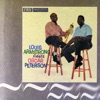
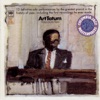
The definitive instrumental version of “Willow Weep for Me” would have to be Art Tatum’s stunning solo piano version from 1949 ( Piano Starts Here). He manages to turn the tune upside down without losing the thread of the tune’s melody. As for vocal renditions, Louis Armstrong’s 1957 version with Oscar Peterson’s group ( Louis Armstrong Meets Oscar Peterson) stands out as being particularly significant, not to mention irresistible.
Noah Baerman - Jazz Pianist and Educator
|
“Willow Weep for Me” is an extremely well-crafted
and highly evocative song that at the same time
is unusually vague for a lament. Throughout its
A-A-B-A format, there are few hints as to the exact
cause of the heartbreak. The singer asks of the
willow tree, “weep for me,” “bend your branches,”
“whisper to the wind,” “murmur to the night,” etc.
Within the second “A” section there’s a wisp of
a clue as to the cause of the melancholy,
Gone my lover’s dream, lovely
summer’s dream
It does not seem to be a well-known lover that
has left but just a summer dream, as though the
love may never have been stated in the first place.
Taking the Gershwin dedication into consideration,
it is not difficult to imagine an aspiring Ann Ronell
having unspoken romantic feelings for her idol and
mentor. Perhaps the dedication of her lament carries
a message beyond that of professional gratitude.
-JW
|
Musical analysis of
“Willow Weep for Me”
|
| Original
Key |
G major;
“B” is an unsettled minor section that floats
between G minor and C minor |
| Form |
A – A – B
– A |
| Tonality |
The “A” section
is mostly major with hints of minor toward
the end; “B” is definitely minor. |
| Movement |
“A” is primarily
downward via large (8ve) leaps followed
by scale movement. “B” tends to be an arc,
ascending then descending. |
|
Comments
(assumed
background)
|
|
This is an “Arlenesque” tune with strong
blues overtones; in fact, the “A” section
is essentially the first eight measures
of a 12-bar blues, using substitutions and
embellishing chords (I-iv I-iv instead of
just four measures of I, and the IV–iv movement
in mm 5-6, for example). The contrasting
“B” section is vague; the ear is not quite
certain whether C minor or G minor is the
“tonic of the moment.” The Gm – G7 and descending
Cm – Bb –Ab – G7 in mm.3-4 of “B” would
seem to establish C minor, yet aurally it
makes more sense to have the song continue
in the parallel minor rather than the key
of iv. In any event, the modulation in the
last measure before the final “A”–Ab – Am7
– D7+5 –is unexpected. Although it is the
most logical return to the original key,
coming out of a progression in C minor it
serves to reinforce the tonal ambiguity
of “B.” |
|
K. J. McElrath - Musicologist for JazzStandards.com |
|
On March 19, 1939, the Count Basie Orchestra
made its first recording for Columbia Records under
the supervision of John Hammond. The last tune recorded
that day was “Taxi War Dance,” a clever play-on-words
(a taxi dance hall was a place where men paid women
to dance with them). Although Basie claimed composer
credit, the tune is actually based on the chords
of “Willow Weep for Me.” But the record belongs
to Lester Young, who opens the proceedings with
arguably one of his best solos. Starting out with
a quote from “Ol’ Man River,” Lester swings the “Willow’s” changes
with ease, making what was once considered a ballad
into a swing jazz classic.
Chris Tyle - Jazz Musician and Historian
|
Additional information for "Willow Weep for Me" may be found in:
|
|
|
 Thomas S. Hischak
The Tin Pan Alley Song Encyclopedia
Greenwood Press
Hardcover: 552 pages
(1 paragraph including the following types of information: film productions, history, lyric analysis and performers.)
|
|
|
|
|
“Willow Weep for Me” was included in these films:
- Love Happy (1950, Vera Ellen
tap dances to ‘The Sadie Thompson Number’)
- Wild Blade (1991, Ben Webster)
- In the Line of Fire (1993)
|
|
|
|
Comment Policy
- Your comments are welcome, including why you like
this tune, any musical challenges it presents, or additional background information.
- Jazz musicians, fans, and students of all ages use this website as an educational resource.
As such, off-topic, off-color, unduly negative, and patently promotional comments will be removed.
- Once submitted, all comments become property of JazzStandards.com.
By posting, you give JazzStandards.com permission to republish or otherwise distribute your comments in any format or other medium.
JazzStandards.com reserves the right to edit or remove any comments at its sole discretion.
|
|
| Click on any CD for more details at Amazon.com |
 Art Tatum
Piano Starts Here
Sony 64690
Original recording, 1933
|
|
Tatum recorded this tune a number of times, and this is one of the best. He manages at the same time to sound bluesy even while inserting strikingly modern harmonies and lyrical even while interjecting technically awesome flourishes.
|
 David Newman
Fathead: Ray Charles Presents David Newman
2005 Collectables 6541
Original recording 1958
|
|
David “Fathead” Newman is heard here wailing the blues on alto saxophone, backed by a band that includes his boss, Ray Charles, on piano. This early recording is one that helped pave the way for his long, successful career.
|
 Thad Jones and Mel Lewis
Opening Night
2002 Alan Grant Productions 1939
Original recording 1966
|
|
This recording documents the early days of one of the greatest of all modern big bands. This arrangement is hauntingly modern and the performance is brilliant.
|
 Sarah Vaughan
At Mister Kelly's
1991 Polygram 32791
Original recording 1957
|
|
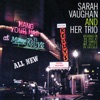
Vaughan’s acrobatic voice proves to be a perfect match for the challenging melody. The sparse accompaniment leaves her voice in the forefront, where it belongs on this performance.
|
 Dexter Gordon
Our Man in Paris
Blue Note Records
Original recording 1963
|
|
Gordon affirms his ballad mastery with this long exploration. The recording, made during his “exile” in Europe, features two other notable expatriates, pianist Bud Powell and drummer Kenny Clarke, along with French bassist Pierre Michelot.
|
 Modern Jazz Quartet
Fontessa
1990 Atlantic 1231
Original recording 1956
|
|
The lilting, lyrical side of the MJQ can be heard already in full bloom on this early recording.
|
 Cedar Walton
Cedar Walton Plays
1992 Delos 4008
Original Recording 1986
|
|
Walton dips into a swinging blues bag, assisted by Ron Carter (who has adopted this tune as a feature in his own performances), Billy Higgins and a five piece horn section.
|
 Louis Armstrong
Louis Armstrong Meets Oscar Peterson
1997 Verve 539060
Original recording 1957
|
|
Included on the album’s reissue, this may well be one of the happiest versions of “Willow Weep for Me.” Between the joyous singing of Armstrong and the buoyant accompaniment of Oscar Peterson’s group, one can only imagine the willow weeping tears of joy!
|
|
 Sheila Jordan
Portrait of Sheila
1989, Blue Note 89002
Original recording, 1962
|
|
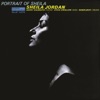
Exploratory vocalist Sheila Jordan delivers a superb reading of the song. While she is restrained, there is an obvious underlying passion threatening to break the calm surface.
|
|
 Kenny Clarke
Bohemia After Dark
1994, Savoy 107
Original recording, 1955
|
|
Drummer Kenny Clarke leads an all-star lineup that includes Donald Byrd and Nat Adderley on trumpets, Cannonball Adderley on alto sax, and Horace Silver at the piano. The song simmers at a low heat.
|
 Wes Montgomery
Willow Weep For Me
2002, Universal
Original recording, 1969, Verve
|
|
On this live version of the title track the guitarist is joined by pianist Wynton Kelly for a contemplative rendition of the song.
|
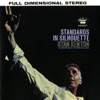
 Stan Kenton
Standards in Silhouette
Blue Note Records 94503
Original recording, 1959, Capitol
|
|
Pianist Stan Kenton leads his big band through a lush version of the song. Plenty of good solos pique the ear.
|
|
|
|