|
|
|
| “Vocalist Reeves delivers a crisp, romantic reading of the song...” |
|
 |
|
- Ben Maycock
|
|
| |
The introduction of “You Go to My Head” is almost universally credited to Glen Gray and the Casa Loma Orchestra. A recording by Teddy Wilson and His Orchestra, however, was a hit eight weeks before Gray’s.
On the pop charts the song appeared by:
- Teddy Wilson (1938, Nan Wynn, vocal, #20) (charted on June 18)
- Larry Clinton and His Orchestra (1938, Bea Wain, vocal, #3) (charted on July 23)
- Glen Gray and the Casa Loma Orchestra (1938, Kenny Sargent, vocal, #9) (charted on August 13)
|
|
| |
|
| |
|
From 1935 to 1938 the Teddy Wilson Orchestra enjoyed dozens of successful recordings, but “You Go to My Head” would be their last major hit before the band broke up in 1940. In his book The Big Bands, George T. Simon suggests “Perhaps the band remained too polite...” Wilson continued his career, working with small groups.
|
| |
| |
|
| |
|
|
| |
| |
|
| |
|
Critics marvel over “You Go to My Head.” Praise for its composer, J. Fred Coots, is not as complimentary, most often characterizing him as a one-hit wonder. William Zinsser in Easy to Remember: The Great American Songwriters and Their Songs includes “You Go to My Head” in a group of songs he calls “...the great shots that came from out of nowhere.”American Popular Song: The Great Innovators, 1900-1950 author Alec Wilder calls the song “a minor masterpiece.” When discussing the song “Gone With the Wind,” Wilder comments that Allie Wrubel “...never wrote a song nearly like it, any more than J. Fred Coots ever wrote another song like “You Go to My Head.” And Wilder goes on further to express surprise that “You Go to My Head” was written by a “competent but unexceptional” writer such as Coots.
What then is the attraction of this song that has the critics relegating poor Coots to a goose that laid one golden egg? It certainly is not mass appeal; Coots had bigger hits, including (with Gillespie) “Santa Claus is Comin’ to Town,” a song that easily outranks “You Go to My Head” in sales and popularity. It is, instead, the harmonic composition, which is surprisingly sophisticated for a “pop” song. And those harmonies are showcased by a melody with an alarming number of repeated notes.
|
| |
| |
|
| |
|
The song’s level of compositional sophistication is rare for the “pop” genre, that is, songs written outside the spheres of jazz or theater. Though Coots is usually associated with his Tin Pan Alley hits, his background was also in vaudeville and the theater where he worked under contract for the Shubert Organization, a theatrical production company where he co-composed with Sigmund Romberg.
|
| |
| |
|
| |
|
|
|
|
|
More information on this tune... |
|
- Jeremy Wilson
|
|
| This section suggests definitive or otherwise significant recordings that will help jazz students get acquainted with
“You Go to My Head.” These recordings have been selected from the Jazz History and
CD Recommendations sections.
|
Coleman Hawkins recorded “You Go to My Head” in 1946 ( Bean and the Boys) with a band featuring the piano of Hank Jones and the vibes of Milt Jackson. As with his landmark recording of “ Body and Soul,” the melody is only referenced in passing, but the performance is a classic. Louis Armstrong recorded a wonderful version in 1957 with Oscar Peterson ( Louis Armstrong Meets Oscar Peterson). The tune is approached faithfully, and Armstrong’s trumpet and vocals both shine. As for non-ballad performances of the tune, Lee Morgan’s version ( The Gigolo) stands out. This 1965 version features fiery soloing from Morgan and saxophonist Wayne Shorter, all prodded by the irresistibly funky drumming of Billy Higgins.
Noah Baerman - Jazz Pianist and Educator
|
Haven Gillespie’s urbane lyrics are well
suited to the music, likening a romance
to the effervescence of an alcoholic beverage.
The song has an A1-A1-B-A2 form with a 10-bar
extension. Gillespie starts out each A section
with “You go to my head…” then describes
through simile just how. Apparently Gillespie
did not want to start or end the song with
alcoholic comparisons so instead he sandwiches
“bubbles in a glass of champagne,” “sparkling
Burgundy brew,” and “kicker in a julep or
two” between “haunting refrain” and “summer
with a thousand Julys.” -JW
|
Musical analysis
of “You Go to My Head”
|
|
Original Key |
Eb
major; brief false key change to
“G” at the end of the bridge |
|
Form |
A1
– A1 – B – A2 – C |
|
Tonality |
Primarily
major |
|
Movement |
After
an opening upward octave leap, the
“A” section descends mainly leap-wise.
“B” starts with two upward leaps
and an arpeggiated figure which
outlines the notes of the harmony
descending and ascending. This is
followed by two measures of a repeated
note that drops an octave to repeat
for another eight beats before returning
to the third “A.” “C” starts with
a downward octave leap that ascends
three steps and a skip before arpeggiating
upwards to rest on the fifth scale
degree where it remains until the
end. |
|
Comments
(assumed
background)
|
| The aural interest here lies not
in the almost static melody but
in the lush and exotic harmonic
progression. Initially, this ascends
I – ii – iii with one change per
beat (not difficult at the traditional
tempo of approximately 60 b.p.m.).
Then, instead of IV, it lands on
the minor “iv,” becoming a “ii7”
of the bIII chord (Gb in the original
key of Eb). Before the new tonality
can become established, however,
it drops a half step to form a II7
leading to the V7 of the original
key. It resolves to the original
tonic but in parallel minor. There
is then an interesting i – vi –
iib5 – V7+ sequence that returns
to the major in resolution.
“B” starts in the “IV” key (Ab
in the original), going through
a very traditional IV - #iv˚7 –
I6/4 (second inversion, fifth degree
in the bass) and brief I – IV –
I (or “amen”). It then changes to
III (G major in the original) by
means of a tri-tone jump to the
#iv7(b5) where it settles until
the end of the “B” section. In order
to get back to the original key,
the harmonic progression drops two
half-steps to form the original
ii7 chord (actually a m6 if the
melody note is taken into consideration),
leading to V7 – I.
Another traditional harmonic
progression that gets turned on
its head underlies the “C” section.
A IV chord becomes minor, followed
by the I which ascends diatonically
to iii – biii˚7 – ii. This ii is
briefly decorated by a lower, neighboring
vii˚7 chord (in the original, Fm7
– E˚7 – Fm), then to V7. But final
resolution to I is delayed when
the bass line moves down to the
flatted third scale degree (Gb in
the original key), creating a bIII
chord resolving to bVI (called an
“augmented sixth” in theory books–B
major in the key of Eb). Since the
melody note at this point is the
major seventh of the penultimate
chord, it is “common” with the root
tone of the V7 which follows, resolving
at last back to I. (The melody,
however, remains on the fifth degree.)
Generally, this is a complex
and unusual, but lovely, harmonic
progression that must be heard to
be appreciated. It does not lend
itself well to a casual “jam” or
impromptu improvisation. |
|
K. J. McElrath - Musicologist for JazzStandards.com |
|
Although
Teddy Wilson recorded this tune with
his band in 1937, he revisited the tune
in a solo piano version in 1945. The following
year tenor saxophonist Don Byas, a master
of up-tempo material and ballads, stretched
his ballad “chops” on his recording. In
1947, the man whom many considered to be
the “master” of the tenor sax, Coleman Hawkins,
laid down his rendition with a band of future
all-stars: Fats Navarro on trumpet, J.J.
Johnson on trombone, Milt Jackson on vibes,
Hank Jones on piano, and Max Roach on drums.
To close out the decade, there were sides
made by ex-Benny
Goodman pianist Mel Powell (on solo
piano) and young and upcoming tenor sax
player Gene Ammons.
Chris Tyle - Jazz Musician and Historian
|
Additional information for "You Go to My Head" may be found in:
|
|
|
 Thomas S. Hischak
The Tin Pan Alley Song Encyclopedia
Greenwood Press
Hardcover: 552 pages
(1 paragraph including the following types of information: history, lyric analysis, music analysis and performers.)
|
|
|
|
|
 Robert Gottlieb, Robert Kimball
Reading Lyrics
Pantheon
Hardcover: 736 pages
(Includes the following types of information: song lyrics.)
|
|
|
|
|
“You Go to My Head” was included in these films:
- Laura (1944, instrumental)
- Swing Kids (1993)
- Corrina, Corrina (1994,
Louis Armstrong, Oscar Peterson)
- Playing by Heart (1999,
Chet Baker)
|
|
|
|
Comment Policy
- Your comments are welcome, including why you like
this tune, any musical challenges it presents, or additional background information.
- Jazz musicians, fans, and students of all ages use this website as an educational resource.
As such, off-topic, off-color, unduly negative, and patently promotional comments will be removed.
- Once submitted, all comments become property of JazzStandards.com.
By posting, you give JazzStandards.com permission to republish or otherwise distribute your comments in any format or other medium.
JazzStandards.com reserves the right to edit or remove any comments at its sole discretion.
|
|
| Click on any CD for more details at Amazon.com |
 Stan Kenton
City of Glass: Stan Kenton Plays Bob Graettinger
1994 Blue Note 32084
Original recording 1952
|
|
Bob Graettinger was one of the most forward-looking composer/arrangers in the history of large jazz ensemble writing. His arrangement of “You Go To My Head”’ is brilliant, haunting, even disturbing at times, and yet somehow remains true to the song.
|
 Lennie Tristano
Lennie Tristano/The New Lennie Tristano
1994, Rhino 71595
Original recording, 1955, Atlantic
|
|
Tristano’s live recording of “You Go To My Head”’ features the alto saxophone of Lee Konitz. Konitz recorded this tune numerous times and developed a strong relationship with it.
|
 Louis Armstrong
Louis Armstrong Meets Oscar Peterson
1997 Verve 539060
Original recording 1957
|
|
There is no better way to begin learning this song than by studying this recording. With sensitive accompaniment by Peterson and his group, Louis Armstrong gives a faithful reading of the melody on the trumpet, followed by an irresistible vocal chorus.
|
 Bill Evans
Interplay
Ojc
Original Recording 1962
|
|
This recording went a long way towards displaying the potential for “You Go To My Head”’ to go beyond ballad interpretations. This high-energy performance features brilliant solos by Evans, trumpeter Freddie Hubbard, guitarist Jim Hall and drummer “Philly”’ Joe Jones.
|
 Lee Morgan
The Gigolo
2006 Blue Note 37762
Original recording 1965
|
|
Trumpeter Morgan lets loose with a wonderful, funky performance that revolves around an infectious vamp played intermittently throughout the tune. His stellar supporting cast includes tenor saxophonist Wayne Shorter, bassist Bob Cranshaw, pianist Harold Mabern and drummer Billy Higgins.
|
|
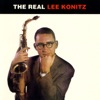
 Lee Konitz
The Real Lee Konitz
32 Jazz Records
Original recording, 1961, Collectables
|
|
You can hear a pin drop on this live recording. The alto saxophonist mesmerizes the audience with his sensitivity and originality.
|
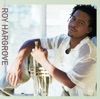
 Roy Hargrove
Moment to Moment
2000 Verve 314543540
Original recording 2000
|
|
Hargrove kicks off this album with a superbly romantic version of the ballad. Backed by strings, the trumpeter weaves hypnotically through this lush arrangement.
|
|
|
|