|
|
|
| It was Count Basie’s classic 1955 recording of “April in Paris,” arranged by organist Wild Bill Davis, that brought the song to the forefront for jazz musicians. |
|
 |
|
- Sandra Burlingame
|
|
| |
The 1932 Broadway revue Walk a Little Faster introduced “April in Paris,” composed by Vernon Duke and lyricist E. Y. “Yip” Harburg. The production starred comedians Bobby Clark and Paul McCullough and actress/singer Beatrice Lillie. This was the first time Duke had written the complete score for a show, and “April in Paris” was not originally a part of it. Set designer Boris Aronson had created a Left Bank setting for a number, and the producers wanted a romantic song. Duke and some friends and collaborators were having a discussion when someone (purportedly Dorothy Parker) expressed a longing to be in Paris during the month of April.
|
| |
| |
|
| |
|
|
| |
| |
|
| |
|
Duke pricked up his ears, found a piano and worked out the song to which Harburg quickly supplied lyrics. The song was inserted into the revue in Boston tryouts and was sung by Evelyn Hoey. Boston critics gave the song high praise, but in New York the song fell flat and was dismissed by critics. One reason given for its failure was that Hoey had laryngitis which marred her performance of the song on opening night.
However, the song received attention after the show closed following 119 performances. Blues singer Marian Chase featured it in her club dates and influenced other musicians such as band leaders Eddie Duchin and Paul Weston, vocalist Hildegarde, and opera singers Lilly Pons and Dorothy Kirsten to perform it.
Two recordings of “April in Paris” charted in 1933-34. The first was by tenor saxophonist Freddy Martin (nicknamed “Mr. Silvertone”), leader of one of the most popular “sweet bands” of the ‘30s. It made the charts in December, 1933, and stayed there for seven weeks. A week later, on December 30, Henry King, pianist and leader of a hotel band, recorded the song which stayed on the charts for two weeks:
- Freddy Martin and His Orchestra (1933-34, Elmer Feldkamp, vocal, #5)
- Henry King and His Orchestra (1933-34, Joe Sudy, vocal, #14)
- Count Basie and His Orchestra (1956, #28)
|
|
| |
|
| |
|
In 1952 Doris Day starred in the film April in Paris with Ray Bolger. Her recorded version of the song was popular but the film was a flop. Unfortunately movie moguls had tried to capitalize on the plot of Romance on the High Seas, Day’s successful 1948 film debut where she impersonated another woman on a cruise to Europe. But neither the cast nor the plot of the copycat second film could match the ebullience of the earlier film with Jack Carson, Janice Paige, Don Defore, and the delightful addition of Oscar Levant, S.Z. Sakall, and Eric Blore.
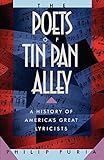
In The Poets of Tin Pan Alley: A History of America’s Great Lyricists Philip Furia lauds the blending of Duke’s sophisticated melody and Harburg’s theatrical and poetic phrases and his “muted rhymes.” Furia refers to the songwriters’ collaboration as “melodramatic lyrics and urbane music”--the reverse, he says, of Rodgers and Hart.
Thomas S. Hischak in his book The Tin Pan Alley Song Encyclopedia praises Duke’s bold melody, a departure from the norm both melodically and harmonically “with its sudden key changes in the opening section.” He calls Harburg’s lyric “beguiling” for his use of “short, haiku-like phrases to paint a picture with a series of specific and unforgettable images.... There are few rhymes in the lyric, and those that are there are quiet and understated.”
The verse deftly sets a romantic atmosphere. Harburg anthropomorphizes the month of April: “But here in Paris April wears a diff’rent gown, You can see her waltzing Down the street. The tang of wine is in the air.”
It was Count Basie’s classic 1955 recording of “April in Paris,” arranged by organist “Wild” Bill Davis, that brought the song to the forefront for jazz musicians. It was the Basie Band’s biggest hit, climbing to number 28 on the charts. The swinging performance, which featured an abundance of sterling solos, was later inducted into the Grammy Hall of Fame, and future performers have continued to reference the “one more time” tag ending.
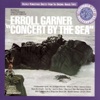
Some of the many jazz musicians who recorded the song include Ella Fitzgerald with Oscar Peterson, Coleman Hawkins, Mel Torme, Ahmad Jamal, Stan Kenton, Artie Shaw, Bill Evans, Charlie Parker, Miles Davis, Thelonious Monk, and Erroll Garner in his memorable Concert by the Sea album, recorded in the same year as the Basie arrangement.
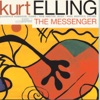
Among contemporary artists who have recorded the tune are saxophonist Don Braden, reed player Anthony Braxton, trumpeter Wynton Marsalis, drummer Cindy Blackman, guitarist Bireli Lagrene, and vocalist Kurt Elling.
|
|
|
|
More information on this tune... |
|
See the Reading and Research page for this tune for additional references. |
|
- Sandra Burlingame
|
|
| This section suggests definitive or otherwise significant recordings that will help jazz students get acquainted with
“April in Paris.” These recordings have been selected from the Jazz History and
CD Recommendations sections.
|
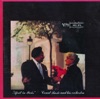
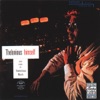
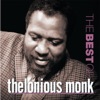
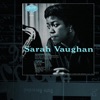
Sarah Vaughan’s 1954 version of “April in Paris” with Clifford Brown (Sarah Vaughan with Clifford Brown) is an excellent starting place for learning the song and for hearing how it can be interpreted as a ballad and in a small-group setting. Thelonious Monk recorded the song more than once, also with an influential ballad approach, and his solo version from 1957 (Thelonious Himself) is a particularly compelling performance. Meanwhile, probably the best-loved version of the song is Count Basie’s fabulous recording 1956 (April in Paris), which displays the song in a hard-swinging big band context.
Noah Baerman - Jazz Pianist and Educator
|
Musical analysis of “April in Paris” | | Original Key | C major | | Form | A1 - A2 - B - C; although different pitches are used, the melodic contour of “A2” is virtually identical to “A1.” Additionally, “C” is constructed of the same motivic ideas as the “A” sections and could alternatively be construed as “A3” | | Tonality | Primarily major; some strong minor tonality during “C” | | Movement | Narrow, descending phrases that arpeggiate upwards to higher registers or use chromatic embellishing tones between descending steps; initial motivic fragments from “A” are separated by upward skips and used in “C” to build toward the end. | Comments (assumed background) | | Although the range of this tune is only a ninth and is predominantly made up of narrow intervals, its classical construction-the use and development of the quarter-note triplet figure followed by the sustained note-gives it great sophistication, making the melody seem to have a wider range than it does. Starting out at the low end of the range, it builds beautifully, flowing through the initial “A” sections. In “B” new, contrasting material is introduced. The rhythmic activity is reversed, being carried toward the end of measures (half note followed by eighths), giving the melody an agitated feeling. “C” returns to the flowing triplet motif which is repeated three times, each time starting on a higher pitch, moving to an almost anguished climax on the final note. The harmonic progression is made up of fairly standard devices used in many standards; however, Vernon Duke’s use of exotic embellishing chords, inversions, extensions in the melody notes, and chromatic alterations gives these cadences a fresh and exotic sound. | | K. J. McElrath - Musicologist for JazzStandards.com |
|
Pianist Thelonious Monk’s Trio recording for Blue Note from 1947 was his first trio recording, and it’s possible that his version of “April in Paris” was responsible for bringing the tune out of the dance band doldrums it been consigned to for years; for within the next few years it would be recorded on several stellar sessions. The 1949 album of alto saxophone genius Charlie Parker, recorded with strings, produced some lovely music and nicely showcased Parker’s playing, bringing it to an audience outside the realm of jazz fans. Soon after several other jazz players followed suit in covering the tune. Vocalist Sarah Vaughan’s 1954 session with masterful trumpeter Clifford Brown is about as close to perfection as one can get. Not only is Sassy in top form, but Brownie’s backing is superlative, and tenor saxophonist Paul Quinichette is in his best mellow, Lester Young-style mode.
Chris Tyle - Jazz Musician and Historian
|
Additional information for "April in Paris" may be found in:
|
|
|
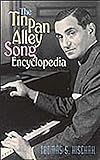 Thomas S. Hischak
The Tin Pan Alley Song Encyclopedia
Greenwood Press
Hardcover: 552 pages
(1 paragraph including the following types of information: film productions, history, lyric analysis and performers.)
|
|
|
|
|
 Robert Gottlieb, Robert Kimball
Reading Lyrics
Pantheon
Hardcover: 736 pages
(Includes the following types of information: song lyrics.)
|
|
|
|
|
|
|
|
Comment Policy
- Your comments are welcome, including why you like
this tune, any musical challenges it presents, or additional background information.
- Jazz musicians, fans, and students of all ages use this website as an educational resource.
As such, off-topic, off-color, unduly negative, and patently promotional comments will be removed.
- Once submitted, all comments become property of JazzStandards.com.
By posting, you give JazzStandards.com permission to republish or otherwise distribute your comments in any format or other medium.
JazzStandards.com reserves the right to edit or remove any comments at its sole discretion.
|
|
| Click on any CD for more details at Amazon.com |
 Coleman Hawkins
Body & Soul
RCA
|
|
In addition to being a dominant voice on the tenor saxophone, Coleman Hawkins was an important nurturer to the fledgling bebop movement in the 1940s. On this lovely ballad track he is supported by a band that includes Fats Navarro, J.J., Johnson, Hank Jones, Max Roach, with an arrangement by Tadd Dameron.
|
 Bud Powell
Jazz Giant
Polygram Records
|
|
Bud Powell’s ballad style, heavily influenced by Art Tatum but still uniquely Bud, can be heard in one of its most important examples on this trio cut with Curly Russell and Max Roach.
|
 Thad Jones
Magnificent Thad Jones
Blue Note Records
Original recording 1956
|
|
Better known later in his career for his arranging, Thad Jones was also a remarkable trumpet and cornet virtuoso and the featured soloist on the heralded Count Basie recording. This terrific recording with Detroit comrades Billy Mitchell and Barry Harris makes some references to the Basie version (including the famous “Pop Goes the Weasel” quote), but is generally more relaxed and subtle.
|
 Ella Fitzgerald, Louis Armstrong
Ella & Louis
Polygram Records
Original Recording 1956
|
|
The Oscar Peterson-led rhythm section on this track lays down a molasses-slow tempo, providing a canvas for intimate vocals from Fitzgerald and Armstrong, as well as some trumpet work by Armstrong.
|
 Gloria Lynne
Glorious Gloria Lynne (Digitally Remastered)
0
Original recording 1958
|
|
Lynne is relaxed and confident on this assertively swinging performance loosely based on Wild Bill Davis’ arrangement for the Basie band. The personnel includes saxophonist Sam “the Man” Taylor (the primary instrumental soloist), vibraphonist Eddie Costa, guitarist Kenny Burrell, perhaps most significantly, Davis himself on organ.
|
 Joe Williams
At Newport '63
RCA
Original recording 1963
|
|
This recording captures Williams live at the Newport Jazz Festival, and he is at his slyly swinging best. The all-star band features solos on this track by Coleman Hawkins and Clark Terry.
|
|
 Count Basie Orchestra
April in Paris
1997 Polygram Records 521402
Original recording 1956
|
|
Unquestionably the most famous version of “April in Paris” is this one by the Count Basie Orchestra. The band swings irrepressibly and the solos are hearty. Arranged by William “Wild Bill” Davis, it was an immediate hit, and its improvised lines are often referenced by other musicians. For example, Glen Gray used whole segments, even Basie’s countdown ending, for his big band arrangement of “What Kind of Fool Am I.”
|
 Kurt Elling
The Messenger
1997 Blue Note 52727
Original recording 1997
|
|
Like Joe Williams, Elling has the perfect voice for the song--sophisticated and rich. On this outing the rhythm section ups the tempo a notch to a funky, mid-tempo swing.
|
 Erroll Garner
Concert by the Sea
Sony 40589
original recording 1955
|
|
It sounds more like a night at the symphony when Garner takes the bench. The piano genius displays both sensitivity and drama as he plays the song like the finest concerto.
|
 Thelonious Monk
Thelonious Himself
1991 Original Jazz Classics 254
Original recording 1957
|
|
Monk is a formidable presence as he sits at the piano for this solo reading. The might and emotion with which he hits the keys make this an interpretation of menacing beauty.
|
|
|
|