|
|
|
| “’Avalon’ is practically an advertisement for the resort town on Catalina Island off the coast of California which was a popular resort destination for the film community of Hollywood.” |
|
 |
|
- Chris Tyle
|
|
| |
Vocalist Al Jolson premiered this number in 1920, and it scored two positions on the charts the following year:
- Al Jolson (1921, vocal, #2)
- Art Hickman and His Orchestra (1921, #11)
|
|
| |
|
| |
|
From his first hit record in 1912 until the decline of his career in the 1930s, almost anything Jolson performed turned to gold. Just his name associated with a song almost guaranteed success. Jolson was one of the first artists to capitalize on his popularity, cutting in on composer credits and royalties--hence the reason Jolson gets top billing on the credits to “Avalon.”
|
| |
| |
|
| |
|
Most likely Vincent Rose deserves credit for the music, but not completely. The opening melody of the tune is actually a lift from Giacomo Puccini’s aria “E Lucevan Le Stelle,” from the opera Tosca. Rose merely changed the melody from minor to major and added some melody bits of his own. But it was an obvious enough lift that Puccini’s publishers, G. Rocordi, sued the composers and the publisher in 1921 and were awarded $25,000 in punitive damages and all future royalties.
|
| |
| |
|
| |
|
|
| |
| |
|
| |
|
The original music shows only the names of Jolson and Rose. At some point in time DeSylva’s name was added. It is possible that he did have a hand in the lyrics, as he wrote lyrics to many of the songs performed by and purportedly composed by Jolson.
“Avalon” is practically an advertisement for the resort town on Catalina Island off the coast of California which was a popular resort destination for the film community of Hollywood. The song not only relates missing the place “beside the bay” but dreaming “from dusk ‘til dawn” of someone left behind. One of the cleverest parts of the lyric is the rhyme “I’ll have to travel-on, to Av-a-lon.”
|
|
|
|
More information on this tune... |
|
|
 Henry Martin
Enjoying Jazz
Schirmer Books
Paperback: 302 pages
(The author devotes two pages to an analysis of the song’s musical content and its performers and includes a jazz solo transcription.)
|
|
|
|
Chris Tyle - Jazz Musician and Historian
|
|
| This section suggests definitive or otherwise significant recordings that will help jazz students get acquainted with
“Avalon.” These recordings have been selected from the Jazz History and
CD Recommendations sections.
|
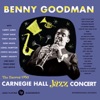
The 1928 Red Nichols recording of “Avalon” featuring Pee Wee Russell on clarinet (Red Nichols and His Five Pennies, 1926-1930) is the quintessential rendition of the early jazz era. Benny Goodman’s many wonderful recordings of the tune typify the swing approach to the tune, and the 1938 Carnegie Hall performance with Lionel Hampton, Teddy Wilson and Gene Krupa (Carnegie Hall Jazz Concert) is a standout. Meanwhile, Django Reinhardt’s 1935 recording with the Quintette Du Hot Club de France (First Recordings) represents another influential approach to “Avalon.”
Noah Baerman - Jazz Pianist and Educator
|
Musical analysis of “Avalon” | | Original Key | F major | | Form | A - B or A1 - B - A2 - C, depending on whether one considers the phrases as being 8 or 16 measures long. | | Tonality | Primarily major | | Movement | Primarily scale-wise ascending, with some wide leaps (4th- 6th) in both directions. | Comments (assumed background) | | Based on an operatic aria by Puccini, the melody is a classic example of “call and response”; the call is the ascending and descending scale pattern in mm. 1-4, 9-12, 17-20 and 25-28, each instance followed by wide leaps on sustained pitches. Rhythmically, the melody moves slowly. For this reason, it is usually played at a break-neck tempo. Because of the slow harmonic and melodic rhythm, it gives players opportunities to explore improvisational ideas without worrying about quick chord changes. | | K. J. McElrath - Musicologist for JazzStandards.com |
|
Cab Calloway’s record from 1934 features a snappy arrangement with some Benny Carter-like saxophone writing (uncredited but possibly by saxophonist Eddie Barefield). After Calloway’s vapid vocal there’s an interesting half chorus of fours between Walter “Foots” Thomas on flute and Morris White on guitar, a trumpet solo on the bridge by Doc Cheatham, and more flute by “Foots.” Tenor saxophonist Coleman Hawkins, on a busman’s holiday in Europe, joined forces with guitarist Django Reinhardt for a swinging outing on “Avalon” in 1935, accompanied by violinist Michel Warlop’s Orchestra. Talented trombonist/guitarist/arranger Eddie Durham contributed his arrangement of “Avalon” to the classy Jimmie Lunceford Orchestra, which waxed it in 1935. One of the most exciting moments from Benny Goodman’s 1938 Carnegie Hall concert was the Goodman Quartet’s smoking rendition of “Avalon” featuring pianist Teddy Wilson, Lionel Hampton on vibes, and Goodman’s hot clarinet.
Chris Tyle - Jazz Musician and Historian
|
Additional information for "Avalon" may be found in:
|
|
|
Henry Martin
Enjoying Jazz
Schirmer Books
Paperback: 302 pages
(2 pages including the following types of information: music analysis, performers and jazz solo transcription.)
|
|
|
|
|
|
|
|
Comment Policy
- Your comments are welcome, including why you like
this tune, any musical challenges it presents, or additional background information.
- Jazz musicians, fans, and students of all ages use this website as an educational resource.
As such, off-topic, off-color, unduly negative, and patently promotional comments will be removed.
- Once submitted, all comments become property of JazzStandards.com.
By posting, you give JazzStandards.com permission to republish or otherwise distribute your comments in any format or other medium.
JazzStandards.com reserves the right to edit or remove any comments at its sole discretion.
|
|
| Click on any CD for more details at Amazon.com |
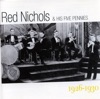
 Red Nichols & His Five Pennies
Red Nichols and His Five Pennies, 1926-1930
Fabulous
Original recording 1928
|
|
This is one of the earliest recordings of “Avalon” to fit squarely into the realm of jazz, and it would be a classic in any era. The whole band cooks, especially Pee Wee Russell, whose fiery and creative clarinet playing steals the show.
|
 Django Reinhardt
First Recordings (Django Reinhardt)
Ojc
Original recording 1935
|
|
This performance with the Quintette Du Hot Club de France occurred just a few months after Reinhardt’s recording of the same tune with Coleman Hawkins. Unlike that earlier recording, this one gives Reinhardt plenty of space to show off his striking improvisational style.
|
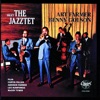
 Art Farmer, Benny Golson
Meet the Jazztet
Mca
Original recording 1960
|
|
On this album, trumpeter Farmer and tenor saxophonist Golson officially unveil their important hard bop group, the Jazztet. This burning performance, arranged by Golson, also features pianist McCoy Tyner and trombonist Curtis Fuller shortly before they joined John Coltrane and Art Blakey’s bands, respectively.
|
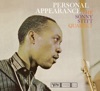
 Sonny Stitt
Personal Appearance
Verve
Original Recording 1957
|
|
Stitt plays alto saxophone on this recording which also features a young Bobby Timmons on piano. The tempo is breakneck and Stitt burns effortlessly, showing the compatibility between the song and a bebop conception.
|
|
 Pearl Django
Avalon
2000 Modern Hot Records
|
|
Joy is inherent in the sound of this group that takes its cue from the work of Django Reinhardt/Stephane Grappelli and brings it into the 21st century. Their delight is infectious.
|
 James Carter
Chasin' the Gypsy
2000 Atlantic 83304
|
|
Carter’s robust saxophone muscles its way through some red-hot gypsy swing. He blows with abandon while trading fours with exquisite violinist (and cousin) Regina Carter.
|
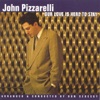
 John Pizzarelli
Our Love Is Here to Stay
1997 RCA Records 67501
|
|
Guitarist and vocalist Pizzarelli does a nice job with the lyrics on this recording, but it is when he gets down to soloing with the big band ascending behind him that the song really soars.
|
 Art Pepper
Landscape
1991 OJC 676
Original recording 1979
|
|
Altoist Pepper is featured in this Tokyo concert with his favorite pianist George Cables (who delivers a fine solo), bassist Tony Dumas, and drummer Billy Higgins. All-around good fun.
|
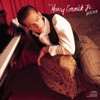
 Harry Connick Jr
20
1988 Columbia 44369
Original recording 1988
|
|
Alone at the piano, Connick slows down the pace to an easy-going mid-tempo, accommodating an interpretation that infuses gypsy sensibilities with a New Orleans spirit.
|
|
|
|