|
|
|
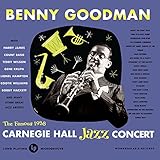
| “Henderson’s superb work with “Blue Skies” was featured during Goodman’s appearance at Carnegie Hall in 1938 and is an electrifying performance.” |
|
 |
|
- Chris Tyle
|
|
| |
This perennial favorite was introduced by Belle Baker in the 1926 musical Betsy. The following year the tune went big with the public, especially the version by Ben Selvin and His Orchestra recording under the pseudonym, The Knickerbockers.
- Ben Selvin and His Orchestra (1927, Charles Kaley, vocal, #1)
- George Olsen and His Music (1927, #2)
- Vincent Lopez and His Orchestra (1927, Frank Munn, vocal, #9)
- Johnny Marvin and Ed Smalle (1927, #9)
- Harry Richman (1927, #13)
- Vaughn Deleath (1927, vocal, #15)
- Johnny Long and His Orchestra (1941, Bob Houston, vocal, #22)
- Count Basie and His Orchestra (1946, #8)
- Benny Goodman and His Orchestra (1946, #9)
|
|
| |
|
| |
|
|
| |
| |
|
| |
|
The songwriting team of Richard Rodgers and Lorenz Hart had written the music for the Ziegfield show Betsy. Actress/vocalist Belle Baker, unhappy with the piece the two had written for her solo (“This Funny World”), contacted old friend Irving Berlin in hopes he might have something that would suit her needs. Berlin had, in fact, just put the finishing touches on a number dedicated as a Christmas gift to his newborn daughter, Mary Ellin. Baker liked the song, and it was inserted into the musical, much to the chagrin of Rodgers and Hart, who were not consulted and wouldn’t have allowed the change. The tune was the hit of the show, and Baker received 24 encores on opening night, December 28, 1926. Despite this, the show itself was a disaster and closed a month later.
|
| |
| |
|
| |
|
The introduction of “Blue Skies” in Betsy brought the number a great deal of attention and resulted in its first recordings. But a technological landmark across the continent brought it to the attention of millions. The first feature-length motion picture with sound, The Jazz Singer starring vocalist Al Jolson, premiered on October 6, 1927, and “Blue Skies” was one of the nine tunes performed by Jolson. Not only was the film a huge success, but it spelled the end of silent films. Soon Broadway musicals would be filmed for the silver screen, and songwriters Berlin, Cole Porter, the Gershwins and others would relocate to Hollywood or have bi-coastal careers.
“Blue Skies” continued to be a hit in films. After The Jazz Singer it returned in Alexander’s Ragtime Band, a 1938 biopic loosely based on composer Berlin’s life; a 1946 film named after the tune and sung by Bing Crosby; and a 1954 reprise by Crosby (along with Danny Kaye) in the film White Christmas.
|
|
|
|
| This section suggests definitive or otherwise significant recordings that will help jazz students get acquainted with
“Blue Skies.” These recordings have been selected from the Jazz History and
CD Recommendations sections.
|
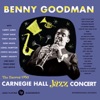
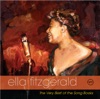
Benny Goodman’s live 1938 recording of “Blue Skies” (Carnegie Hall Jazz Concert) gives us perhaps the definitive swing-era interpretation of the song, not to mention a highlight in the arranging career of Fletcher Henderson. A looser, more intimate and more unpredictable version can be heard courtesy of Art Tatum in 1949 (The Complete Capitol Recordings Of Art Tatum) alone at the piano. If there were one recording on which to focus, though, it would likely be Ella Fitzgerald’s 1958 recording (The Very Best Of The Irving Berlin Songbook), which allows us to hear a swinging small-group performance and a masterful interpretation of the melody and lyric, not to mention one of the best solos ever recorded on the song.
Noah Baerman - Jazz Pianist and Educator
|
Berlin’s lyrics are, like many of his tunes, a reflection of what was going on in his life, and by late 1926 he was in a personal upswing: “Blue Skies’ smilin’ at me,” and “blue days, all of them gone.”
Chris Tyle - Jazz Musician and Historian
|
Musical analysis of “Blue Skies”
|
|
Original Key
|
D minor/F major
|
|
Form
|
A - A - B - A
|
|
Tonality
|
Starting in minor, shifting to relative major
|
|
Movement
|
“A” begins with an upward leap of a fifth, followed by a short descending stepwise figure (major third), embellishing the dominant before jumping down a major sixth and stepping up to the tonic. “B” rises up the scale from the tonic to the dominant, then descends with a series of “turns,” returning to the original pitch.
|
|
Comments (assumed background)
|
|
The descending harmonic and bass movement of “A” moves in contrary motion to the generally upward direction of the melodic line, creating interesting counterpoint. Although the written chord progression here is Dm - A7 - F - G7 - Bbm, the inversions should be kept so as to retain the descending chromatic bass line. While “A” is harmonically complex, the melody is slow-moving and relaxed. “B,” on the other hand, is simpler (scale patterns over a I - iv progression) yet rhythmically more active (many eighth-note passages) than “A.” While there are few improvements that could be made on Berlin’s original “A,” the “B” theme may yield different rhythmic and harmonic possibilities for the adventurous jazz performer (for example, the substitution of an Eb9 for the Bbm).
|
|
K. J. McElrath - Musicologist for JazzStandards.com
|
|
Bandleader/arranger/pianist Fletcher
Henderson had, by 1937, given up his band
but was quickly employed by clarinetist
Benny Goodman as chief arranger. Henderson’s
superb work with “Blue Skies” was featured
during Goodman’s appearance at Carnegie
Hall in 1938 and is an electrifying performance.
Bassist John Kirby, an ex-Fletcher Henderson
musician, fronted a small group of great
musicians including trumpeter Charlie Shavers,
clarinetist Buster Bailey, and pianist Billy
Kyle. Shaver’s clever arrangement of “Blue
Skies” is typical of the band’s output,
alternating tightly arranged passages with
exceptional solos.
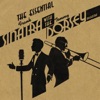
Tommy Dorsey’s 1941 version of Irving
Berlin’s tune epitomizes big band era jazz:
beautiful saxophone section playing that
alternates with brass riffs over a mellow
statement of the melody (by Dorsey on trombone),
followed by a swinging vocal (young
Frank Sinatra with vocal responses from
the band), then a rousing “shout” chorus
out. Ex-Jimmy Lunceford sideman Sy Oliver,
a fine trumpeter and vocalist, was responsible
for this stellar arrangement.
Chris Tyle - Jazz Musician and Historian
|
Additional information for "Blue Skies" may be found in:
|
|
|
 Thomas S. Hischak
The Tin Pan Alley Song Encyclopedia
Greenwood Press
Hardcover: 552 pages
(1 paragraph including the following types of information: film productions, history and performers.)
|
|
|
|
|
 Robert Gottlieb, Robert Kimball
Reading Lyrics
Pantheon
Hardcover: 736 pages
(Includes the following types of information: song lyrics.)
|
|
|
|
|
 Gerald Mast
Can't Help Singin'
Overlook Press; Rei edition
Paperback: 400 pages
(2 paragraphs including the following types of information: lyric analysis and music analysis.)
|
|
|
|
|
|
|
|
Comment Policy
- Your comments are welcome, including why you like
this tune, any musical challenges it presents, or additional background information.
- Jazz musicians, fans, and students of all ages use this website as an educational resource.
As such, off-topic, off-color, unduly negative, and patently promotional comments will be removed.
- Once submitted, all comments become property of JazzStandards.com.
By posting, you give JazzStandards.com permission to republish or otherwise distribute your comments in any format or other medium.
JazzStandards.com reserves the right to edit or remove any comments at its sole discretion.
|
|
| Click on any CD for more details at Amazon.com |
 Maxine Sullivan
Moments Like This
Proper Introduction
|
|
Sullivan’s light, airy vocal performance is supported by the subtly swinging piano playing and arranging of Claude Thornhill.
|
 Ben Webster
1944-1946
Classics
Original recording 1944
|
|
Saxophonist Webster swings assertively on this performance, which also features the soloing talents of pianist Johnny Guarnieri and influential bassist Oscar Pettiford.
|
 Art Tatum
The Complete Capitol Recordings
Blue Note Records
|
|
It is difficult to go wrong with an Art Tatum solo performance, and this one is no exception, providing a great mix of adherence to the tune and remarkable inventiveness.
|
 Ella Fitzgerald
The Very Best Of The Irving Berlin Song Book
Verve
Original recording 1958
|
|
After a subtle rubato introduction, Fitzgerald offers up a hard-swinging interpretation of the melody followed by a truly stunning scat solo. Pianist Paul Smith and trumpet master Harry “Sweets” Edison are standouts among the terrific band.
|
 Hampton Hawes
Green Leaves of Summer
Ojc
|
|
Hawes gives us a long, creative rubato intro before eventually launching into a creative, swinging trio romp. This recording is also significant for representing his comeback after over 5 years away from music.
|
 Earl Hines
Earl Hines in New Orleans
Chiaroscuro Records
Original recording 1977
|
|
This swinging solo piano excursion displays Hines at his late-career best, as he shows remarkable technical command and seemingly endless creativity.
|
|
 Cassandra Wilson
Blue Skies
2002 Winter & Winter 919018
Original recording 1988
|
|
Though the upbeat band swings in support of her, vocalist Wilson is able to create a sense of tentative optimism in the lyrics with her deadpan delivery and melancholy scat.
|
 Bill Charlap
Written in the Stars
2000 Blue Note 27291
Original recording 2000
|
|
As the tight rhythm section sets down a toe-tapping swing Charlap eloquently mines the song with a mainstream approach enriched with historical musical asides.
|
 Teri Thornton
Devil May Care
1999 Original Jazz Recordings 1017
Original recording 1961
|
|
Thornton is cooking on this slow-burning, bluesy swinger that features some engaging call and response between the singer and trumpeter Clark Terry.
|
 Junko Onishi
Live at the Village Vanguard
1995 Blue Note Records 31886
|
|
Berlin could never have imagined that his tune would have such interest for modernists such as pianist Onishi, bassist Reginald Veal, and drummer Herlin Riley. No matter how far out these explorers go, they carry a life line to the early 20th century composers. Their interpretation is affirmation of the endless improvisational significance of standards such as “Blue Skies.”
|
|
|
|