|
|
|
| Speculation has surrounded the meaning of the “lost” verses of “Bye Bye Blackbird.” |
|
 |
|
- Sandra Burlingame
|
|
| |
Two popular “crooners” of the 1920s recorded this standard the year it was published. Gene Austin’s version beat out Nick Lucas’ in the charts and was in the charts a total of 12 weeks:
- Gene Austin (1926, vocal, #1)
- Nick Lucas (1926, vocal, #4)
- Benny Kruger and His Orchestra (1926, #7)
- Leo Reisman and His Orchestra (1926, #11)
- Russ Morgan and His Orchestra (1948, #20)
|
|
| |
|
| |
|
The songwriting team of Mort Dixon and Ray Henderson was a brief association from 1923 to 1927. “Bye Bye Blackbird” was their most popular song, although their first collaboration, “That Old Gang of Mine” from 1923, was a hit, too. They had moderate success with “Follow the Swallow” from 1924 and “Bam Bam Bammy Shore” the following year. Their “comedy” number, “Oh How I Hate Bulgarians” from 1924, faded quickly and has thankfully been forgotten.
|
| |
| |
|
| |
|
|
| |
| |
|
| |
|
Vocalist Gene Austin’s hit recording had a very large part in the Dixon-Henderson song becoming a standard. Austin had number one hits on almost all of what are now considered the chestnuts of the 1920s: “Yes Sir! That’s My Baby” (1925); “Five Foot Two, Eyes of Blue” and “Bye Bye Blackbird” (1926); and “My Blue Heaven” (1927). Although not really a jazz singer, he was undoubtedly influenced by some of the good sounds he heard when singing in New Orleans in the ‘teens. He later was a great supporter of Fats Waller, recording several of his tunes and bailing him out of jail for delinquent alimony payments.
As mentioned in the history notes, “Bye Bye Blackbird” was far from being a favorite tune of jazz players in the period from 1926 to 1950, based on data from Tom Lord’s CD-rom The Jazz Discography. Lord includes Leo Reisman’s version mentioned above and a recording by trombonist Harry Raderman’s band, both of which would technically belong more to the “hot dance band” category. There are two recordings listed from the 1930s, both by English bands, and two from the 1940s, one of which was by New Orleans-born pianist Frank Froeba, who made some respectable recordings in the 1930s (he was pianist in Benny Goodman’s band prior to Jess Stacy), but by the 1940s he had descended into a kind of commercially-oriented “honky-tonk” piano style. Most likely the resurgence of the tune began with the 1948 version by trombonist Russ Morgan’s band, a popular dance band of the 1930s and ‘40s but definitely not a jazz group.
The 1955 film Pete Kelly’s Blues, starring Jack Webb as cornetist Kelly, created a great interest in 1920s music. Most musicians find the film characterizations amusing, especially Webb’s “Sergeant Joe Friday” persona and the dubious casting of tough-guy Lee Marvin as clarinetist Al Gannaway. The soundtrack music is really the film’s strong point, provided by a group of superb Hollywood studio musicians led by clarinetist/saxophonist Matty Matlock and vocals by Peggy Lee, cast in the film as vocalist Rose Hopkins. Webb, who produced and directed, deserves credit for his undying love of jazz music, and a number of the cast members were fine jazz players and not professional actors.
Dixon’s lyric played on the “blackbirds and bluebirds” theme of the 1920s and is a happy pronouncement on the pleasures of returning home to a sweetheart who is waiting, a special person who is loving and understanding.
|
|
|
|
| This section suggests definitive or otherwise significant recordings that will help jazz students get acquainted with
“Bye Bye Blackbird.” These recordings have been selected from the Jazz History and
CD Recommendations sections.
|
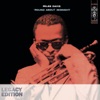
Miles Davis recorded “Bye Bye Blackbird” numerous times with numerous groups from the mid-1950s through his groundbreaking 1960s ensemble with Herbie Hancock, Ron Carter and Tony Williams. Among these (and, indeed, among all versions of the song) his 1956 quintet recording with John Coltrane (‘Round About Midnight) offers the last word on how to interpret the song. Among vocal renditions, Etta Jones’ 1960 recording with Frank Wess on flute (Don’t Go to Strangers) is particularly appealing.
Noah Baerman - Jazz Pianist and Educator
|
Speculation has surrounded the meaning of the “lost” verses of “Bye Bye Blackbird.” Vocalists generally sing only the chorus which begins “Pack up all my care and woe, Here I go singing low....” The following website offers an explanation of the meaning of the verses:
The first verse concerns a blackbird outside the window singing the blues and saying, “There’s no sunshine in store.” The listener feels the urge to return home, expressed in the chorus as “where someone waits for me.” In the second verse the listener hears a bluebird saying, “Skies are turning blue.” The listener reacts by saying, “I’m like a flower that’s fading here, Where ev’ry hour is one long tear.”
The story told by Chicago singer Mae Arnotte was that the song is about a “lady” fed up with the city and the “blackbirds” or “johns” and wanting to return home to her mother. And another version based on the same story explained that the “blackbirds” referred to the city of New York.
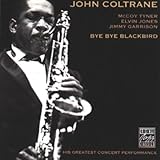
Both verses are sung on the soundtrack of The History Boys. The song has appeared in other films, such as Sleepless in Seattle where it was sung by Joe Cocker. Lou Rawls sang it on the Muppet show, and it’s been the title of a book and a 2005 movie. It’s been recorded by numerous jazz artists, including vocalists Nina Simone, Mel Torme, and Ella Fitzgerald, trumpeter Miles Davis, pianist Keith Jarrett, harmonica player Toots Thielemans, and saxophonist John Coltrane who won the 1981 Grammy Award for Best Jazz Instrumental Performance, Soloist for his rendition.
- Sandra Burlingame
|
Musical analysis
of “Bye Bye Blackbird”
|
|
Original Key |
F
major |
|
Form |
A1
- A2 - B - A3 |
|
Tonality |
Primarily
major |
|
Movement |
Generally
downward by step with occasional
upward leaps. |
|
Comments
(assumed
background)
|
|
Almost folk-like in its simplicity,
this is a great favorite of “trad”
jazz and Dixieland players. With
a range of less than an octave,
there is only one potentially awkward
interval in the entire piece. In
the third measure from the end,
there is a downward leap of a tri-tone.
However, because the second note
of the tri-tone is the “leading
tone,” resolving to the tonic, it
poses little problem for the novice.
Harmonically, there are few surprises.
Most of the song is either I- IV
- I - V7 or ii7 - V7 - I or some
variation. In “B” and “A3,” there
are instances of iiiø7-
V7/ii cadences in which the iiiø7
is replaced by a ivm6 (Cm6 substituting
for A ø7 in the original).
The only real difference between
the m6 and the ø7 chord
in this case is the placement of
the bass note; harmonically, they
serve the same voice-leading function.
|
|
K. J. McElrath - Musicologist for JazzStandards.com |
|
Since this is a vastly popular song from 1926, one would assume that there are myriad of jazz versions from that time. Not so. The tune’s popularity as a jazz vehicle stems in part from a 1955 motion picture set in the 1920s, Pete Kelly’s Blues. Although the movie itself was a Hollywood stereotype of the era and jazz musicians, the music was superb, provided by a group of fine musicians led by ex-Bob Crosby clarinetist Matty Matlock and vocalist Peggy Lee. The tune would continue for years to be associated with 1920s era jazz.
Then, less than a year following the release of the film, trumpeter Miles Davis recorded his ground-breaking album, ‘Round About Midnight. Immediately “Bye, Bye Blackbird” became a staple of modern jazz. Did Miles get his inspiration for playing the tune after seeing the film?
Chris Tyle - Jazz Musician and Historian
|
Additional information for "Bye Bye Blackbird" may be found in:
|
|
|
 Thomas S. Hischak
The Tin Pan Alley Song Encyclopedia
Greenwood Press
Hardcover: 552 pages
(1 paragraph including the following types of information: film productions, history and performers.)
|
|
|
|
|
 Robert Gottlieb, Robert Kimball
Reading Lyrics
Pantheon
Hardcover: 736 pages
(Includes the following types of information: song lyrics.)
|
|
|
|
|
|
|
|
Comment Policy
- Your comments are welcome, including why you like
this tune, any musical challenges it presents, or additional background information.
- Jazz musicians, fans, and students of all ages use this website as an educational resource.
As such, off-topic, off-color, unduly negative, and patently promotional comments will be removed.
- Once submitted, all comments become property of JazzStandards.com.
By posting, you give JazzStandards.com permission to republish or otherwise distribute your comments in any format or other medium.
JazzStandards.com reserves the right to edit or remove any comments at its sole discretion.
|
|
| Click on any CD for more details at Amazon.com |
 Ben Webster With Oscar Peterson
Ben Webster Meets Oscar Peterson (20-Bit Master)
Polygram Records
Original recording 1959
|
|
In a quartet with bassist Ray Brown and drummer Ed Thigpen, saxophonist Webster and pianist Peterson offer up a remarkably swinging performance, both taking fabulous solos.
|
Bill Henderson
His Complete Vee-Jay Recordings, Vol. 1
Vee-Jay
Original recording 1959
|
|
Henderson’s singing here is sly and bluesy, ably riding the slow but swinging groove established by the Ramsey Lewis Trio.
|
 Miles Davis
In Person Friday and Saturday Nights at the Blackhawk, Complete
Sony
Original recording 1961
|
|
This version of the Miles Davis quintet is sometimes seen as being transitional in the big picture of Davis’ career, but they produced some remarkable music. This performance, recorded live at Chicago’s Blackhawk club, features hard-swinging solos by Davis, saxophonist Hank Mobley and pianist Wynton Kelly.
|
 Kenny Garrett
Black Hope
Warner Bros / Wea
Original recording 1992
|
|
With a very clever arrangement, alto saxophonist Garrett turns “Bye Bye Blackbird” into a burning up-tempo vehicle. Tenor saxophonist Joe Henderson is featured as well.
|
|
 Mel Torme
The London Sessions
1992 Sandstone 5005
Original recording 1977
|
|
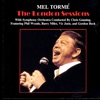
The symphony orchestra moves to the background for this number while Torme is featured with predominantly bass and sax. There is wistfulness behind his hope-filled farewell as Phil Woods’ alto sax circles the singer with excited, airborne cries in a very emotional reading of the song.
|
 Keith Jarrett
At the Deer Head Inn
1994 ECM Records 21531
|
This jaunty version features pianist Jarrett’s trio bassist Gary Peacock with drummer Paul Motian sitting in for regular colleague, Jack DeJohnette.
Jarrett takes this blackbird on a flight of fancy.
|
|
 Jimmy Smith
Standards
Blue Note Records
Original recording 1957
|
|
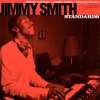
The bluesy funk of Smith’s organ and the crisp tones from Kenny Burrell’s guitar signal the beginning of a wonderful musical relationship. Together they squeeze out a large, powerful sound that is rich in texture yet not overpowering.
|
 Jacky Terrasson
Jacky Terrasson
1995 Blue Note 29351
Original recording 1995
|
|
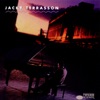
Pianist Terrasson’s debut is a dynamic one as he turns this song on its ear. Lightning quick of both wit and wrist, he attacks the tune from all angles, making the familiar unfamiliar and the unconventional fantastic.
|
 Etta Jones
Don't Go to Strangers
1991 Original Jazz Classics 298
Original recording 1960
|
|
Vocalist Jones gives the song some bluesy swing, and flautist Frank Wess lightens the tone for this superb recording. Elegant with an underlying growl, it stands out as one of Jones’ finest moments.
|
|
|
|