|
|
|
| “[Astaire] is a real inspiration for a writer. I’d never have written Top Hat without him.” |
|
 |
|
- Irving Berlin
|
|
| |
Singer/dancer/actor Fred Astaire introduced Irving Berlin’s “Cheek to Cheek” in the RKO motion picture Top Hat in 1935. The song immediately roared into the charts: - Fred Astaire (1935, vocal, #1)
- Eddy Duchin and His Orchestra (1935, #2)
- Guy Lombardo and His Royal Canadians (1935, #2)
- Phil Ohman and His Orchestra (1935, #5)
- Boswell Sisters (1935, vocal, #10)
|
|
| |
|
| |
|
The American public went crazy for the duo of Fred Astaire and Ginger Rogers in the mid-1930s. Their RKO musicals were the perfect escapist fare, showing how the “other half lived” during the tough days of the Depression. Astaire (dressed to the nines, suave and debonair) and Rogers (coquettish and elegantly clad in evening attire) along with superb music and choreography made these films sure-fire hits.
|
| |
| |
|
| |
|
Top Hat was Berlin’s second musical for Astaire/Rogers. “Cheek to Cheek” is one of the best songs he wrote for their films. In typical Berlin fashion, part of the tune had already been written with a working title of “Moon Over Napoli” and intended for an un-produced Broadway show titled More Cheers. Berlin effortlessly reworked the number into “Cheek to Cheek.” In Edward Jablonski’s biography, Irving Berlin: American Troubadour, Berlin related the effect Astaire had on him: “He’s a real inspiration for a writer. I’d never have written Top Hat without him.”
The radio program “Your Hit Parade” debuted in 1935. On September 29, 1935, the program featured all five Berlin songs written for Top Hat, the first time music from a film had received such coverage from the program. Astaire’s version of “Cheek to Cheek” was in the charts for 18 weeks, and his versions of the other songs from the show, “No Strings,” “Top Hat, White Tie and Tails,” “Isn’t This a Lovely Day,” and “The Piccolino,” were in the charts from six to eleven weeks.
“Cheek to Cheek” took some time to become comfortable to jazz musicians. Its unusual, 72-bar length and A-A-B-C-A structure proved a bit daunting for some players, but the more advanced ones found the tune the perfect challenge with its engaging melodic and chordal structure.
|
|
|
|
| This section suggests definitive or otherwise significant recordings that will help jazz students get acquainted with
“Cheek to Cheek.” These recordings have been selected from the Jazz History and
CD Recommendations sections.
|
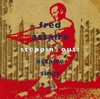
Fred Astaire is closely associated with “Cheek to Cheek,” and his 1952 re-recording of it (Steppin’ Out: Astaire Sings) is both wonderful and very jazz-relevant, thanks largely to featured soloists Charlie Shavers, Flip Phillips, Barney Kessel and Oscar Peterson. Peterson also figures prominently in another definitive vocal treatment of the song, the 1956 recording by Ella Fitzgerald and Louis Armstrong (Ella and Louis). Among instrumental versions, Red Norvo’s up-tempo 1950 recording with Tal Farlow and Charles Mingus (Modern Red Norvo) is an excellent place to start.
Noah Baerman - Jazz Pianist and Educator
|
Berlin’s song is a perfect evocation of Astaire’s dancing with Rogers, explaining how his film character is in “heaven” and seems to find “happiness” when “dancing cheek to cheek.” On the C section of the tune, where it goes into minor, Astaire pleads “dance with me, I want my arms about you.” Then in the return to the A section he confesses “my heart beats so that I can hardly speak” when “dancing cheek to cheek.” Chris Tyle
|
Musical analysis of “Cheek to Cheek”
|
|
Original Key
|
C major; temporary tonal shifts to C minor and A minor in section “B”
|
|
Form
|
A - A - B - C - A
|
|
Tonality
|
Predominantly major, except for the minor tonalities of “C”
|
|
Movement
|
A repeated note with lower embellishing tones, then ascending by step with upper neighbor tones. Descends in a pattern of thirds, ascends by step, and then descends to the tonic by step. “B” consists of arpeggiated figures in both directions; “C” uses repeated notes interspersed with dramatic downward leaps.
|
|
Comments (assumed background)
|
|
The melody spans a fairly large range of a minor tenth; there is a passage in section “C” consisting of descending sixths, while the lead-in to “C” itself is an entire octave. Fortunately, these happen in predictable patterns--a tribute to Berlin’s instinctive use of compositional devices such as melodic development which makes the tune easier to learn. The harmonic progression of “C” is of interest in its complete contrast to the rest of the song and Berlin’s idea of tension and delayed resolution. The song turns suddenly to the parallel minor (C major to C minor). The movement from i to V7 is embellished by VI (C minor -Ab7 - G7). Instead of resolving back to i, however, the V7 resolves deceptively to a minor chord a whole step higher (in the original, G7 -Am), which is the relative minor of the original tonic key. It therefore becomes a simple matter to return to the initial key.
|
|
K. J. McElrath - Musicologist for JazzStandards.com
|
|
A stroke of brilliance led producer Norman
Granz to engage
Fred Astaire in 1952 for a session revisiting
his 1930s movie hits. Backed by an all-star
group of players culled from Granz’ Jazz
at the Philharmonic touring bands, Astaire’s
1952 version of “Cheek to Cheek” is almost
half the tempo of the 1935 recording done
with Leo Reisman’s Orchestra, and it is
decidedly groovier.
Vibraphonist Red Norvo, who had been
a swing-era bandleader of both big and small
bands, ventured into modern jazz in 1945
in a session with Charlie Parker and
Dizzy Gillespie. His 1950 group, which
included innovative bassist Charlie Mingus
and guitarist Tal Farlow, did a stunning
interpretation of Irving Berlin’s song.
Another Norman Granz session, from 1951,
featured tenor saxophonist Flip Phillips
with trombonist Bill Harris in a smoking,
up-tempo performance.
Chris Tyle - Jazz Musician and Historian
|
Additional information for "Cheek to Cheek" may be found in:
|
|
|
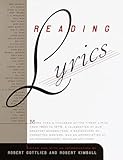 Robert Gottlieb, Robert Kimball
Reading Lyrics
Pantheon
Hardcover: 736 pages
(Includes the following types of information: song lyrics.)
|
|
|
|
|
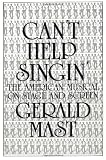 Gerald Mast
Can't Help Singin'
Overlook Press; Rei edition
Paperback: 400 pages
(2 paragraphs including the following types of information: lyric analysis and music analysis.)
|
|
|
|
|
 Gary Giddins
Visions of Jazz: The First Century
Oxford University Press; New Ed edition
Paperback: 704 pages
(1 paragraph including the following types of information: lyric analysis and music analysis.)
|
|
|
|
|
|
|
|
Comment Policy
- Your comments are welcome, including why you like
this tune, any musical challenges it presents, or additional background information.
- Jazz musicians, fans, and students of all ages use this website as an educational resource.
As such, off-topic, off-color, unduly negative, and patently promotional comments will be removed.
- Once submitted, all comments become property of JazzStandards.com.
By posting, you give JazzStandards.com permission to republish or otherwise distribute your comments in any format or other medium.
JazzStandards.com reserves the right to edit or remove any comments at its sole discretion.
|
|
| Click on any CD for more details at Amazon.com |
 Ella Fitzgerald, Louis Armstrong
Ella & Louis
Polygram Records
Original Recording 1956
|
|
This is an irresistible performance. Louis Armstrong sings “Cheek to Cheek” over a relaxed swing feel before Ella Fitzgerald comes in to sing it again as the groove becomes more driving and Armstrong interjects some trumpet. The Oscar Peterson-led rhythm section keeps it swinging throughout.
|
 Billie Holiday
All Or Nothing at All
Polygram Records
Original Recording 1956
|
|
Holiday offers an appealing and comparatively lighthearted performance here over a bouncy, mid-tempo swing groove. Saxophonist Ben Webster, trumpeter Harry “Sweets” Edison and guitarist Barney Kessel all figure prominently in the performance as well.
|
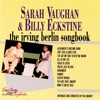
 Sarah Vaughan
Diva Series
Verve
Original Recording 1958
|
|
Vaughan interprets the melody of “Cheek to Cheek” faithfully over a slyly-swinging arrangement performed mostly by Count Basie associates, including bandleader Thad Jones and reedman Frank Wess, who solos here on flute.
|
 Ahmad Jamal
Ahmad's Blues
Verve
Original Recording 1958
|
|
Pianist Ahmad Jamal is heard live in Washington, D.C. here with his “classic” trio including bassist Israel Crosby and drummer Vernell Fournier. The playing is swinging, tight and atmospheric, as Jamal refers to the melody in an impressionistic manner and solos sparsely.
|
 Teddy Edwards
Out of This World
Steeplechase
Original Recording 1980
|
|
This appealing performance, recorded in Copenhagen, is taken at a very bright tempo. The arrangement is tight, the rhythm section smokes, and there are excellent solos by saxophonist Edwards, pianist Kenny Drew and drummer Billy Hart.
|
|
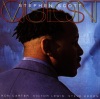
 Stephen Scott
Vision Quest
1999 Enja 9347
|
|
Ron Carter lays down the funkiest of bass lines in service to pianist Scott’s exuberance and agility on this lively, original reading of the song.
|
 Gene Ammons
The Big Sound
1991 Original Jazz Classics 651
Original recording 1958
|
|
Tenor saxophonist Ammons leads an all-star group through an energetic romp distinguished by the airy flute of Jerome Richardson and a rare appearance by John Coltrane on alto sax.
|
 Jane Monheit
Live at the Rainbow Room
2003 N-Coded Music 4249
Original recording 2002
|
|
The Rainbow Room audience enjoyed a treat the night Monheit recorded this rendition. The singer swings this one with the highest of energy, elevating the giddy emotion of the song.
|
 Red Mitchell
Presenting Red Mitchell
1996 OJC 158
Original recording 1957
|
|
On this early album the bassist displays the qualities of lyricism and rhythm that would soon put him at the top of the game. His quartet swings this one with relish. Texas tenor James Clay and pianist Lorraine Geller have fun trading licks while a young Billy Higgins keeps things rolling from behind the drum kit.
|
|
|
|