|
|
|
Duke Ellington’s 1940 composition was first released as “Never No Lament.”
|
|
 |
|
- Chris Tyle
|
|
| |
Duke Ellington’s 1940 composition was first released as “Never No Lament.” By 1943 it had been fitted with lyrics by Bob Russell. Once the tune was released as “Don’t Get Around Much Anymore,” it hit the charts:
- Ink Spots (1943, vocal, #2)
- Glen Gray and the Casa Loma Orchestra (1943, Kenny Sergeant and the LeBrun Sisters, vocal, #7)
- Duke Ellington (1943, instrumental, #8)
|
|
| |
|
| |
|
Ellington’s 1940 band represented a pinnacle in his 15-year band-leading career. Now referred to as the “Webster-Blanton” band (for tenor saxophonist Ben Webster and string bassist Jimmy Blanton), the group was a tightly-knit unit comprised of some fabulous jazz talent. Ellington’s recordings and compositions from this period are readily acknowledged classics, enlivened by the great playing of musicians like Webster and Blanton but also by Barney Bigard (clarinet), Cootie Williams (trumpet), Harry Carney (baritone sax) and Johnny Hodges (alto sax). Duke’s “Never No Lament” was an instrumental feature for Hodges. But Duke, ever mindful that a hit record would help ease the financial burden of running a big band, was open to suggestions on the commercial possibilities of his compositions. Consequently, several of his instrumentals from this period had lyrics retrofitted to them by Bob Russell, and “Don’t Get Around Much Anymore” is arguably one of Russell’s best efforts.
|
| |
| |
|
| |
|
|
| |
| |
|
| |
|
Unfortunately, World War II and the A.S.C.A.P and American Federation of Musicians’ recording bans nixed Duke’s plans to get a vocal version recorded. Glen Gray’s Casa Loma Orchestra beat Duke to the punch, recording their version just weeks before the A.F. of M. ban. And because vocal groups were exempt from the ban, the Ink Spots recorded their version, also for Decca, in 1943. Realizing the tune was gaining popularity, RCA Victor re-released Duke’s 1940 recording as “Don’t Get Around Much Anymore.”
By the time Ellington recorded a vocal version for Columbia in 1947 (featuring Al Hibbler), much of the momentum of the tune was lost, and it failed to hit the charts.
Russell’s lyric tells the story of a jilted lover who prefers to stay home rather than be haunted by memories of happier times spent at dances and nightspots. An amusing sideline to this song concerns the first line of the lyrics. “Missed the Saturday dance” has been misunderstood as “Mister Saturday dance” or “Mister Saturday night,” much to the amusement of musicians who get these as requests.
|
|
|
|
| This section suggests definitive or otherwise significant recordings that will help jazz students get acquainted with
“Don't Get Around Much Anymore.” These recordings have been selected from the Jazz History and
CD Recommendations sections.
|
Duke Ellington’s 1940 recording of “Never No Lament” (Never No Lament: The Blanton-Webster Band) is the basis for “Don’t Get Around Much Anymore” and as such is essential listening for anyone seeking to build a meaningful relationship with this song. Al Hibbler, meanwhile, joined Ellington’s band in 1947 for an essential vocal recording of “Don’t Get Around Much Anymore” (Duke Ellington - Greatest Hits). Outside of Ellington’s own performances of the tune, Ella Fitzgerald’s 1956 rendition (Ella Fitzgerald Sings the Duke Ellington Songbook) features a flawless reading of the melody, not to mention some great solos and a boatload of swing.
Noah Baerman - Jazz Pianist and Educator
|
Musical analysis of “Don’t Get Around Much Anymore” | | Original Key | C major | | Form | A - A - B - A | | Tonality | Major throughout | | Movement | “A” is primarily scale-wise, rhythmically fast and descending, interspersed with chromatic ascending figures; “B” is more arpeggiated, moving generally downward with a slower, more flowing rhythm. | Comments (assumed background) | | This is one of the first tunes learned by the novice. The
initial chord progression is the popular I
– VI (V7/ii) - ii7 - V7 for “A” (“Sweet Lorraine,” “Back Home Again in Indiana”),
done at a slower rhythmic speed. The “B” section starts out with IV - iv - I, followed by a v7 functioning as a ii7/IV before returning to a variation on this, IV - vii°/iii- vi - ii - V7. An interesting fact is that this tune apparently originated as a counter-melody for “Concerto for Cootie,” later known as “Do Nothin’ Till You Hear from Me.” | | K. J. McElrath - Musicologist for JazzStandards.com |
|
The great early-1940s Duke Ellington Orchestra, known as the “Webster-Blanton” band for tenor saxophonist Ben Webster and bassist Jimmy Blanton, had lost several of its key players by 1947, most of whom had tired of the road and desired careers of their own. (Blanton died in 1942 at age 23 of tuberculosis). Cornetist Rex Stewart visited Paris in 1947, recording a plunger-mute version of Duke’s tune similar in concept to Ray Nance’s on the original “Never No Lament.” Milt Jackson’s Quintet of 1953 was the Modern Jazz Quartet plus alto saxophonist Lou Donaldson. Their version of the tune is taken at a faster clip than that of the Ellingtonians, and Donaldson doffs his hat in the direction of alto sax patriarch Charlie Parker. Ben Webster, tenor saxophonist on the original Ellington recording, revisited the tune in a 1953 Verve session, sounding a bit like his former Ellington section-mate, alto saxophonist Johnny Hodges.
Chris Tyle - Jazz Musician and Historian
 Benny Carter, Ben Webster, Harry, Ray Brown, J.C. Heard, Herb Ellis, Barney Kessel, Oscar Peterson, Ben Webster, Ben Webster
King of the Tenors
Polygram Records
|
|
|
|
|
Additional information for "Don't Get Around Much Anymore" may be found in:
|
|
|
 Thomas S. Hischak
The Tin Pan Alley Song Encyclopedia
Greenwood Press
Hardcover: 552 pages
(1 paragraph including the following types of information: film productions, history and performers.)
|
|
|
|
|
 Robert Gottlieb, Robert Kimball
Reading Lyrics
Pantheon
Hardcover: 736 pages
(Includes the following types of information: song lyrics.)
|
|
|
|
|
|
|
|
Comment Policy
- Your comments are welcome, including why you like
this tune, any musical challenges it presents, or additional background information.
- Jazz musicians, fans, and students of all ages use this website as an educational resource.
As such, off-topic, off-color, unduly negative, and patently promotional comments will be removed.
- Once submitted, all comments become property of JazzStandards.com.
By posting, you give JazzStandards.com permission to republish or otherwise distribute your comments in any format or other medium.
JazzStandards.com reserves the right to edit or remove any comments at its sole discretion.
|
|
| Click on any CD for more details at Amazon.com |
 Duke Ellington
Never No Lament the Blanton-Webster Band
RCA
|
|
“Don’t Get Around Much Anymore” had its genesis in an instrumental composition of Ellington’s called “Never No Lament.” This tune relies heavily on the alto saxophone of Johnny Hodges and is an all-time classic example of Ellington’s 1940 ensemble.
|
 Duke Ellington
Duke Ellington - Greatest Hits [Columbia/Legacy]
Columbia
Original recording 1947
|
|
Interestingly, numerous ensembles had recorded vocal versions of “Don’t Get Around Much Anymore” before Ellington cut his first classic vocal rendition of the tune. Rest assured, though, Al Hibbler’s performance proved to be worth the wait.
|
 Ella Fitzgerald
Ella Fitzgerald Sings the Duke Ellington Songbook
Polygram Records
Original recording 1957
|
|
The loping melody of “Don’t Get Around Much Anymore” presents no challenge to Fitzgerald, who sings and swings it with relaxed assurance. The featured soloists on this tune are Ben Webster on tenor saxophone and Stuff Smith on violin.
|
 Oscar Peterson
Oscar Peterson Plays the Duke Ellington Song Book
Polygram Records
Original recordings 1952 and 1959
|
|
This album gives us two trio interpretations of “Don’t Get Around Much Anymore,” both featuring the bass of Ray Brown. The first is a relaxed and harmonically rich performance with Barney Kessel on guitar. The second features Peterson’s trio with Ed Thigpen on drums and is taken at an even more relaxed pace.
|
 Kenny Burrell
Ellington Is Forever 1
Fantasy
|
|
Guitarist Burrell is widely known as a definitive interpreter of Ellington material. However, the focal point of this performance is the underrated Ernie Andrews, whose delightful vocal delivery steals the show.
|
 Nat Adderley Quintet
Branching Out
Ojc
Original recording 1958
|
|
This is the first of Nat Adderley wonderful Riverside albums, and he is joined here by Gene Harris, Andy Simpkins and Bill Dowdy, a.k.a. the Three Sounds. Not surprisingly, their rendition of “Don’t Get Around Much Anymore” is tight, soulful and intensely swinging.
|
|
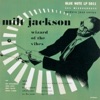
 Milt Jackson
Wizard of the Vibes
Blue Note Records 32140
Original recording 1952
|
|
An up-tempo, swing version of the tune is delivered from what is effectively the Modern Jazz Quartet with the bonus of alto sax player Lou Donaldson. Donaldson and vibes master Jackson trade some outstanding solos on two separate takes.
|
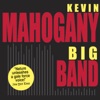
 Kevin Mahogany
Big Band
2005 Lightyear 54675
Original recording 2005
|
|
A voice as big and rich as Mahogany’s deserves a band equally big and rich. The singer owns this song, delivering equal parts reverence and humor and wrapping it up in his larger than life vocal persona.
|
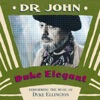
 Dr. John
Duke Elegant
2000 Blue Note 23220
Original recording 2000
|
|
This engaging version of the song has the pianist/singer visiting Duke’s music from the perspective of New Orleans stride. Genuine love for the composer is apparent in the dynamic play and the tongue-in-cheek delivery of the lyrics.
|
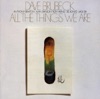
 Dave Brubeck
All the Things We Are
1990 Atlantic/Wea 1684
Original Recording 1974
|
|
In a departure from his standing quartet format pianist Brubeck recorded with Anthony Braxton, Alan Dawson, Roy Haynes, Lee Konitz, and Jack Sax on this date. This particular track, though, is a delightful and intimate duet between Brubeck and Konitz.
|
|
|
|