|
|
|
| “It’s likely Brooks Bowman came up with the title from a Norwegian fairy tale where a prince and his step-mother live ‘east of the sun and west of the moon.’” |
|
 |
|
- Chris Tyle
|
|
| |
This standard had a modest introduction as part of Princeton University’s Triangle Club production Stags at Bay in 1934. A west coast dance band recording of the tune landed number one in the charts the following year:
Tom Coakley and His Orchestra (1935, Carl Ravazza, vocal, #1)
|
|
| |
|
| |
|
The Triangle Club was the successor to the Princeton College Dramatic Association, founded in 1883. The Club staged a production every academic year, and for the 1934-35 show, Princeton student Brooks Bowman (class of 1936) composed the music, which in addition to “East of the Sun” featured “Will Love Find a Way?” and “Love and a Dime.” The show garnered positive reviews while on tour and culminated with two sold-out performances in New York.
|
| |
| |
|
| |
|
Tom Coakley had a popular, California-based dance band. In 1934 they were playing the Rose Room at the Palace Hotel in San Francisco, recording and being featured on live radio broadcasts. As a result they did a coast-to-coast tour in 1935, the year they recorded “East of the Sun.” In January, 1936, they returned to San Francisco and an engagement at the Hotel St. Francis.
Bandleader Hal Kemp recorded Bowman’s “Love and a Dime” and Will Love Find a Way?” for Brunswick Records in 1934. Although it appears he didn’t record “East of the Sun,” references abound in print and on the internet that he did. A listing of Brunswick releases of Kemp’s band from 1934-1936 shows only the two titles.
Probably the most famous pre-World War II recording was by trombonist Tommy Dorsey’s Orchestra in April, 1940, featuring his new vocalist, Frank Sinatra. Based along the lines of Dorsey’s earlier successes with “Marie” and “Who,” the recording features a call-and-response vocal between Sinatra and the band. A high point on the record is a marvelous trumpet solo by Bunny Berigan.
It’s likely Brooks Bowman came up with the title from a Norwegian fairy tale where a prince and his step-mother live “east of the sun and west of the moon.” The tune’s lyrics have a fairy tale quality, beginning with the seldom-performed verse: “I wish that we could live up in the sky, to live among the stars, the moon, just you and I.” In the chorus the couple will “live in a lovely way, on love and pale moonlight.” The tune is a romantic ballad that continues to find favor with vocalists and instrumentalists alike.
|
|
|
|
| This section suggests definitive or otherwise significant recordings that will help jazz students get acquainted with
“East of the Sun (and West of the Moon).” These recordings have been selected from the Jazz History and
CD Recommendations sections.
|
Lester Young’s tender ballad performance of “East of the Sun” from 1947 (The Complete Aladdin Sessions) is a classic and a definitive interpretation of this song. Serving as a counterpart of sorts is Sarah Vaughan’s 1950 recording (Sarah Vaughan In Hi-Fi), also interpreted as a gentle ballad. For a faster, swinging approach to the tune, Carmen McRae’s 1957 version with Ray Bryant’s trio (I’ll Be Seeing You) can’t be beat.
Noah Baerman - Jazz Pianist and Educator
|
Musical analysis of “East of the Sun (and West of the Moon)” | | Original Key | G major | | Form | A - B - A - C with a 4-measure extension | | Tonality | Primarily major | | Movement | Generally skips (3rds, 4ths) and leaps (5ths and larger); some stepwise movement between phrases. Fairly balanced between ascending and descending motion. | Comments (assumed background) | | The harmonic progression in the opening eight measures of “A” is similar to “rhythm changes,” except that the changes have been stretched out and a iii7 chord inserted before the VI7 (V7/ii). In “B” the composer plays with a number of ii7-V7 cadences in different tonalities. However unusual for the time, they are not random; every chord in this section shares one or more common tones with the chord following it. The only place in the song in which a chordal sequence is followed by an unrelated one occurs at the end of “C,” just before the extension, where a G major chord is followed by Bbm7 and Eb7 -a ii7-V7 cadence in Ab that resolves deceptively to A minor. | | K. J. McElrath - Musicologist for JazzStandards.com |
|
There are critics who find the string arrangements for alto saxophonist Charlie Parker’s recordings pedestrian; yet Bird’s album is a classic and his playing, which could be erratic at times, is marvelous. On “East of the Sun” from 1950 Parker soars over the orchestra on Joe Lippman’s arrangement.
Tenor saxophonist John Haley “Zoot” Sims, who rose to prominence with Woody Herman’s Herd, had a marvelous style loosely based on the work of Lester Young, but, like many of the Young inspired tenors, he found his own voice. Zoot’s version of “East of the Sun” from 1951 is outstanding: eleven-plus minutes of swinging, highly-listenable jazz.
Multi-instrumentalist Bud Shank, with Howard Rumsey’s Lighthouse All-Stars on a session from 1955, is the featured horn on “East of the Sun” and he acquits himself superbly.
Chris Tyle - Jazz Musician and Historian
 Zoot Sims
Quartets
Original Jazz Classics 242
Original recording, 1951
|
|
|
|
|
Additional information for "East of the Sun (and West of the Moon)" may be found in:
|
|
|
|
|
|
Comment Policy
- Your comments are welcome, including why you like
this tune, any musical challenges it presents, or additional background information.
- Jazz musicians, fans, and students of all ages use this website as an educational resource.
As such, off-topic, off-color, unduly negative, and patently promotional comments will be removed.
- Once submitted, all comments become property of JazzStandards.com.
By posting, you give JazzStandards.com permission to republish or otherwise distribute your comments in any format or other medium.
JazzStandards.com reserves the right to edit or remove any comments at its sole discretion.
|
|
| Click on any CD for more details at Amazon.com |
 Frank Sinatra, Tommy Dorsey Orchestra
The Essential Frank Sinatra with the Tommy Dorsey Orchestra (2CD)
RCA
Original Recording 1940
|
|
In this classic early version of “East of the Sun,” Bandleader and trombonist Dorsey offers up a rendition of the melody before giving way to the vocals of Sinatra (and responses from the band), as well as a fine trumpet solo by Bunny Berigan.
|
 Dizzy Gillespie
Groovin' With Diz & Co.
Passport
Original recording 1944
|
|
Bandleader Gillespie multi-tasks on this relaxed, swinging performance, playing piano except for a brief but spectacular trumpet solo. The star, however, is young vocalist Sarah Vaughan, whose interpretation of the melody straightforward but displays some of her still-developing personality.
|
 Lester Young
Complete Aladdin Recordings
Blue Note Records
Original Recording 1946
|
|
Lester Young focuses on the melody on this ballad performance, interpreting it faithfully yet creatively. The results are achingly emotional.
|
 George Shearing
Quintet: 1949
Hep Records
Original recording 1949
|
|
George Shearing plays a relaxed, tightly swinging version of “East of the Sun” with his classic quintet. His piano solo features an impressive display of his signature “locked-hands” block chord style.
|
 Sarah Vaughan
Sarah Vaughan in Hi-Fi
Sony
Original recording 1950
|
|
Over five years after recording the song with Dizzy Gillespie, Vaughan slows the tempo way down for an intimate and mature ballad performance featuring pianist Jimmy Jones and guitarist Mundell Lowe.
|
 Bud Powell
Complete Bud Powell on Verve
Polygram Records
Original recording 1955
|
|
Pianist Powell, alongside trio-mates George DuVivier and Arthur Taylor, presents one of his most swinging performances here. After a melody statement consisting primarily of block chords, Powell moves on to play a fabulous single-note solo that locks right into the swinging groove.
|
 Carmen McRae
I'll Be Seeing You
Grp Records
Original recording 1957
|
|
McRae offers a sly and very swinging interpretation of “East of the Sun” with some fleeting moments of bop-inspired melodic reinterpretation once she has established the melody. Much of the swing can be credited to the tight, bluesy playing of Ray Bryant and his trio.
|
|
 Diana Krall
When I Look In Your Eyes
1999 Impulse! 304
Original recording 1999
|
|
Pianist/vocalist Krall introduced the song to a whole new generation with this introspective, sensual reading that balances the earthiness of Krall’s voice with the bright guitar play of Russell Malone.
|
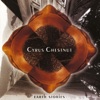
 Cyrus Chestnut
Earth Stories
1996 Atlantic Jazz 82876
|
|
Pianist Chestnut delivers a warm and elegant reading in which his playing, sometimes soft, sometimes authoritative, dances over an unobtrusive rhythm section.
|
 Earl Hines/Joe Venuti
Hot Sonatas
1999 Chiaroscuro 145
Original recording 1975
|
|
When two veteran swingers get together the results are wonderfully surprising. At times pianist Hines seems to be infusing a flavor of ragtime as Venuti’s violin takes on a classical sound.
|
 Joel Frahm/Brad Mehldau
Don't Explain
2004 Palmetto Records
|
|
The long-standing friendship of saxophonist Frahm and pianist Mehldau is apparent in their interactive interpretation of this lovely standard.
|
 Charles Lloyd
Forest Flower & Soundtrack
1994 Atlantic/WEA 71746
Original recording 1967
|
|
Saxophonist Lloyd takes the tune at a frantic pace, which may not be to everyone’s taste, but his version illustrates the endless possibilities offered by a great tune. The recording is from a live concert at the Monterey Festival with his young and then unknown pianist Keith Jarrett and drummer Jack De Johnette.
|
|
|
|