|
|
|
| “...the pithy lyrics, flowing melody, and tasteful harmony of ‘Easy to Love’ easily survived [Jimmy] Stewart’s assault, and the song went on to receive great acclaim.” |
|
 |
|
- Charles Schwartz, Author
|
|
| |
Actor Jimmy Stewart introduced “Easy to Love” in the 1936 film Born to Dance, singing it to Frances Langford as they walked in Central Park. It was his only vocal performance on screen, and with good reason. Porter actually recommended Stewart for the role but was concerned about the actor’s singing ability. In Cole: A Biographical Essay by musical theater historian Robert Kimball, Porter is quoted as saying, “...Stewart came over to the house and I heard him sing. He sings far from well, although he has nice notes in his voice, but he could play the part perfectly.” Says Charles Schwartz in Cole Porter: A Biography,“Nor did Stewart’s rendition of the tune disprove Cole’s original assessment of his voice, for his pipsqueak though earnest tenor did little justice to the song. Nonetheless, the pithy lyrics, flowing melody, and tasteful harmony of ‘Easy to Love’ easily survived Stewart’s assault, and the song went on to receive great acclaim.”
|
| |
| |
|
| |
|
Porter had originally written the song for the Broadway show Anything Goes, but it was outside the vocal range of star William Gaxton and was replaced by the Porter composition “All Through the Night.” “Easy to Love” was also sung by Frances Langford in Born to Dance and appeared instrumentally as well, danced to by both Eleanor Parker and Buddy Ebsen and mimed by Reginald Gardiner.
The song appeared in other films as well--sung by Laurence Melchior in This Time for Keeps (1947) and by Tony Martin in Easy to Love (1953). It was restored to the revival of Anything Goes in 1988 and sung by Howard McGillin.
The song charted three times in 1936, hitting a high of number seven:
- Shep Fields and His Rippling Rhythm Orchestra (1936, Dick Robertson, vocal, two weeks, topping at #13)
- Frances Langford (1936, one week, topping at #20)
- Ray Noble and His Orchestra (1936, Al Bowlly, vocal, nine weeks, topping at #7)
|
|
| |
|
| |
|
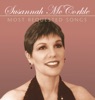
In praise of the song Alec Wilder, in American Popular Song: The Great Innovators, 1900-1950, has said, “If ever there was a song that shouldn’t have a note changed, it’s ‘Easy to Love.’ Nor, as far as I’m concerned, any of its harmony.” This goes a long way toward explaining why jazz instrumentalists have continued to mine the harmonics of the tune--from Artie Shaw to Sun Ra, from Charlie Parker and Cannonball Adderley to Dave Brubeck and Alan Broadbent. And why singers from Chet Baker to Freddy Cole and from Ella Fitzgerald and Carmen McRae to Susannah McCorkle and Harry Connick, Jr. have made its lilting melody and lighthearted lyric a staple of the vocal repertoire.
|
|
|
|
More information on this tune... |
|
See the Reading and Research page for this tune for additional references. |
|
- Sandra Burlingame
|
|
| This section suggests definitive or otherwise significant recordings that will help jazz students get acquainted with
“Easy to Love.” These recordings have been selected from the Jazz History and
CD Recommendations sections.
|
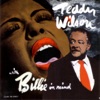
Teddy Wilson and Billie Holiday provided perhaps the first definitive recording of “Easy to Love” in 1936 (Lady Day: The Best of Billie Holiday). Ella Fitzgerald’s version from twenty years later (Ella Fitzgerald Sings The Cole Porter Songbook) adds the verse and demonstrates an even slower-tempo approach. Erroll Garner’s trio version from 1953 (This Is Jazz Vol. 13) is a great instrumental version and a fine example of the song taken at a medium swing tempo.
Noah Baerman - Jazz Pianist and Educator
|
In the song’s verse Porter’s lover admits that he may be “wasting precious time in thinking such a thing could be,” but he claims that it’s not all his fault because his love object is so obviously “easy to love” and “so worth the yearning for, so swell to keep ev’ry home-fire burning for.” Sandra Burlingame
Musical analysis of “Easy to Love” | | Original Key | G major | | Form | A1 - B - A2 - C | | Tonality | Primarily major; opening measures of “A” sections have a strong minor tonality (see Comments). | | Movement | Generally by downward leaps and ascending steps; some very wide upward leaps (7th and 8va) in the penultimate measures of “A” sections. Some chromatic movement in both directions. | Comments (assumed background) | | Porter at his lyrical best. Although in major, the use of ii - v in the initial measures give the tune a dark, haunting quality, while the soaring, wide intervals lend passion and the chromatic passages give flavor. Porter’s original piano arrangement also contains very nice moving harmonic lines in the inner voices under sustained melody notes, especially in mm. 24 and 29. Unfortunately, the “stock chords” included over the vocal line do not reflect these contrapuntal devices. Although this tune is contained in many fake book collections, it would behoove performers to study Porter’s original version as they become familiar with this piece. | | K. J. McElrath - Musicologist for JazzStandards.com |
|
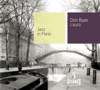
When Charlie Parker went into the studio to do his “with Strings” album, the music was so beautiful he left, intimidated. He did return, however, and the record was a huge success, capped by a Carnegie Hall appearance. Although the latter has the excitement typical of a live performance, Charlie’s studio version, a minute longer, is arguably superior. A number of superb musicians hailed from the southwestern United States, including Parker. Don Byas, from Oklahoma, worked on 52nd Street at the same time as Parker but found his niche in Europe. His 1951 version of “Easy to Love,” accompanied by a French rhythm section, spotlights his beautiful, big-toned style on the tenor saxophone. The Chet Baker Quartet recording from 1953 has the trumpeter paired with pianist Russ Freeman, and the results are brilliant, the group getting into a fine groove on the tune.
Chris Tyle - Jazz Musician and Historian
|
Additional information for "Easy to Love" may be found in:
|
|
|
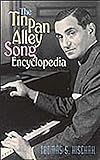 Thomas S. Hischak
The Tin Pan Alley Song Encyclopedia
Greenwood Press
Hardcover: 552 pages
(1 paragraph including the following types of information: Broadway productions, film productions, history and performers.)
|
|
|
|
|
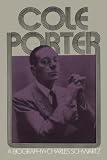 Charles Schwartz
Cole Porter: A Biography
Da Capo Press; 1st Pbk edition
Paperback: 365 pages
(1 paragraph including the following types of information: history.)
|
|
|
|
|
 Robert Kimball, Brendan Gill
Cole: A Biographical Essay
Overlook Press
Hardcover: 283 pages
(Includes the following types of information: song lyrics.)
|
|
|
|
|
|
|
|
Comment Policy
- Your comments are welcome, including why you like
this tune, any musical challenges it presents, or additional background information.
- Jazz musicians, fans, and students of all ages use this website as an educational resource.
As such, off-topic, off-color, unduly negative, and patently promotional comments will be removed.
- Once submitted, all comments become property of JazzStandards.com.
By posting, you give JazzStandards.com permission to republish or otherwise distribute your comments in any format or other medium.
JazzStandards.com reserves the right to edit or remove any comments at its sole discretion.
|
|
|