|
|
|
| “Most people come to this world by stork. I came by Flamingo, and Duke Ellington delivered me. And it’s flown me all over the world.” |
|
 |
|
- Herb Jeffries
|
|
| |
Vocalist Herb Jeffries introduced this standard with Duke Ellington’s orchestra. By mid-1941 it had taken off in the hit parade and rose to #11.
|
|
| |
|
| |
|
|
| |
| |
|
| |
|
Jeffries tells the tale of how, one night in 1940 while performing with the Duke Ellington band at the Pearl Theater in Philadelphia, a stranger approached him. In a 1993 interview with Don Ferguson for the San Diego Union-Tribune, Jeffries recalled: “I was going out for dinner and this little guy stops me at the stage door. He says, in a French accent, ‘Monsieur Jeffries, I am Ted Grouya. The doorman would not let me in. Please, show my song to Monsieur Ellington.’ I said, `All right,’ and I put his music in my pocket. Later, I set it on my dressing-room table.” Arranger/pianist Billy Strayhorn saw the music, took it over to the piano and began playing it. Ellington heard him and said, “Whatever you’re playing, make a chart of it.” The music, with words added by Ellington chum Edmund Anderson, was “Flamingo.” Duke, needing one additional number for the band’s December 28, 1940, recording session for RCA Victor, recorded the tune. Although RCA executive Leonard Joy wasn’t impressed with the recording, it was Ellington’s first number to hit the charts in 1941 and Jeffries’ second hit record.
|
| |
| |
|
| |
|
|
| |
| |
|
| |
|
After the recording was released, composer Grouya contacted Jeffries, upset that the singer had changed some of the words. Jeffries told him, “You’re lucky when you brought it to me, you couldn’t even get to Ellington. You’re lucky I’m not asking to include my name on it as co-composer.” Once the tune was a hit, Grouya backed down. At Jeffries 88th birthday, Grouya was in attendance and performed the number with Jeffries.
“Flamingo” was on Duke Ellington’s short list of favorite recordings. In Walter van de Leur’s biography, Something to Live For:The Music of Billy Strayhorn, Ellington is quoted as saying, “[Flamingo” was] the renaissance of vocal orchestration. Before then, an orchestration for a singer was usually something pretty tepid, and it was just background--that’s about all. But now, this had real ornamentation, fittingly done, supporting the singer and also embellishing the entire performance of both the singer and the band.”
|
|
|
|
| This section suggests definitive or otherwise significant recordings that will help jazz students get acquainted with
“Flamingo.” These recordings have been selected from the Jazz History and
CD Recommendations sections.
|
Though he did not compose “Flamingo,” Duke Ellington is responsible for its most significant recording, a rendition by his classic big band of 1940 (Never No Lament: The Blanton-Webster Band) featuring the vocals of Herb Jeffries. Jimmy Smith’s 1958 version (The Sermon) presents the tune in an instrumental small-group setting (featuring Lee Morgan and Kenny Burrell) and can also be seen as the origin of the song’s popularity among jazz organists.
Noah Baerman - Jazz Pianist and Educator
|
“Flamingo” describes an island paradise where the elegant bird, “like a flame in the sky,” flies over the islands, where a lover has been left behind. Chris Tyle
|
Musical analysis of “Flamingo”
|
|
Original Key
|
C major; false key change to Eb major in “B”
|
|
Form
|
A1 - A2 - B - A3
|
|
Tonality
|
Major throughout
|
|
Movement
|
Following an initial upward octave leap into “A,” a motif consisting of a downward third is followed by a rising and falling figure. This repeats three times in sequential fashion, each time in a lower register. Another octave leap leads into “B,” which is constructed along similar lines except that the motif consists of a downward scale figure followed by an upward leap (fourths and fifths).
|
|
Comments (assumed background)
|
|
The almost classical construction of the harmonic progression is a perfect complement to the soaring melody, containing unexpected, yet delightful resolutions. Starting with a I - ii7 - V7 sequence, the second I chord turns minor, becoming a ii7 of Bb. However, the following F7 resolves deceptively to Ab7. In this context, the Ab7 is a true “German augmented sixth,” as it resolves to V7 - I in the tonic key of C (the G V7 is embellished by a preceding ii7 chord). “B” is similar; F turns minor, becoming a ii7 of Eb. The second time, however, the Fm ii7/I is followed not by Bb, as we would expect, but a G7(sus4) (which could be construed as a Dm11 and, in any event, serves the same function as a V7).
|
|
K. J. McElrath - Musicologist for JazzStandards.comle style="width: 100%" cellpadding="10" border="1">
|
|
Musical analysis of “Flamingo”
|
|
Original Key
|
C major; false key change to Eb major in “B”
|
|
Form
|
A1 - A2 - B - A3
|
|
Tonality
|
Major throughout
|
|
Movement
|
Following an initial upward octave leap into “A,” a motif consisting of a downward third is followed by a rising and falling figure. This repeats three times in sequential fashion, each time in a lower register. Another octave leap leads into “B,” which is constructed along similar lines except that the motif consists of a downward scale figure followed by an upward leap (fourths and fifths).
|
|
Comments (assumed background)
|
|
The almost classical construction of the harmonic progression is a perfect complement to the soaring melody, containing unexpected, yet delightful resolutions. Starting with a I - ii7 - V7 sequence, the second I chord turns minor, becoming a ii7 of Bb. However, the following F7 resolves deceptively to Ab7. In this context, the Ab7 is a true “German augmented sixth,” as it resolves to V7 - I in the tonic key of C (the G V7 is embellished by a preceding ii7 chord). “B” is similar; F turns minor, becoming a ii7 of Eb. The second time, however, the Fm ii7/I is followed not by Bb, as we would expect, but a G7(sus4) (which could be construed as a Dm11 and, in any event, serves the same function as a V7).
|
|
K. J. McElrath - Musicologist for JazzStandards.com
|
|
Alto saxophonist
Johnny Hodges, featured briefly on
Duke Ellington’s seminal 1940 version
of “Flamingo,” gets more of chance to stretch
out on Eddie Heywood’s trio version from
1944. Along with Heywood and Hodges is young
drummer Shelly Manne, demonstrating his
tasteful brushwork.
In 1950
Duke Ellington and his right-hand-man,
arranger and pianist
Billy Strayhorn, were featured on an
unusual duet recording. The two worked elegantly
together and produced a highly personal
version of “Flamingo.”
Next to Hodges the other important pre-bop
alto saxophonist was Benny Carter. He recorded
a splendid, trenchant version of “Flamingo,”
with strings, for Verve in 1953.
Chris Tyle - Jazz Musician and Historian
|
Additional information for "Flamingo" may be found in:
|
|
|
|
|
|
Comment Policy
- Your comments are welcome, including why you like
this tune, any musical challenges it presents, or additional background information.
- Jazz musicians, fans, and students of all ages use this website as an educational resource.
As such, off-topic, off-color, unduly negative, and patently promotional comments will be removed.
- Once submitted, all comments become property of JazzStandards.com.
By posting, you give JazzStandards.com permission to republish or otherwise distribute your comments in any format or other medium.
JazzStandards.com reserves the right to edit or remove any comments at its sole discretion.
|
|
| Click on any CD for more details at Amazon.com |
 Duke Ellington
Never No Lament the Blanton-Webster Band
RCA
|
|
This version of “Flamingo” introduced the song to the public and established it as a jazz standard. Ellington’s lush orchestration supports vocalist Heb Jeffries without ever overwhelming him.
|
 Charlie Mingus
Tijuana Moods
RCA
Original recording 1957
|
|
This performance represents one of bassist/bandleader/composer Charles Mingus’ first classic arrangements of a standard. His edgy but rich orchestration features the unique voices of Jimmy Knepper on trombone and the otherwise obscure Clarence Shaw on trumpet.
|
 Jimmy Smith
The Sermon!
Blue Note Records
|
|
Organist Smith presents “Flamingo” as a ballad feature for trumpet great Lee Morgan, who makes the most of the opportunity with his lyrical and soulful playing. Guitarist Kenny Burrell is also featured prominently.
|
 Dave Brubeck & Paul Desmond
Newport 1958: Brubeck Plays Ellington
101 DISTRIBUTION
Original recording 1958
|
|
This spirited live recording from Newport begins with Brubeck playing the melody on piano with a Latin feel. Thereafter, the band shifts to a gently swinging groove with tasteful solos by Brubeck and saxophonist Paul Desmond.
|
 Oscar Peterson & Stephane Grappelli Quartet
Jazz in Paris: Oscar Peterson-Stephane Grappelli Quartet, Vol. 1
Umvd Labels
|
|
Pianist Peterson and violinist Grappelli show a wonderful rapport and play excellent solos on his elegant duo performance. Most of the tune is played in free time, and Grappelli’s soulful and creatively ornamented statement of the melody is a particular highlight.
|
|
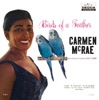
 Carmen McRae
Birds of a Feather
2002 Verve 314589515
Original recording 1958
|
|
McRae tones down her growly delivery a little but it still retains its gruff sensuality. Her delicate phrasing and the low-key orchestra in the background add to the melancholia. Of special note is the great saxophonist Ben Webster, who contributes a solo.
|
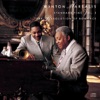
 Wynton Marsalis
Standard Time Vol. 3: The Resolution of Romance
1990 Columbia 46143
Original recording 1990
|
|
A swinging mid-tempo is offered by the great trumpeter. Marsalis’ horn is cool and clear as he struts his stuff over the top of a rhythm section (which includes dad Ellis at piano) that keeps a tango time.
|
 Stan Getz
Stan Getz and the Cool Sounds
2002 Verve 547317
Original recording 1961
|
|
This is West Coast “cool” from one of the hippest. Saxophonist Getz leads this up-tempo rendition with unbridled delight, gleefully soloing with round, full tones and laid back bravado.
|
 Terry Gibbs
The Latin Connection
1996 Contemporary 14022
|
|
Vibraphonist Gibbs takes this one at a relaxed tempo, setting the stage for soft tropical breezes and, of course, pink flamingos. Tito Puente and Frank Morgan are guest artists on the album.
|
|
|
|