|
|
|
| “The Nat ‘King’ Cole Trio’s 1949 recording brought this tune back into the mainstream 15 years after it was written.” |
|
 |
|
- Chris Tyle
|
|
| |
Composer J. Fred Coots and lyricist Sam Lewis, both of whom enjoyed success on Broadway, wrote “For All We Know” in 1934. Vocalist Morton Downey, the “Irish Thrush” who was voted best male vocalist on the air in 1932, introduced it on his popular radio show.
|
| |
| |
|
| |
|
|
| |
| |
|
| |
|
Two recordings of the song made the charts in 1934. The version by Hal Kemp’s “sweet band,” arranged by John Scott Trotter, went to number three. The Kemp band was twice voted the Best Sweet Band by Metronome readers in the ‘30s for its romantic tone, and Skinnay Ennis’ sexy, intimate vocals complemented the band’s style. Gordon Jenkins arranged the number for the Isham Jones band which had a strong ensemble sound. Their rendition rose to number 16 on the charts.
- Hal Kemp and His Orchestra (1934, Skinnay Ennis, vocal, #3)
- Isham Jones and His Orchestra (1934, Joe Martin, vocal #16)
- Dinah Washington (1962, #88)
|
|
| |
|
| |
|
It was recorded by the early bands of Kay Kyser and Guy Lombardo and by Nina Simone in 1959, but it didn’t chart again until 1962 when singer Dinah Washington took it to number 88. Many jazz instrumentalists recorded the song as well as vocalists Billie Holiday, June Christy and Nat “King” Cole. New recordings include those of the Clayton/Hamilton Jazz Orchestra, pianists Cyrus Chestnut and Monty Alexander, vocalists Freddy Cole, Arild Andersen, and Eden Atwood, and, in 2006, British pianist Stan Tracey.
Johnny Hartman’s rendition was used on the soundtrack of Bridges of Madison County while Rosemary Clooney’s version played over the closing credits in the 2005 film Mrs. Palfrey at the Claremont, starring Dame Joan Plowright. The song, Mrs. Palfrey’s favorite, is memorably performed on screen by Rupert Friend who sings it to her, accompanying himself on guitar, in a touching and memorable scene.
“For All We Know” is not to be confused with the Academy Award-winning song by the same title, written by Fred Carlin, Robb Wilson, and Arthur James for the 1970 film Lovers and Other Strangers. The Carpenters took that song to the charts in 1971, and it was also recorded by jazz violinist Stephane Grappelli and singers Mary Stallings, and Astrud Gilberto.
While the pop song, written for the film’s wedding scene, deals hopefully with the future of a love that grows with time, Lewis’ poignant lyric for the jazz standard recalls the pain of parting. He captures the uncertainty of the future with images such as “We come and go like a ripple on a stream” and ends with the anguished plea, “So love me tonight...Tomorrow may never come.”
|
|
|
|
More information on this tune... |
|
See the Reading and Research page for this tune for additional references. |
|
- Sandra Burlingame
|
|
|
Musical analysis of “For All We Know”
|
|
Original Key
|
F major
|
|
Form
|
A - B - A - C. Although the first two measures of “B” and “C” are virtually identical, the remaining six measures of each section differ considerably.
|
|
Tonality
|
Major throughout
|
|
Movement
|
“A” consists of upward skips and leaps on sustained pitches, followed by arcing eighth note passages. “B” and “C” are more flowing, primarily half and quarter notes briefly traveling to the highest melodic pitch before gradually descending. There are a few embellishing leaps of a 5th and 6th.
|
|
Comments (assumed background)
|
| Rhythmically, this ballad has a flavor similar to “The Way You Look Tonight,” although the harmonic and melodic structure is quite different. The “A” changes are simply I - V7/V - V7 (F - G7 - C7 in the original). “B’s” chord progression is more sophisticated, based on a I -iii° - ii7 - V7 similar to “Fine and Dandy,” “Moonlight Serenade,” “Let’s Call the Whole Thing Off,” etc. In “C” the progression descends a half step from the tonic, returning to the tonic through what is basically a circle of fifths with some embellishing lower neighbor chords. |
|
K. J. McElrath - Musicologist for JazzStandards.com
|
|
The Nat “King” Cole Trio’s 1949 recording brought this tune back into the mainstream 15 years after it was written. Cole’s version is considered one of his classics and frequently reissued. Pianist Dave Brubeck’s Quartet, with Lester Young-influenced alto saxophonist Paul Desmond, had been gaining in popularity since its inception in 1951. Their 1953 College of the Pacific Concert recording contains six fine standards, including a moving “For All We Know.” Desmond would revisit the tune six years later with his quartet featuring the incomparable guitarist Jim Hall. Vibraphonist Cal Tjader and tenor saxophonist Stan Getz were teamed up in 1958 with pianist Vince Guaraldi and Bill Evans’ exceptional bassist Scott LaFaro for an acclaimed session of relaxed, swinging music.
Chris Tyle - Jazz Musician and Historian
|
Additional information for "For All We Know" may be found in:
|
|
|
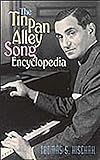 Thomas S. Hischak
The Tin Pan Alley Song Encyclopedia
Greenwood Press
Hardcover: 552 pages
(1 paragraph including the following types of information: film productions, history and performers.)
|
|
|
|
|
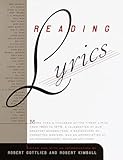 Robert Gottlieb, Robert Kimball
Reading Lyrics
Pantheon
Hardcover: 736 pages
(Includes the following types of information: song lyrics.)
|
|
|
|
|
|
|
|
Comment Policy
- Your comments are welcome, including why you like
this tune, any musical challenges it presents, or additional background information.
- Jazz musicians, fans, and students of all ages use this website as an educational resource.
As such, off-topic, off-color, unduly negative, and patently promotional comments will be removed.
- Once submitted, all comments become property of JazzStandards.com.
By posting, you give JazzStandards.com permission to republish or otherwise distribute your comments in any format or other medium.
JazzStandards.com reserves the right to edit or remove any comments at its sole discretion.
|
|
| Click on any CD for more details at Amazon.com |
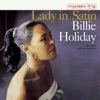
 Billie Holiday
Lady in Satin
Sony
Original recording 1958
|
|
Amidst thick string orchestrations, Holiday’s haunting vocals penetrate deeply with their maturity and emotional resonance. These late-career sessions contain some of her best-loved vocal performances.
|
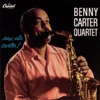
 Benny Carter
Sax ala Carter!
United Artists
Original recording 1960
|
|
Alto saxophone legend Carter breaks away from the song’s ballad conventions, re-arranging “For All We Know” as a spirited mid-tempo number featuring pianist Jimmy Rowles.
|
 Wes Montgomery
Guitar on the Go
Ojc
Original recording 1963
|
|
Guitarist Montgomery was an excellent interpreter of ballads, as demonstrated by this performance. Organist Melvin Rhyne, a frequent Montgomery collaborator, provides typically sensitive accompaniment.
|
 Cedar Walton
First Set
Steeplechase
Original recording 1974
|
|
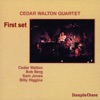
Pianist Walton has recorded “For All We Know” over a half-dozen times through the years. Recorded live in Denmark, this is a particularly lyrical version. He is joined by his Eastern Rebellion quartet, here featuring Bob Berg, Sam Jones and Billy Higgins.
|
|
 Grant Green
Am I Blue
2002 Blue Note 35564
Original recording 1963
|
|
The rhythm section bumps this one up to a mid-tempo as guitarist Green and the horn section trade some engaging solos. Organist John Patton presides over the whole engagement with a bluesy wail.
|
 Dave Brubeck Quartet
At Carnegie Hall
2001 Legacy Recordings 61455
Original recording 1963
|
|
A staple of pianist Brubeck’s repertoire over the years, this is one of the finest versions of the song. The group swings lightly, giving saxophonist Paul Desmond plenty of space to fill with rich, majestic shades.
|
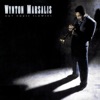
 Wynton Marsalis
Hot House Flowers
2000 Legacy Recordings 39530
Original recording 1984
|
|
An early recording by trumpeter Marsalis (featuring brother Branford), this CD highlights his deft hand at sculpturing a ballad. “For All We Know” is crystal clear and sublimely beautiful.
|
 Carol Sloane
Love You Madly
1991 Contemporary 14049
|
|
Vocalist Sloane is surrounded by jazz heavyweights for this outing; however, she opts to perform this lovely ballad in a simple setting with guitarist Kenny Burrell. She includes the verse in her poignant reading.
|
 Freddy Cole
To the Ends of the Earth
1997 Fantasy 9675
|
|
This is a supremely beautiful version of the song. Freddy Cole, Nat’s younger brother, is a sensitive interpreter of song with a marvelous voice that bears a family resemblance. He’s backed here by the great rhythm section of Cyrus Chestnut, Tom Hubbard, and Yoron Israel. Vibraphonist Joe Locke adds to the mood with a sterling solo.
|
|
|
|