|
|
|
| “After the premier recording by McKinney’s Cotton Pickers in 1929, [the song] wasn’t recorded again until 1941 by tenor saxophonist ‘Chu’ Berry.” |
|
 |
|
- Chris Tyle
|
|
| |
The talented saxophonist/arranger/bandleader/vocalist Don Redman introduced his composition on a 1929 Victor recording with McKinney’s Cotton Pickers. Fourteen years later, with a slight lyric rewrite by Andy Razaf, Nat “King” Cole brought the tune back into vogue. Cole’s version was his fourth recording to hit the charts:
Nat “King” Cole Trio (1944, vocal, #15)
|
|
| |
|
| |
|
Redman was responsible for integrating the rhythmic approach of Louis Armstrong into his arrangements for Fletcher Henderson’s Orchestra during the mid-1920s. In 1927 he was wooed away from Henderson and joined McKinney’s Cotton Pickers, the house band at the Greystone Ballroom in Detroit. During his tenure with McKinney he wrote and recorded his three best known tunes: “Gee Baby...,” “Cherry,” and “Save it Pretty Mama.” He recorded the latter tune while guesting with Louis Armstrong’s band in Chicago in December, 1928.
|
| |
| |
|
| |
|
|
| |
| |
|
| |
|
While with the Cotton Pickers, Redman began utilizing an unusual vocal style, more softly-spoken than sung, which proved more effective than his normal singing style. His vocal on “Gee Baby...” fits the haunting melody perfectly and brings out the best in Andy Razaf’s lyrics. The song explains why “there’s nothing too good for a gal that’s true,” and those good things include a “fur coat for Christmas, a diamond ring and big Packard coupe” (later updated to a “Cadillac car” when Packard went out of business).
Following Nat “King” Cole’s hit version in 1944, the tune started appearing in cover versions by numerous groups and eventually became more popular than when originally released in 1929.
|
|
|
|
| This section suggests definitive or otherwise significant recordings that will help jazz students get acquainted with
“Gee Baby Ain't I Good to You.” These recordings have been selected from the Jazz History and
CD Recommendations sections.
|
Nat Cole’s 1943 recording of “Gee Baby, Ain’t I Good to You?” (The Best of Nat King Cole Trio: The Vocal Classics, Vol. 1) is probably the best-loved version of the song, featuring a definitive vocal interpretation of the song and great playing, including a classic guitar solo by Oscar Moore. Billie Holiday, meanwhile, offered up one of her classic late-career works with her 1957 recording of the song (Billie Holiday for Lovers). Art Blakey’s 1961 sextet version (The Jazz Messengers) is a standout among the many modern instrumental versions.
Noah Baerman - Jazz Pianist and Educator
|
|
Musical analysis
of “Gee Baby Ain’t I Good to You”
|
|
Original Key |
F
major |
|
Form |
A
- A - B - A |
|
Tonality |
Primarily
major; periodic flatted “blue notes” |
|
Movement |
Generally
descending from the sixth scale
degree with several upper and lower
embellishing tones and eventually
settling on the tonic. |
|
Comments
(assumed
background)
|
|
This piece has a flavor similar
to the Razaf/Waller song, “Black and Blue,” although the harmonic
construction is more suggestive
of “Cry Me a River.” Starting on
the V7/II, it delays this resolution
by going back to the VI chord, embellished
by a bVII passing chord. Returning
to V7/II, it gets to the tonic chord
through the circle of fifths. “B”
begins with a IV - ct°7/I - I (second
inversion) sequence. The second
time, the ct°7 resolves to the iiø7
of A7, returning the song to the
chord progression of “A.”
Although not a “blues” in the
strict sense, this piece strongly
suggests the blues and should be
played in that fashion.
|
|
K. J. McElrath - Musicologist for JazzStandards.com |
|
Alto saxophonist Don Redman’s tune was a popular vehicle for jazz musicians and vocalists. After the premier recording by McKinney’s Cotton Pickers in 1929, it wasn’t recorded again until 1941 by tenor saxophonist “Chu” Berry. Berry’s version featured ex-Bennie Moten/Count Basie trumpeter Oran “Hot Lips” Page whose bluesy singing and plunger mute work capped the session. (Lips recorded it again in 1944.) On his first session for Capitol Records in 1943, pianist/vocalist Nat “King” Cole recorded his treatment, which became a staple in his repertoire.
In 1944 Count Basie recorded the tune, featuring vocalist Jimmy Rushing, for the wartime Department of Defense V-Disc label. A 1946 live recording captured ex-Basie vocalist Billie Holiday performing the tune at Carnegie Hall, only the second time a female vocalist had recorded the number.
Chris Tyle - Jazz Musician and Historian
 McKinney's Cotton Pickers
1928-1930
Epm Musique 157432
|
|
|
|
|
Additional information for "Gee Baby Ain't I Good to You" may be found in:
|
|
|
|
|
|
Comment Policy
- Your comments are welcome, including why you like
this tune, any musical challenges it presents, or additional background information.
- Jazz musicians, fans, and students of all ages use this website as an educational resource.
As such, off-topic, off-color, unduly negative, and patently promotional comments will be removed.
- Once submitted, all comments become property of JazzStandards.com.
By posting, you give JazzStandards.com permission to republish or otherwise distribute your comments in any format or other medium.
JazzStandards.com reserves the right to edit or remove any comments at its sole discretion.
|
|
| Click on any CD for more details at Amazon.com |
 Billie Holiday
Billie Holiday for Lovers
Umvd Labels
Original recording 1957
|
|
Holiday balances a deep blues feeling with maturity and restraint on this classic studio recording. There are excellent solos as well from Jimmy Rowles on piano, Barney Kessel on guitar, Ben Webster on tenor saxophone and Harry “Sweets” Edison on trumpet.
|
 Joe Williams, Count Basie
Everyday I Have the Blues
Roulette Jazz/ EMI
Original recording 1957
|
|
After Count Basie recorded “Gee Baby” in 1944 with Jimmy Rushing, both he and vocalist Joe Williams recorded it numerous times over the years. This collaboration is a highlight for both of them, with a groove that is slow but energetic.
|
 Stanley Turrentine, Three Sounds
Complete Blue Hour Sessions
Blue Note Records
Original Recording 1960
|
|
When it comes to mixing straight-ahead jazz and the blues, saxophonist Stanley Turrentine and pianist Gene Harris were two of the greatest in jazz history. It is not surprising, then, that their version of “Gee Baby” is intensely soulful and swinging.
|
 Art Blakey & The Jazz Messengers
The Jazz Messengers
Grp Records
Original recording 1961
|
|
This classic recording features a transitional line-up of Jazz Messengers. Saxophonist Wayne Shorter takes the lead on the melody over a slow, bluesy groove before he and trombonist Curtis Fuller solo over a double-time feel. The groove slows back down for solos by Lee Morgan on trumpet and Bobby Timmons on piano.
|
 Dizzy Gillespie
Dizzy for President
Douglas Records
Original recording 1963
|
|
On this live recording from Newport, Gillespie takes the melody in a ballad setting, before upping the rhythmic intensity, eventually reaching a fever pitch. The band features James Moody on saxophone and a twenty-year-old Kenny Barron on piano.
|
|
 Cassandra Wilson
Blue Skies
2002 Winter & Winter 919018
Original recording 1988
|
|
Pianist Mulgrew Miller lays down a delicate foundation on which Wilson builds a slow bluesy burn. The singer’s debut recording and her treatment of the standards established her as one of the foremost virtuosos.
|
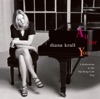
 Diana Krall
All for You: A Dedication to the Nat King Cole Trio
Grp Records
|
|
On this recording dedicated to the Nat King Cole Trio, singer/pianist Krall treats the listener to a sultry, soulful rendition of the song. Her musical symbiosis with guitarist Russell Malone is readily apparent, and the tune aches exquisitely.
|
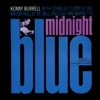
 Kenny Burrell
Midnight Blue
Blue Note Records
|
|
This is jazz at its coolest from a guitarist just hitting his peak. Burrell swings elegantly through a wonderfully thoughtful and sympathetic reading of the song.
|
 Bill Mays, Ed Bickert
Concord Duo Series 7
Concord Records
|
|
When you pair a sterling pianist like Bill Mays with an equally talented guitarist like Ed Bickert, you get magic. “Gee Baby” is only one of the gems on this CD which illustrates the creativity of the players and the fullness of sound that can be achieved by just two instruments.
|
|
|
|