|
|
|
| Billie Holiday recorded her composition on a number of occasions, but a wonderful video from 1950 has her appearing with her former boss Count Basie.... |
|
 |
|
- Chris Tyle
|
|
| |
Billie Holiday recorded her co-written composition on May 9, 1941, for Columbia Records (originally issued on their subsidiary label, Okeh). The number made the charts that year and rose to #25.
|
|
| |
|
| |
|
On December 30, 1938, Billie Holiday began singing at Barney Josephson’s Cafe Society nightclub at a salary of $75 a week, seven-days-a-week. The gig had been arranged by impresario John Hammond, who, although not Holiday’s manager per se, had been instrumental in many strategic career moves for her. Holiday was happy to have a steady New York engagement after being on the road with the big bands of Count Basie and Artie Shaw.
Working at Cafe Society was the first time she was able to have complete artistic control over her material. She began singing and recording more standards rather than Tin Pan Alley material that song pluggers insisted she do. Although she quit Cafe Society in August, 1939, the exposure there, plus having a recording in the charts (“Strange Fruit”), enabled her to find work at 52nd Streets clubs such as Kelly’s Stables and the Famous Door for much better pay. In May, 1941, when she recorded “God Bless the Child,” she was working at Kelly’s Stables for $300 a week with pianist Art Tatum accompanying her.
|
| |
| |
|
| |
|
|
| |
| |
|
| |
|
Songwriter Arthur Herzog, an employee of Edward B. Marks Music Company, had begun an association with Holiday in early 1940, supplying the words for a number composed by pianist Teddy Wilson’s first wife, Irene Kitchings. The song, “Ghost of Yesterday,” was a slow, melancholy piece, the type of thing that Holiday wouldn’t have been able to record prior to the release of “Strange Fruit.” (Columbia Records, with whom Holiday was under contract, wouldn’t record the controversial tune. Instead, indie label Commodore did, and once the tune hit the charts Columbia executives realized their mistake, ultimately giving Holiday more latitude.)
In May, 1941, Herzog had an idea for getting himself and Holiday some much-needed royalty income. Herzog asked for Billie’s help in coming up with something, a title or words, they could use. Billie’s mother, Sadie, was trying to find funds to open a little after-hours joint and turned to her daughter for financial support. Billie refused, telling her “God bless the child that’s got his own.” Herzog liked the title, and the two, along with pianist/arranger Danny Mendelsohn, put it together in 20 minutes. Billie recorded it on her next date for Columbia Records. It would be a regular feature in her repertoire for the rest of her life.
|
|
|
|
| This section suggests definitive or otherwise significant recordings that will help jazz students get acquainted with
“God Bless the Child.” These recordings have been selected from the Jazz History and
CD Recommendations sections.
|
Billie Holiday’s original 1941 version of “God Bless the Child” (Jazz Signatures - God Bless the Child) is a timeless recording and a necessary starting point when exploring the song. Her more intimate 1956 version (Lady in Autumn) is also noteworthy and achingly beautiful. Among instrumental versions, Sonny Rollins’ recording from 1962 (The Bridge) is well-loved and manages to match the emotional intimacy of Holiday.
Noah Baerman - Jazz Pianist and Educator
|
Billie’s lyrics tell the story of how everyone is your friend when you have money but that “empty pockets don’t ever make the grade.” Others, including family, may have it but won’t help you out when you need it. Chris Tyle
Musical analysis of “God Bless the Child” | | Original Key | Eb major, shifting to relative minor during “B” | | Form | A - A - B - A | | Tonality | “A” is major; “B” is minor | | Movement | Ascending and descending a third by step in two registers, followed by a downward skip and a leap; “B” is a series of descending minor thirds until the last two measures before “A” returns. | Comments (assumed background) | | A fairly simple melody in the style of an “old-time” spiritual, the chord progression is based on a series of IV-I, or “plagal,” cadences, suggesting the traditional “Amen” of many traditional hymns. | | K. J. McElrath - Musicologist for JazzStandards.com |
|
Billie Holiday recorded her composition on a number of occasions, but a wonderful video from 1950 has her appearing with her former boss Count Basie and his short-lived septet that included Clark Terry (trumpet) and Wardell Grey (tenor sax).
Webster Young, a cornet/trumpet player heavily influenced by Miles Davis, had a pretty tone and fine command of his instrument. A talented musician, his recording career was brief, ending in 1961, although he continued to play for a number of years thereafter. His 1957 tribute to Billie Holiday is a sleeper, memorable for his contribution but also for the uncluttered arrangements and for the work of Lester Young-inspired tenor saxophonist Paul Quinichette. (According to the liner notes Young played Miles’ cornet on the date.)
Multi-instrumentalist Eric Dolphy’s unusual, unaccompanied, live performance from 1951 of “God Bless the Child” features him on bass clarinet, an instrument rarely used in jazz.
Chris Tyle - Jazz Musician and Historian
 Webster Young
For Lady
Original Jazz Classics 1716
|
|
|
|
|
Additional information for "God Bless the Child" may be found in:
|
|
|
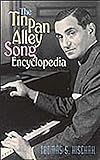 Thomas S. Hischak
The Tin Pan Alley Song Encyclopedia
Greenwood Press
Hardcover: 552 pages
(1 paragraph including the following types of information: film productions, history and performers.)
|
|
|
|
|
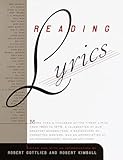 Robert Gottlieb, Robert Kimball
Reading Lyrics
Pantheon
Hardcover: 736 pages
(Includes the following types of information: song lyrics.)
|
|
|
|
|
|
|
|
Comment Policy
- Your comments are welcome, including why you like
this tune, any musical challenges it presents, or additional background information.
- Jazz musicians, fans, and students of all ages use this website as an educational resource.
As such, off-topic, off-color, unduly negative, and patently promotional comments will be removed.
- Once submitted, all comments become property of JazzStandards.com.
By posting, you give JazzStandards.com permission to republish or otherwise distribute your comments in any format or other medium.
JazzStandards.com reserves the right to edit or remove any comments at its sole discretion.
|
|
| Click on any CD for more details at Amazon.com |
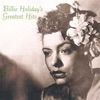
 Billie Holiday
Jazz Signatures - God Bless the Child: Very B.O.
Sony
Original recording 1941
|
|
This, the original version of “God Bless the Child” is presented in a straightforward manner, though with Holiday’s brilliant singing and emotional depth things are seldom entirely straightforward. Eddie Heywood leads the band and contributes some nice piano, while there is a great (if fairly short) trumpet solo by Roy Eldridge.
|
 Billie Holiday
Lady in Autumn: The Best of the Verve Years
Polygram Records
Original Recording 19
|
|
Fifteen years after first recording the song, Holiday here presents more world-weary vocals and a slower tempo. The elegant accompaniment prominently includes pianist Wynton Kelly, guitarist Kenny Burrell, trumpeter Charlie Shavers and saxophonist Paul Quinchette.
|
 Anita O'Day
Anita O'Day's Finest Hour
Polygram Records
Original recording 1961
|
|
This duo performance with Barney Kessel is intimate on an emotional level as well. It is slow, moody and tender and O’Day’s vocals are simply gorgeous.
|
 Sonny Rollins
Bridge
RCA
Original recording 1962
|
|
This performance of “God Bless the Child” is achingly slow and very lyrical and contemplative. Saxophonist Rollins and guitarist Jim Hall both contribute excellent solos and share responsibility for the melody.
|
 Lee Morgan
Standards
Blue Note Records
Original recording 1967
|
|
Trumpeter Morgan is at his slow and soulful best on this performance arranged by Duke Pearson for a mid-sized group featuring excellent piano work by Herbie Hancock.
|
|
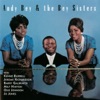
 Andy Bey & The Bey Sisters
Andy Bey & The Bey Sisters
2000 Prestige Records 24245
Original recording 1965
|
|
The song has an appropriate gospel groove within the tight harmonies of Andy (also on piano), Salome, and Geraldine Bey. Powerful, dignified and full of soul.
|
 Rene Marie
How Can I Keep from Singing
2000 MAXJAZZ 109
Original recording 2000
|
|
This is a high energy, snappy swinger of a rendition from singer Rene Marie. Articulate, passionate, and engaging, the vocalist delivers a top notch performance.
|
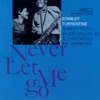
 Stanley Turrentine
Never Let Me Go
2004 Blue Note 90838
Original recording 1963
|
|
A heavy blues vibe, courtesy of Shirley Scott’s wailing organ, permeates Turrentine’s reading of the song and inspires the saxophonist to deliver a mournful, plaintive beauty.
|
 Art Abrams Swing Machine Big Band
Art Attack
1997 AYA Records
|
|
Abrams’ big band is noted not only for its section work but for its fine soloists. Scott Anderson kicks off the tune with his sweet trombone followed by the slightly edgier alto sax of Brian Dickerson. The band shifts gears before slowing down the closing. Fine arrangement by Abrams.
|
|
|
|