|
|
|
| Herb Magidson has the distinction of writing the first Academy Award-winning song, “The Continental,” with composer Con Conrad for the 1934 film The Gay Divorcee. |
|
 |
|
- Sandra Burlingame
|
|
| |
Composer Allie Wrubel and lyricist Herb Magidson wrote this tune in 1937 following the publication of Margaret Mitchell’s book of the same name. Of the several bands that recorded the tune that year, Horace Heidt’s version popped to number one in the charts.
- Horace Heidt and His Orchestra (1937, Larry Cotton, vocal, #1)
- Guy Lombardo and His Royal Canadians (1937, #16)
- Claude Thornhill and His Orchestra (1937, Maxine Sullivan, vocal, #19)
|
|
| |
|
| |
|
The songwriting team of Wrubel and Magidson were busy in the period from 1937-1940. Their first collaboration comes from 1933, entitled “The Sweetheart Song,” and the next year they wrote “Lullaby in Blue.” But they didn’t join forces again until 1937. Although they wrote a number of songs that year, none of them were as big as “Gone with the Wind.” It wasn’t until 1938 with “Music, Maestro, Please” and “I’m Afraid the Masquerade Is Over” that they struck pay dirt again. Their collaboration ended in 1945 with “I’ll Buy That Dream.”
|
| |
| |
|
| |
|
|
| |
| |
|
| |
|
Although Magidson and Wrubel worked on films for a number of years, they only worked together on two pictures, Footlight Serenade (1942) and Sing Your Way Home (1945). Magidson was the first to enter the film world, and his composition “The Continental,” written with Con Conrad for the film The Gay Divorcee, won the first Oscar for Best Song. He and Wrubel were nominated for “I’ll Buy That Dream” from Sing Your Way Home. Magidson’s last picture was Make Mine Laughs in1949, the same year Wrubel did his last, Tulsa, for which he wrote the title song.
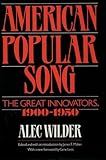
Most critics agree that Wrubel’s best composition was “Gone with the Wind.” There’s an interesting passage expressing this opinion from Alec Wilder’s book American Popular Song: The Great Innovators, 1900-1950. He writes: “These exceptional songs from competent but unexceptional writers fascinate and plague me. For if they could write one sensitive, inventive, exceptional song, why not more? ...In my bafflement I cast about for the solution to this phenomenon, but I can’t find it.”
|
|
|
|
| This section suggests definitive or otherwise significant recordings that will help jazz students get acquainted with
“Gone with the Wind.” These recordings have been selected from the Jazz History and
CD Recommendations sections.
|
Two important 1960 recordings offer particularly strong insight into “Gone with the Wind” as a medium-tempo swing number. Ella Fitzgerald’s live recording in Berlin (Mack the Knife: The Complete Ella in Berlin) is a great place to start learning the song, while Wes Montgomery’s classic quartet rendition (The Incredible Jazz Guitar of Wes Montgomery) features a marvelous extended guitar solo. Meanwhile, Stan Getz’s recording from ten years prior (1950) is a definitive example of the tune interpreted as a ballad
Noah Baerman - Jazz Pianist and Educator
|
Magidson’s words tell the story of a love affair that has ended “just like a leaf that has blown away.” He describes a sudden parting as “love burned brightly” but “then became an empty smoke dream” that faded away. Chris Tyle
Musical analysis of “Gone with the Wind” | | Original Key | Eb major; tonal shift to G major in last half of “A” | | Form | A - B - A - C | | Tonality | Primarily major | | Movement | Initially downward by step and/or skip (thirds); rising during the transitions into “B” and “C,” then gradually descending again. | Comments (assumed background) | | The harmonic progression is generally based on a series of ii7 - V7 - I and I -vi -ii7 - V7 sequences, played in different keys with occasional substitutions (iii for I, or ct°7 for vi, for example). What makes this melody unusual is the fact that, throughout the shifting tone centers, a tonic note is never actually present. Many melodic notes are “colour tones” or extensions of the chord of the moment. (It is true that Eb occurs in m. 2 of “C,” but this is over a Cm7 chord and cannot be heard as a “tonic” pitch.) | | K. J. McElrath - Musicologist for JazzStandards.com |
|
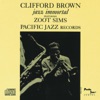
A pairing of two great saxophonists, Johnny Hodges (alto) and Don Byas (tenor), was part of an album of Esquire Magazine All-Star groups recorded in 1946 for RCA Victor. Their version of “Gone with the Wind” was impressive, and it was one of the first times it had been recorded in a jazz context (Esquire All-American Hot Jazz Sessions. Bluebird 6757-2-RB. Out of print). By 1950 Stan Getz was in the first year of leading his own quartet, and his sensitive rendition of “Gone with the Wind” was no doubt due in part to top-notch accompanists Al Haig (piano), Tommy Potter (bass), and Roy Haynes (drums), seasoned players who had paid their dues with a number of great bebop musicians and groups. A session from 1954 brought together the marvelous trumpeter Clifford Brown with an ensemble of West Coast “cool jazz” players who turned in a first-class version of “Gone with the Wind” featuring great solo work by Zoot Sims (tenor sax), Bob Gordon (baritone sax), and Brown.
Chris Tyle - Jazz Musician and Historian
|
Additional information for "Gone with the Wind" may be found in:
|
|
|
 Robert Gottlieb, Robert Kimball
Reading Lyrics
Pantheon
Hardcover: 736 pages
(Includes the following types of information: song lyrics.)
|
|
|
|
|
|
|
|
Comment Policy
- Your comments are welcome, including why you like
this tune, any musical challenges it presents, or additional background information.
- Jazz musicians, fans, and students of all ages use this website as an educational resource.
As such, off-topic, off-color, unduly negative, and patently promotional comments will be removed.
- Once submitted, all comments become property of JazzStandards.com.
By posting, you give JazzStandards.com permission to republish or otherwise distribute your comments in any format or other medium.
JazzStandards.com reserves the right to edit or remove any comments at its sole discretion.
|
|
| Click on any CD for more details at Amazon.com |
 Art Tatum
Art Tatum's Finest Hour
Polygram Records
Original Recording 1940
|
|
This solo recording is taken at a relaxed medium tempo, and Tatum keeps it light and restrained throughout. Of course, Tatum being Tatum, there are still technically stunning moments at nearly every turn.
|
 Betty Carter and Ray Bryant
Meet Betty Carter and Ray Bryant
Sony
|
|
Carter offers an elegant ballad interpretation of “Gone with the Wind” featuring the accompaniment of Ray Bryant and his trio. Her rendition is somewhat personalized but mostly stays faithful to the song.
|
 Wes Montgomery
The Incredible Jazz Guitar of Wes Montgomery
Riverside
Original recording 1960
|
|
Guitarist Montgomery takes “Gone with the Wind” as a relaxed swing tune, accompanied by Tommy Flanagan, Percy Heath and Albert “Tootie” Heath. He provides us with a prototypical Montgomery solo, moving from fleet-fingered single notes to octaves to thick block chords.
|
 Paul Smith Quartet, Ella Fitzgerald
Mack the Knife: The Complete Ella in Berlin
Polygram Records
Original recording 1960
|
|
This iconic live date in Berlin features an exceptionally swinging “Gone With the Wind.” As only she can, Fitzgerald finds a perfect balance between closely interpreting the original melody and playing around with it.
|
 Ben Webster
Gone with the Wind
1201 Music
Original recording 1965
|
|
Webster recorded this song often throughout his career, so by the time of this live recording in Copenhagen, he had developed quite a relationship with it. He is assured and swinging here and benefits from the authoritative accompaniment of Kenny Drew’s trio.
|
|
 Frank Wess Quartet
The Frank Wess Quartet
2004 Original Jazz Classics 1103
Original recording 1960
|
|
A delicate piano introduction by Tommy Flanagan sets up the lyricism of tenor saxophonist Wess on this tender, cultivated interpretation of the song.
|
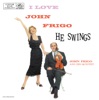
 John Frigo
I Love John Frigo...He Swings
2004 Verve 145602
Original recording 1952
|
|
Dramatically ominous horns (including Cy Touff on bass trumpet) introduce the theme before violinist Frigo pacifies them with a gypsy swing motif.
|
 Blue Mitchell
A Sure Thing
Original Jazz Classics 837
Original recording 1962
|
|
This glossy, buoyant reading highlights the talents of trumpeter Mitchell and fellow horn players. The rhythm section keeps time at a clip, encouraging the principals through a series of dynamic solos.
|
 Julie London
Julie Is Her Name Vol 1 & 2
1992 Capitol 99804
Original recording 1955
|
|
London’s naturally sultry voice is perfect for this wistful ballad. Guitarist Barney Kessel and bassist Ray Leatherwood provide gentle rhythmic counterpoint in a setting stripped of any embellishment that might detract from the lyrics.
|
|
|
|