|
|
|
| “[Anything Goes]...the quintessential musical of the period.” |
|
 |
|
- Robert Kimball
|
|
| |
Fortunately Cole Porter didn’t toss his rejects into a waste basket. “I Get a Kick Out of You” was originally written for a 1931 Broadway show, Star Dust, which was never produced. The song made it into Cole’s Broadway show Anything Goes in 1934 where it was introduced by Ethel Merman. The show ran for 420 performances, opening in November, 1934, and closing in November, 1935. Musical theater historian Robert Kimball has called the show “the quintessential musical of the period.” It also produced the hits “All Through the Night,” “You’re the Top,” and, of course, “Anything Goes.”
|
| |
| |
|
| |
|
|
| |
| |
|
| |
|
Although “I Get a Kick Out of You” was not written specifically for Merman, Porter, as Charles Schwartz points out in Cole Porter: A Biography, was well aware of Merman’s special qualities as a performer. He tried to “...include in his lyrics for her words like ‘terrific’ (so prominent in the line, ‘that would bore me terrific’ly too’)...that allowed her to roll out the r’s with the force of a TNT charge.” Her lusty performance as an evangelist-turned-nightclub singer made the song one of the hits of the show.
The song charted three times:
- Paul Whiteman and His Orchestra (1934-35 Bob Lawrence, vocal, 11 weeks, topping at #3)
- Ethel Merman (1934-35, accompanied by the Johnny Green Orchestra, five weeks, topping at #12)
- Leo Reisman and His Orchestra (1935, Sally Singer, vocal, one week, topping at #20)
|
|
| |
|
| |
|
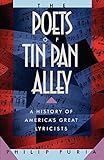
The speaker in the song is “fighting vainly the old ennui” and listing the things that no longer add spice to life. “I get no kick from champagne, Mere alcohol doesn’t thrill me at all.” Furthermore, “Some get a kick from cocaine, I’m sure that if I took even one sniff, That would bore me terrific’ly too.” The only thing that provides a kick is “you”--a “you” that is no longer adoring. In his analysis of the song’s lyrics in The Poets of Tin Pan Alley: A History of America’s Great Lyricists, Philip Furia writes, “Thus the character who emerges from the lyric, far from being impervious to sensation, is hopelessly addicted to his lover’s ‘kick,’ an addiction all the more poignant given his facade of nonchalant sophistication.”
According to Gerald Mast in his book Can’t Help Singin’, the reference to cocaine ultimately caused problems. In the 1960s Merman substituted “some like that perfume from Spain,” the phrase also used by Sinatra. “In 1972, a published version of the song substituted, ‘Some like a bop-type refrain’.... Porter preferred to ravage the song with a jazz riff than a sniff of Spanish perfume.” Obviously the sophisticated lyricist knew that the best perfume came from France, and while perfume can be heady, it is not a stimulant such as drugs or alcohol and as such didn’t fit the idea of the song. Eventually Merman returned to the original lyrics in 1972 when it was no longer impolitic to mention cocaine.
Porter takes the “high” image literally in the final A section of the song. Furia goes on to say, “...[Porter] underscores the ascent with a series of rhymes on the progressively higher notes of the melody: ‘flying too high with some guy in the sky is my idea of nothing to do.’ Despite the imagistic shift, Porter laces his three ‘kickers’ together with rhyme: champagne, cocaine, plane.”
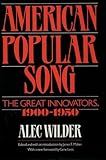
The song’s popularity is universal. In his book American Popular Song: The Great Innovators, 1900-1950, Alec Wilder says, “This is a very good, essentially simple song, in spite of its half note triplets, but, as is almost always the case with Porter songs, it is popular as much because of its lyric as its melody. This, however, is not true for jazz musicians who like it for its looseness, which provides ample room for improvisation. Needless to say, the half note triplets are, for the most part, ignored by them.”
Max Morath points out the popularity of “I Get a Kick Out of You” in his book The NPR Curious Listener’s Guide to Popular Standards, saying that it’s been recorded by almost everybody in the business. “Jazz musicians go for it--they love most anything of Porter’s--those long melody lines and the beat, often Latin-tinged, that is so often implicit in his theater songs. It’s had quite a movie career, too. Billy Daniels sang it in Sunny Side of the Street (1951); it was featured in the 1975 film At Long Last Love, and it is prominent on the soundtrack of Kenneth Branagh’s new look at William Shakespeare’s Love’s Labour’s Lost (2000).”
Contemporary renditions of “I Get a Kick Out of You” include those by trumpeter Arturo Sandoval, pianist Adam Makowicz, and vocalists Tierney Sutton and Lisa Ekdahl.
|
|
|
|
More information on this tune... |
|
See the Reading and Research page for this tune for additional references. |
|
- Sandra Burlingame
|
|
| This section suggests definitive or otherwise significant recordings that will help jazz students get acquainted with
“I Get a Kick Out of You.” These recordings have been selected from the Jazz History and
CD Recommendations sections.
|
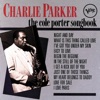
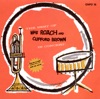
“I Get a Kick Out of You” lends itself well to up-tempo small group performance, and as with many tunes he played, Charlie “Bird” Parker made a mark with a stunning solo on his1954 rendition (The Cole Porter Songbook). Just a few months later, Clifford Brown and Max Roach upped the tempo even more and debuted their extremely slick arrangement; there are several noteworthy live recordings of this, but the initial studio recording (Brown and Roach, Inc.) is the place to start. For a more straightforward approach to the tune, Louis Armstrong’s version with Oscar Peterson in 1957 (Louis Armstrong Meets Oscar Peterson) is particularly recommended.
Noah Baerman - Jazz Pianist and Educator
|
Musical analysis of “I Get a Kick Out of You” | | Original Key | Eb major | | Form | A1 - A2 - B - A3 | | Tonality | Primarily major | | Movement | 90% of the melody moves scale-wise by step, initially rising, then falling. Mostly diatonic; few altered tones. | Comments (assumed background) | | Although the melody is fairly simple, the hemiola (triplets over a two-beat) gives it rhythmic vitality and forward movement. Porter’s original chord progression over “A” was equally simple: ii - V7 -I - vi. Most players today use various substitutions (iii for I, ii°7 for vi, etc). In “B” the progression is less predictable. The initial Bbm7 sounds like a ii7 of a new, subdominant key but never quite settles into a new tonic. This keeps with the equally unsettled spirit of the lyric, just as the rising melodic movement toward the end of “A3” reflects the anguish of the singer who regards flying as “nothing to do.” Like the vast majority of Cole Porter’s works, this melody is inextricably wedded to the lyric and thus more appealing for the vocalist. | | K. J. McElrath - Musicologist for JazzStandards.com |
|
Clarinetist Artie Shaw “retired” from music in 1946 but returned in 1949 and formed what he claimed was his best band; critics agreed, but the public didn’t. Before he “quit” music again, however, the band recorded a session of radio transcriptions, including a bold arrangement of “I Get a Kick Out of You.” Shaw’s playing illustrates that he was keeping up with the changes in jazz, and his band is superb. Charlie Parker, the genius of the alto saxophone and one of the founding fathers of bop, romps through a masterful version of “Kick” with his quintet for Verve in 1954. Trumpeter Clifford Brown and drummer Max Roach’s Quintet version of Cole Porter’s tune is a tour-de-force, featuring deftly executed ensemble passages and played at a whirlwind tempo. Brownie smokes and Roach is showcased on an extended drum solo.
Chris Tyle - Jazz Musician and Historian
 Artie Shaw
Stardust
BMG International 651419
|
|
|
|
|
Additional information for "I Get a Kick Out of You" may be found in:
|
|
|
 David Ewen
Great Men of American Popular Song
Prentice-Hall; Rev. and enl. ed edition
Unknown Binding: 404 pages
(1 paragraph including the following types of information: history.)
|
|
|
|
|
 Charles Schwartz
Cole Porter: A Biography
Da Capo Press; 1st Pbk edition
Paperback: 365 pages
(1 paragraph including the following types of information: lyric analysis.)
|
|
|
|
|
 Robert Gottlieb, Robert Kimball
Reading Lyrics
Pantheon
Hardcover: 736 pages
(Includes the following types of information: song lyrics.)
|
|
|
|
|
 Gerald Mast
Can't Help Singin'
Overlook Press; Rei edition
Paperback: 400 pages
(2 paragraphs including the following types of information: lyric analysis.)
|
|
|
|
|
|
|
|
Comment Policy
- Your comments are welcome, including why you like
this tune, any musical challenges it presents, or additional background information.
- Jazz musicians, fans, and students of all ages use this website as an educational resource.
As such, off-topic, off-color, unduly negative, and patently promotional comments will be removed.
- Once submitted, all comments become property of JazzStandards.com.
By posting, you give JazzStandards.com permission to republish or otherwise distribute your comments in any format or other medium.
JazzStandards.com reserves the right to edit or remove any comments at its sole discretion.
|
|
| Click on any CD for more details at Amazon.com |
 Dinah Washington
The Essential Dinah Washington: The Great Songs
Polygram Records
Original recording 1955
|
|
Vocalist Washington sings “I Get a Kick Out of You” irresistibly, aided by some of her most swinging contemporaries, such as pianist Wynton Kelly and trumpeter Clark Terry.
|
 Ella Fitzgerald
Ella Fitzgerald Sings the Cole Porter Songbook, Vol. 1
Polygram Records
Original recording 1956
|
|
Fitzgerald and guitarist Barney Kessel offer up a gentle duet on the verse before the Paul Smith-led band kicks in and swings with subtle assurance underneath Fitzgerald’s characteristically authoritative singing.
|
 Louis Armstrong
Meets Oscar Peterson
Essential Jazz Album
Original recording 1957
|
|
Armstrong leaves the trumpet behind on this one, but there is plenty of excitement. His singing and the accompaniment of Peterson’s quartet build intensity throughout the performance, reaching a fever pitch by the time they wrap things up.
|
 Billy Taylor
Billy Taylor Touch/One for Fun
Collectables
Original recording 1957
|
|
Pianist Taylor, along with his trio-mates Earl May and Ed Thigpen, go from an up-tempo Latin feel on the melody to a hard-swinging groove for soloing. Throughout, the trio is tight and intense and Taylor’s own playing is .
|
 Earl Hines
Earl Hines Plays Cole Porter
New World Records
Original recording 1974
|
|
This performance is typical of Hines late-period solo piano work. That is to say it is a technically and creatively stunning tour de force with some unexpected twists and turns in the rhythm.
|
|
 Randy Weston
Solo, Duo & Trio
2000 Milestone Records 47085
Original recording 1950
|
|
Tinkering with both rhythm and harmony, pianist Weston manages to produce a thoroughly dissonant yet engagingly comprehensive interpretation of the song.
|
 Ernie Henry Quartet
Seven Standards & a Blues
1993 Original Jazz Classics 1722
Original recording 1957
|
|
Both Henry’s inventive phrasing and the energy of the rhythm section seem inexhaustible as the saxophonist bops and weaves through this infectious rendition.
|
 Clifford Brown/Max Roach
Brown and Roach Inc
1990 Emarcy 814644
Original recording 1954
|
|
Drummer Roach and bassist George Morrow set a blistering pace over which trumpeter Brown practically rockets. It is a jaw-dropping display of exuberance and technique from both lead musicians.
|
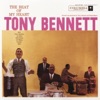
 Tony Bennett
The Beat of My Heart
1997 Sony 66502
Original recording 1957
|
|
This track was added to the CD reissue of the original LP which featured the vocalist with various jazz drummers and percussionists (in this case Art Blakey), but it fits in perfectly. A young and muscular Bennett is at his jazziest here.
|
 Ahmad Jamal
Chamber Music of the New Jazz
2004 GRP
Original recording 1955
|
|
Pianist Jamal was taking jazz piano in a new direction with this 1955 recording, his first. His reading of this song is delicate and rhythmic.
|
|
|
|