|
|
|
| “More than any other prior performance, however, it is John Coltrane’s 1957 trio version that brought the tune jazz standard status.” |
|
 |
|
- Chris Tyle
|
|
| |
In his book Cole Porter: A Biography, Charles Schwartz tells the story of how “I Love You,” introduced in the 1944 Broadway show Mexican Hayride, was written by Porter on a bet with actor Monty Woolley. “While Mexican Hayride was still in its formative stage, Woolley had challenged Cole to write a hit number titled ‘I Love You,’ in which that banal phrase would be repeated again and again. Woolley felt that even Cole’s gift with words and music would not be enough to surmount such a handicap and backed up that opinion with a small wager. Rising to the challenge (and at this point, Cole may have needed Woolley’s goading to bring out the best in him), Cole came up with a languid refrain whose lyrics begin:
‘I love you,’
Hums the April breeze.
‘I love you,’
Echo the hills.
‘I love you,’
The golden dawn agrees
As once more she sees daffodils.
As sung by big-voiced Wilbur Evans in the show, ‘I Love You’ quickly caught on, enabling Cole to win the wager while adding still another number--the only one in Mexican Hayride to become popular--to his long list of hit songs.”
|
| |
| |
|
| |
|
Peter Gammond, author of The Oxford Companion to Popular Music, praised the song for its “...unusual degree of intimacy between the [music and lyrics].” In addition to placing first three times on the popular radio show Your Hit Parade, the song charted several times:
- Bing Crosby (1944, 18 weeks, remaining in first place for five weeks)
- Ernie Madriguera and His Orchestra (1944, three weeks, topping at #7)
- Jo Stafford (1944, with the Paul Weston Orchestra, six weeks, topping at #8)
- Perry Como (1944, three weeks, topping at #12)
|
|
| |
|
| |
|
Despite some harsh criticism of the show, the public succumbed to its gaiety, and it ran for 481 performances. It starred comic Bobby Clark as a numbers racketeer who flees to Mexico, Wilbur Evans as a “charge d’affaires,” and June Havoc as a lady bullfighter to whom Evans sings “I Love You.”
Melodically and harmonically “I Love You” has continued to interest jazz instrumentalists such as French horn player Tom Varner, bassists Red Mitchell and David Friesen, saxophonists Anthony Braxton and John Coltrane, pianist George Cables, drummer Art Blakey, and vibist Milt Jackson. Pianist Marian McPartland performed it on her 85th birthday celebration album in 2005.
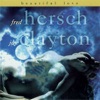
The song appears to have been overlooked by contemporary singers. Although it has a long, beautiful verse, the melody is not a particularly easy one. Earlier vocalists such as Helen Merrill, Anita O’Day, Billy Eckstine, and Irene Kral performed it. Opera singer Jessye Norman recorded it in 1984, and jazz vocalist Jay Clayton included it in her 1995 album with pianist Fred Hersch, Beautiful Love.
|
|
|
|
More information on this tune... |
|
See the Reading and Research page for this tune for additional references. |
|
- Sandra Burlingame
|
|
| This section suggests definitive or otherwise significant recordings that will help jazz students get acquainted with
“I Love You.” These recordings have been selected from the Jazz History and
CD Recommendations sections.
|
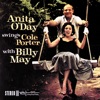
The song “I Love You” really hit its stride as a jazz vehicle in the 1950s. Bill Evans’ first recording of the song (New Jazz Conceptions) and John Coltrane’s powerhouse performance from 1957 (Lush Life) are both presented in a trio format and are both widely influential. Anita O’Day’s 1959 recording (Anita O’Day Swings Cole Porter with Billy May), meanwhile, offers a fine blueprint for how a vocalist can navigate this challenging melody.
Noah Baerman - Jazz Pianist and Educator
|
Musical analysis of “I Love You” | | Original Key | F major; abrupt shift to A major in mm. 13-16 | | Form | A1 - A2 - B - A3. Cole Porter’s original has a six-measure extension in the second ending, but this is not usually played today. | | Tonality | Primarily major | | Movement | Many wide leaps (6ths and 7ths) during “A” sections; “B” is primarily stepwise. Some chromatic embellishment. | Comments (assumed background) | | This song opens with an interval of a downward major 7th, followed by an ascending major sixth, and covers the range of a tenth, presenting a real challenge even for the experienced singer. For the same reason, instrumentalists find this tune a great opportunity to display range and virtuosity, especially with its surprising harmonic sequences. Although mm. 1-12 bear some resemblance to another Porter tune, “I’ve Got You Under My Skin” (a iv chord is substituted for the ii7), there is a sudden shift in tonality at m. 13. While returning to the original tonality in m. 17, the harmonic progression-while orthodox-is unusual and unsettled (a similar progression can be heard in the opening strain of “I Should Care”). | | K. J. McElrath - Musicologist for JazzStandards.com |
|
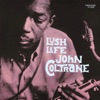
More than any other prior performance, John Coltrane’s 1957 trio version of “I Love You” brought the tune to jazz standard status. His trio, with a rhythm section minus piano or guitar, has a full sound, and his playing is marvelous.
Chris Tyle - Jazz Musician and Historian
 John Coltrane
Lush Life
Original Jazz Classics 131
Original recording, 1958, Prestige Records
|
|
|
|
|
Additional information for "I Love You" may be found in:
|
|
|
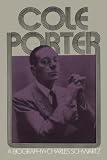 Charles Schwartz
Cole Porter: A Biography
Da Capo Press; 1st Pbk edition
Paperback: 365 pages
(1 paragraph including the following types of information: anecdotal and lyric analysis.)
|
|
|
|
|
 Robert Kimball, Brendan Gill
Cole: A Biographical Essay
Overlook Press
Hardcover: 283 pages
(Includes the following types of information: song lyrics.)
|
|
|
|
|
|
|
|
Comment Policy
- Your comments are welcome, including why you like
this tune, any musical challenges it presents, or additional background information.
- Jazz musicians, fans, and students of all ages use this website as an educational resource.
As such, off-topic, off-color, unduly negative, and patently promotional comments will be removed.
- Once submitted, all comments become property of JazzStandards.com.
By posting, you give JazzStandards.com permission to republish or otherwise distribute your comments in any format or other medium.
JazzStandards.com reserves the right to edit or remove any comments at its sole discretion.
|
|
| Click on any CD for more details at Amazon.com |
 Bill Evans
New Jazz Conceptions (20 Bit Master)
Riverside
Original recording 1956
|
|
This session with bassist Teddy Kotick and drummer Paul Motion was Evans’ first as a bandleader. His driving yet introspective style is in full bloom already on this version of “I Love You,” a tune he would record many times over the ensuing twenty-plus years.
|
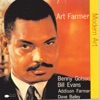
 Art Farmer
Modern Art
Blue Note Records
Original recording 1958
|
|
This performance features powerhouse solos by Farmer on trumpet and his frequent collaborator Benny Golson on tenor saxophone, as well as a long section in which they trade solo passages with one another. Bill Evans anchors the rhythm section and takes an excellent solo of his own.
|
 Art Pepper
Intensity
Ojc
Original recording 1960
|
|
This searingly intense performance by saxophonist Pepper is from his last studio recording session before a long hiatus. Underrated pianist Dolo Coker shines as well.
|
|
 Keith Jarrett Trio
The Out-of-Towners
2004 ECM Records 300102
Original recording 2004
|
|
Here is another great live performance from Jarrett and Co. The pianist swings this one elegantly while still managing to throw some improvisational curveballs into the mix.
|
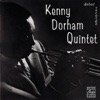
 Kenny Dorham Quintet
Kenny Dorham Quintet
1993 Original Jazz Classics 113
Original recording 1953
|
|
Bright, crisp, lyrical play from trumpeter Dorham, complementary support from saxophonist Jimmy Heath, and a rhythm section unafraid to switch things up make for a dynamic and engaging rendition.
|
 Eliane Elias
Everything I Love
2000 Blue Note 20827
Original recording 2000
|
|
In a sensational, up tempo reading of the Porter song, pianist Elias exudes strength and confidence, delivering a straight-up reading adorned with mischievous asides.
|
 Jay Clayton/Fred Hersch
Beautiful Love
1995 Sunnyside 1066
|
|
Clayton’s clear, sweet voice strikes just the right note of innocence as she delivers the verse for this loveliest of love songs. She and pianist Hersch make beautiful music together.
|
|
|
|