|
|
|
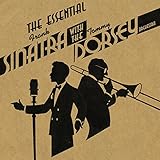
| The Dorsey/Sinatra version of “Imagination” was one of four renditions to make the popular song chart in 1940. |
|
 |
|
- Sandra Burlingame
|
|
| |
In Great Men of American Popular Song David Ewen tells how composer Jimmy Van Heusen’s “Imagination” brought him to Hollywood. “Mark Sandrich, producer of the Astaire-Ginger Rogers screen musicals, heard the song, fell in love with it, and yelled out to one of his assistants, ‘Get me that guy!’” Lyricist Johnny Burke, who had written the lyrics for “Imagination,” was already established in Hollywood as a top lyricist for Bing Crosby films. Eventually the pair worked on several of the “Road” pictures starring Crosby, Bob Hope, and Dorothy Lamour.
Ewen also quotes Van Heusen’s recollection of his first meeting with Burke at the office of the music publisher where Van Heusen worked. “He just came into the office [Remick’s] to shoot the breeze. He said to me, ‘Got any tunes?’ I said, ‘Sure!’ So we went and wrote ‘Oh, You Crazy Moon.’ The next time he was in, we did ‘Polka Dots and Moonbeams.’ Soon after that came ‘Imagination.’”
|
| |
| |
|
| |
|
|
| |
| |
|
| |
|
“Imagination” was introduced by Fred Waring and His Pennsylvanians, became a favorite of the Glenn Miller Orchestra, and charted four times.
- Glenn Miller and His Orchestra (1940, 11 weeks, three of them at #1)
- Tommy Dorsey and His Orchestra (1940, Frank Sinatra, vocal, six weeks, topping at #8)
- Ella Fitzgerald (1940, three weeks, topping at #15)
- Ted Straeter and His Orchestra (1940, Dorothy Rochelle, vocal, one week, topping at #29)
|
|
| |
|
| |
|
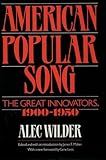
Alec Wilder claims in American Popular Song: The Great Innovators, 1900-1950 that “‘Imagination’ hasn’t the swing and freedom of later songs.” But its gentle, appealing melody and clever yet wistful lyrics have helped maintain its popularity over the years. The lyrics describe the results of imagination metaphorically: “It makes a cloudy day sunny, Makes a bee think of honey.” And it makes “You go around willy-nilly, For example, I go around wanting you, And yet I can’t imagine that you want me, too.”
Ella Fitzgerald was instrumental in popularizing the song with vocalists but it has been picked up by musicians as diverse as bandleader/keyboardist Sun Ra, trombonist Curtis Fuller, and pianist Lenny Tristano. Jim Henson sang it on Sesame Street, and it’s been recorded by contemporary players such as pianists Pete Malinverni and Keith Jarrett, saxophonist Antonio Hart, and harmonica player Toots Thielemans.
|
|
|
|
More information on this tune... |
|
See the Reading and Research page for this tune for additional references. |
|
- Sandra Burlingame
|
|
| This section suggests definitive or otherwise significant recordings that will help jazz students get acquainted with
“Imagination.” These recordings have been selected from the Jazz History and
CD Recommendations sections.
|
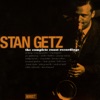
Ella Fitzgerald is considered by many to be the definitive jazz interpreter of “Imagination,” and it is easy to hear why both on her 1940 rendition with her band (The Great Ella Fitzgerald) and on her slower, more tender duo recording with Ellis Larkins from 1954 (Pure Ella). Stan Getz’s 1950 rendition (Complete Roost Recordings), meanwhile, provides an excellent and influential example of the song in an instrumental ballad context.
Noah Baerman - Jazz Pianist and Educator
|
Musical analysis of “Imagination” | | Original Key | Eb major | | Form | A1 - A2 - B - A3 w/four measure extension | | Tonality | Primarily major | | Movement | “A” ascends gently by thirds and seconds from D to the Db a seventh above before descending in a graceful arc; “B” ascends along the tonic scale from root to the seventh and then descends by fourths. | Comments (assumed background) | | The opening chord progression is similar to “Memories of You” and “Doin’ the New Low-Down,” but Van Heusen diverges from this path in measure 5 with a I - iii(b5)- V7/ii sequence (the flatted fifth of the iii chord creates a strong movement toward the secondary dominant, having two notes with a tendency to resolve downward). “B” starts to go into the subdominant key of Eb but resolves deceptively, ultimately winding up on a C7. Then, instead of proceeding to F as we would expect, Van Heusen uses a common-tone diminished chord to modulate to Bb, avoiding any type of tonal stability until the transition into “A3.” For the novice performer, this song is a good choice, as it has a range of no more than an octave and lacks wide leaps. (The only potentially awkward interval is the tri-tone in mm.7-8 of “B,” but this is in context of a strong V7-I cadence). | | K. J. McElrath - Musicologist for JazzStandards.com |
|
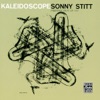
Harry Lim, head of Keynote Records, was one of the first to sign a contract with the American Federation of Musicians to resume recording following the two-year ban. In late 1943 Lim began recording all types of jazz, from traditional New Orleans to more modern sounds. But Lim’s favorite was small band swing, and his 1944 session with Coleman Hawkins included a splendid “Imagination” with Hawk in a peaceful mood and Teddy Wilson brilliantly providing support. Stan Getz’s 1950 recording is a delicate rendering of the tune and Getz’s tone is almost alto-like. The two-and-half-minute recording is short, but it’s Stan all the way. Alto saxophonist Sonny Stitt (who also played tenor and baritone) fell under the spell of Charlie Parker yet was not a slavish copier of the great altoist. Stitt’s 1950 recording of “Imagination” nicely shows his ability and his deft way with a ballad.
Chris Tyle - Jazz Musician and Historian
 Sonny Stitt
Kaleidoscope
Original Jazz Classics 060-2
Original recording 1952
|
|
|
|
|
Additional information for "Imagination" may be found in:
|
|
|
 David Ewen
Great Men of American Popular Song
Prentice-Hall; Rev. and enl. ed edition
Unknown Binding: 404 pages
(1 paragraph including the following types of information: anecdotal.)
|
|
|
|
|
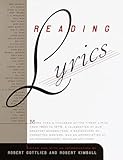 Robert Gottlieb, Robert Kimball
Reading Lyrics
Pantheon
Hardcover: 736 pages
(Includes the following types of information: song lyrics.)
|
|
|
|
|
|
|
|
Comment Policy
- Your comments are welcome, including why you like
this tune, any musical challenges it presents, or additional background information.
- Jazz musicians, fans, and students of all ages use this website as an educational resource.
As such, off-topic, off-color, unduly negative, and patently promotional comments will be removed.
- Once submitted, all comments become property of JazzStandards.com.
By posting, you give JazzStandards.com permission to republish or otherwise distribute your comments in any format or other medium.
JazzStandards.com reserves the right to edit or remove any comments at its sole discretion.
|
|
| Click on any CD for more details at Amazon.com |
 Ella Fitzgerald
The Great Ella Fitzgerald
Festival Records
Original Recording 1940
|
|
With lightly swinging ballad accompaniment, Fitzgerald sings “Imagination” faithfully but with great personality. The results are totally infectious.
|
 Frank Sinatra, Tommy Dorsey Orchestra
The Essential Frank Sinatra with the Tommy Dorsey Orchestra (2CD)
RCA
Original Recording 1940
|
|
Trombonist and bandleader Dorsey plays the melody to “Imagination” with tasteful accompaniment courtesy of Axel Stordahl’s arrangement. Frank Sinatra then provides an appealing, traightforward and lighthearted vocal interpretation.
|
 Ella Fitzgerald
Pure Ella
Verve
Original Recording 1954
|
|
The elegant piano of Ellis Larkins provides Fitzgerald with the perfect backdrop to re-explore “Imagination” in a slower and gentler setting.
|
 Art Pepper
Art Pepper Meets the Rhythm Section
Original Jazz Classics
Original Recording 1957
|
|
Alto saxophonist Pepper gives “Imagination” a relaxed medium swing interpretation. His solo is inventive and melodic, and Red Garland and Paul Chambers are also featured as soloists.
|
 Curtis Fuller
Imagination
Savoy Jazz
Original Recording 1959
|
|
Trombonist Fuller plays “Imagination” as a gentle ballad, and his interpretation of the melody is lyrical and extremely expressive. Of particular note is the powerful but sensitive piano solo by McCoy Tyner, making his recording debut on this session.
|
|
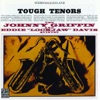
 Johnny Griffin/Eddie Davis
Tough Tenors
2003 Original Jazz Classics 1094
Original recording 1960
|
|
“Lockjaw” sits this ballad out allowing room for Griffin’s robust sound and the mutual groove that the tenor saxophonist enjoys with fellow bopper, pianist Junior Mance.
|
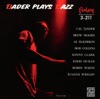
 Cal Tjader
Tjader Plays Tjazz
1998 Original Jazz Classics 988
Original recording 1954
|
|
Vibraphonist Tjader lays back and lets saxophonist Brew Moore and pianist Sonny Clark dictate the somber elegance and pace of the session.
|
 Helen Humes
Songs I Like to Sing!
1991 OJC 171
Original recording 1961
|
|
It doesn’t get any better than this: the singer’s singer with Ben Webster’s tenor, a string quartet, and an all-star rhythm section of Andre Previn, Leroy Vinnegar, Shelly Manne, and guitarist Barney Kessel. Other cuts feature a big band filled with jazz heavies and arrangements by Marty Paich.
|
 Harry Connick Jr
20
1988 Columbia 44369
Original recording 1988
|
|
The young crooner accompanies himself on piano for this straight forward reading that finds the singer drawing out his melancholy phrases and keeping it simple on the keys.
|
|
|
|