|
|
|
| “In a Mellotone” is a perfect example of how Duke could take the chord changes of an old standard (in this case, the 1919 tune “Rose Room”), write a simple riff ..., and then spice it up with great solos.... |
|
 |
|
- Chris Tyle
|
|
| |
Duke Ellington and His Orchestra introduced this standard in 1940. Although he did have three tunes in the charts that year, “Mellotone” wasn’t one of them.
|
| |
| |
|
| |
|
The period of 1939-1942 is regarded by many critics to be the golden era of Duke Ellington’s career. He had a band comprised of sterling talent, and Duke himself was turning out a stellar grouping of original compositions for the orchestra such as “Ko-Ko,” “Jack the Bear,” “Warm Valley,” “Sepia Panorama,” and “In a Mellotone.”
What makes Ellington performances such great triumphs, however, is not just the tune or the arrangement but how he utilized the soloists of the orchestra so perfectly within his arrangements. “In a Mellotone” is a perfect example of how Duke could take the chord changes of an old standard (in this case, the 1919 tune “Rose Room”), write a simple riff (what is now considered the “head” of the tune), and then spice it up with great solos (the original recording contains one of alto saxophonist Johnny Hodges’ premier solos, played in “double-time.”) Undoubtedly the reason this number has achieved standard status is not due to the chords or the melody but what Ellington did with it originally and how jazz players reacted to his concept. (Ellington ends the arrangement with a clever “lift” from Louis Armstrong’s first solo on record, “Chimes Blues,” recorded by King Oliver’s Creole Jazz Band in 1923.)
|
| |
| |
|
| |
|
As was the case with many Ellington compositions, words were added a later date. It’s not clear who did write the lyrics, but record producer Milt Gabler (of the indie jazz label Commodore and later Decca Records), gets co-composer credit. |
|
|
|
| This section suggests definitive or otherwise significant recordings that will help jazz students get acquainted with
“In a Mellotone.” These recordings have been selected from the Jazz History and
CD Recommendations sections.
|
The original Duke Ellington performance of “In A Mellotone” from 1940 (Never No Lament: The Blanton-Webster Band) is a stunning work of art and unquestionably the most important recording of this tune. Erroll Garner’s 1954 recording (Contrasts) is a wonderful example of how to approach the song in a small group, while Ella Fitzgerald’s 1957 rendition (Sings the Duke Ellington Songbook) is unparalleled among vocal versions.
Noah Baerman - Jazz Pianist and Educator
|
Musical analysis of “In a Mellotone” | | Original Key | Ab major | | Form | A - B - A - C | | Tonality | Major throughout | | Movement | Most of the tune is based on a single motif consisting of a descending third followed by an upward, four-note scale run. | Comments (assumed background) | | The repetitive nature of this tune indicates that it (like “C Jam Blues”) began life as a “riff” background for improvised solos. That said, the harmonic progression is more challenging than blues or “rhythm changes,” containing diminished passing chords and ii7 embellishments for secondary dominants. Generally, this piece contains many of the harmonic cadences and sequences found in the majority
of standards (II7 - V7 - I, IV - ct°7/I - I, I - VI7 - II7, etc.) As such, it is an excellent learning piece for the student of improvisation who has mastered the two aforementioned harmonic progressions. | | K. J. McElrath - Musicologist for JazzStandards.com |
|
Duke Ellington’s premier of “In a Mellotone” in 1940 features an exciting solo by alto saxophonist Johnny Hodges, but trumpeter Ray Nance gets a spot also. Ben Webster, tenor saxophonist on Ellington’s initial recording of “Mellotone,” was among the “friends” on trombonist Bill Harris’ ... and Friends Verve session from 1957. After his Ellington experience Webster was deeply influenced by alto saxophonist Johnny Hodges, and “Frog” pays a fitting musical homage to “Rab” on this session. Bill Harris does some distinctive work too. Webster makes an appearance as leader on another Verve date, this time from 1959. He’s featured along with his “associates” which include two other great tenor saxophonists (Coleman Hawkins and Budd Johnson), trumpeter Roy Eldridge, and a first-rate rhythm section. For twenty minutes these master musicians give the listener a first-hand experience of an after-hours jam session.
Chris Tyle - Jazz Musician and Historian
|
|
|
|
Comment Policy
- Your comments are welcome, including why you like
this tune, any musical challenges it presents, or additional background information.
- Jazz musicians, fans, and students of all ages use this website as an educational resource.
As such, off-topic, off-color, unduly negative, and patently promotional comments will be removed.
- Once submitted, all comments become property of JazzStandards.com.
By posting, you give JazzStandards.com permission to republish or otherwise distribute your comments in any format or other medium.
JazzStandards.com reserves the right to edit or remove any comments at its sole discretion.
|
|
| Click on any CD for more details at Amazon.com |
 Erroll Garner
Contrasts
Polygram Records
Original recording 1954
|
|
Pianist Garner offers a subtle, extremely swinging trio performance here. The arrangement is tight and his solo builds from elegant single notes to dramatic block chords.
|
 Ella Fitzgerald
Ella Fitzgerald Sings the Duke Ellington Songbook
Polygram Records
Original recording 1957
|
|
Fitzgerald offers one of her most swinging and impressive performances here, which is no small thing given her track record! She swings the melody with relaxed assurance and then offers a classic scat solo. For good measure, Ben Webster contributes some irresistible saxophone playing.
|
 Gerry Mulligan
The Complete Gerry Mulligan Meets Ben Webster
Polygram Records
Original recording 1959
|
|
Saxophonist Webster appears again here, sharing reed duties with Gerry Mulligan on baritone. They both play with abundant, relaxed creativity, punctuated by a fabulous piano solo by Jimmy Rowles.
|
 Louis Armstrong & Duke Ellington
The Great Summit: The Master Takes
Blue Note Records
Original recording 1961
|
|
Though there are multiple soloists here, Ellington and Armstrong (on trumpet) unsurprisingly take center stage. Ellington’s own playing here offers a glimpse into why he was such a formative influence on Thelonious Monk.
|
 Milt Jackson Quartet
Soul Route
Ojc
Original recording 1983
|
|
Vibraphonist Jackson teams up here with some of his most valued collaborators, pianist Gene Harris, bassist Ray Brown and drummer Mickey Roker, for what may well be the most hard-swinging “In A Mellotone” ever recorded.
|
|
 Tony Bennett
Hot & Cool: Bennett Sings Ellington
1999 Columbia 63668
Original recording 1999
|
|
No other vocalist can deliver an Ellington song like Tony Bennett, and there is no better song to illustrate that point. The singer recreates a time and a place with mellow tone and cool demeanor.
|
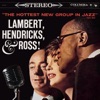
 Lambert, Hendricks & Ross
The Hottest New Group in Jazz
1996 Legacy Recordings 64933
Original recording 1959
|
|
Tight harmonies and loose lyrics typified LH&R. Annie Ross takes the lead on this vocal deconstruction that contains all the swingin’ pyrotechnics and flawless technique you expect from the trio.
|
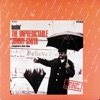
 Jimmy Smith
Bashin'-The Unpredictable Jimmy Smith
1997 Verve 314539061
Original recording 1962
|
|
Smith debuts at Verve with a bang backed by the Oliver Nelson Orchestra. On this piece the horns gain momentum, the orchestra swells, and Smith’s organ cuts through it all to settle into a bluesy groove.
|
 Howard Alden, Bucky Pizzarelli
In a Mellow Tone
Concord Records
|
|
This song seems designed for two guitars, especially played by virtuosos Alden and Pizzarelli the Elder. What a delight!
|
|
|
|