|
|
|
| “What lifts such a lyric above the usual run of film songs is Dubin’s ability to match Warren’s insistent melody with casually conversational phrases....” |
|
 |
|
- Philip Furia
|
|
| |
Dick Powell introduced this song in the 1934 motion picture Dames, scored by Oscar-winning songwriters, composer Harry Warren and lyricist Al Dubin. The song played throughout the soundtrack and was featured in two scenes. Tenor Powell first sings it to Ruby Keeler on the Staten Island ferry. He expresses his bedazzlement by saying that he doesn’t know “if it’s cloudy or bright” or “if we’re in a garden or on a crowded avenue” because “I only have eyes for you.”
|
| |
| |
|
| |
|
|
| |
| |
|
| |
|
The second time the song appears, Powell is riding the subway and sees Keeler’s face everywhere he looks. The dream sequence that follows features the extraordinary choreography of co-director Busby Berkeley whose dancers all wear Ruby Keeler masks. In his book Hollywood Musicals Clive Hirschhorn describes the dance: “Highspot of the number is the jigsaw made by the girls as each, equipped with a board on her back, bends over so the boards interlock to form a giant-size picture of Ruby.”
As with many of Warren and Dubin’s songs, “I Only Have Eyes for You” was created as a production number and had little to do with the characters or the plot. Warner Brothers paired the songwriting duo with Berkeley in other films because the exciting pulse of their music matched the dazzling visual energy of Berkeley’s dance numbers.
According to Philip Furia in his book The Poets of Tin Pan Alley: A History of America’s Great Lyricists, “What lifts such a lyric above the usual run of film songs is Dubin’s ability to match Warren’s insistent melody with casually conversational phrases:
Are the stars out tonight?
I don’t know if it’s cloudy or bright,
‘cause I only have eyes for you
”Beneath such casually understated passion is an emotional progression intensified by insistent rhymes such as the I/eye in the title phrase and ‘For you’ with ‘or on a crowded avenue.’ He drives the lyric more forcefully still by following ‘avenue’ with ‘You are here, so am I,’ just as Warren’s music pushes the end of the release into the final A section.”
The song charted three times in 1934, coming in at #2, #4, and finally #20:
- Ben Selvin and His Orchestra (1934, Howard Phillips, vocal)
- Eddy Duchin and His Orchestra (1934, Lew Sherwood, vocal)
- Jane Froman (1934)
|
|
| |
|
| |
|
The song was a hit for the popular doo wop group the Flamingos in 1959, and their version was included in the 1973 film American Graffiti and in an episode of Buffy the Vampire Slayer named after the song. The Lettermen had a hit with it in 1966, and Art Garfunkel’s 1975 recording of it was a number one hit in England. The song was also featured in the 1980-81 Broadway revival of the Tony award-winning musical 42nd Street and was named the most recorded song in the 20th century top ten by ASCAP.
Ella Fitzgerald, Frank Sinatra, Billie Holiday, Hank Mobley, Grant Green, the Four Freshmen, and Carmen McRae have all recorded the song. Among contemporary interpreters of the tune are pianists Jessica Williams and Geri Allen, vocalist Diane Schuur, bassist Buster Williams, trumpeter Lester Bowie, and saxophonist Scott Hamilton.
An interesting sidelight to the film Dames involves the film itself and choreographer Berkeley. In his book Can’t Help Singin’ Gerald Mast points out that this backstage musical dealt with the ongoing rift between the moralistic upper class and the immoral show folk. “This struggle was an explicit metaphor for Hollywood’s battle with the new Production Code,” written in 1930 but not implemented until 1934.
Berkeley was a particular target of those urging censorship because of his suggestive filming. For instance, he had projected naked silhouettes of dancers onto screens in Gold Diggers of 1933. A proposed number for 1934’s Dames was cut by producer Hal Wallis before it was even staged because of its explicit sexual reference. In a footnote to his book Mast says, “The 1933 and 1934 Berkeley films, increasingly aware of the Code’s coming, mock it without violating it. By 1935 even the mockery is gone.”
Another interesting story comes from George T. Simon’s book The Big Bands. This concerns orchestra leader Ben Selvin, who recorded the song in 1934. Selvin was also a respected recording executive and the person tapped in 1941 by James Petrillo, president of the American Federation of Musicians, to research a proposed recording ban. Selvin argued against it, but in 1942 Petrillo instituted the ban. Although the controversy ended with record companies agreeing to pay a royalty for all records, the ban, which lasted over two years, had devastating effects on the big bands.
|
|
|
|
More information on this tune... |
|
See the Reading and Research page for this tune for additional references. |
|
- Sandra Burlingame
|
|
| This section suggests definitive or otherwise significant recordings that will help jazz students get acquainted with
“I Only Have Eyes for You.” These recordings have been selected from the Jazz History and
CD Recommendations sections.
|
Billie Holiday’s 1952 recording of “I Only Have Eyes for You” (Billie Holiday Sings) demonstrates the song’s compatibility with swinging rhythms, an approach furthered by Joe Williams in 1959 (Music for Lovers). Among instrumental versions, Coleman Hawkins’ 1944 recording stands out (Verve Jazz Masters 34), thanks to his ingenious playing as well as that of pianist Teddy Wilson and trumpeter Roy Eldridge.
Noah Baerman - Jazz Pianist and Educator
|
Musical analysis of “I Only Have Eyes for You” | | Original Key | C major | | Form | A1 - A2 - B - A3 | | Tonality | Primarily major | | Movement | “A” rises gently, descending by scale; this pattern repeats but in “A2-3” ends with increasingly larger upward intervals, creating drama. “B” is based on downward scale movement, major the first time and minor the second. | Comments (assumed background) | | At least one arranger at Fox Studios commented that Harry Warren’s melodies were the easiest to work with-that he had some instinctive idea of the orchestration as he was writing them. This piece is an excellent example of Warren’s craftsmanship in this regard. It is particularly true in the “A” section. Both the original piano version and Dick Hyman’s lead sheet arrangement include a chromatic line ascending in half notes from the fifth scale degree. This creates exotic tone colors and embellishments. Unfortunately, many performers have disregarded this aspect of the tune, reducing it to a dull, repetitive, quasi-modal “V7 - IV” sounding progression. Serious performers should consult Warren’s original version and use it as a basis for interpretation. | | K. J. McElrath - Musicologist for JazzStandards.com |
|
Bandleader Fletcher Henderson’s star soloist, tenor saxophonist Coleman Hawkins, surprised not only his boss but the jazz community by packing his horn and moving to Europe in 1934, staying for five years and performing with a number of groups. In 1935 he recorded “I Only Have Eyes for You” with The Ramblers, a popular Dutch dance band. Although the recording suffers from a mediocre vocal, Hawkins’ playing is superb, and the tune can be heard in two versions highlighting Hawkins’ improvisational abilities. Hawkins revisited the tune in 1944 with an all-star group that included frequent associate Roy Eldridge on trumpet and pianist Teddy Wilson on piano, producing a version that betters that of 1935.
Chris Tyle - Jazz Musician and Historian
|
Additional information for "I Only Have Eyes for You" may be found in:
|
|
|
 Robert Gottlieb, Robert Kimball
Reading Lyrics
Pantheon
Hardcover: 736 pages
(Includes the following types of information: song lyrics.)
|
|
|
|
|
|
|
|
Comment Policy
- Your comments are welcome, including why you like
this tune, any musical challenges it presents, or additional background information.
- Jazz musicians, fans, and students of all ages use this website as an educational resource.
As such, off-topic, off-color, unduly negative, and patently promotional comments will be removed.
- Once submitted, all comments become property of JazzStandards.com.
By posting, you give JazzStandards.com permission to republish or otherwise distribute your comments in any format or other medium.
JazzStandards.com reserves the right to edit or remove any comments at its sole discretion.
|
|
| Click on any CD for more details at Amazon.com |
 Billie Holiday
Billie Holiday Sings (Mlps)
Universal Import
Original Recording 1952
|
|
Oscar Peterson is at the helm in the swinging rhythm section here, providing a terrific backdrop for Holiday’s unusually lighthearted vocals and the excellent playing of saxophonist Flip Phillips and trumpeter Charlie Shavers.
|
 Oscar Peterson
Standards: Great Songs/Great Performances
Verve
Original Recording 1954
|
|
Few groups could swing “I Only Have Eyes For You” with the infectious restraint of pianist Peterson and his cohorts Herb Ellis on guitar and Ray Brown on bass. Peterson’s light, bluesy touch adds a perfect touch, including a subtle block chord melody, and Ellis and Brown solo as well.
|
 Sidney Bechet;Martial Solal
When a Soprano Meets a Piano
Inner City Records
Original Recording 1957
|
|
Soprano saxophonist Sidney Bechet plays in a characteristically swinging manner here. The context, though, is highly modernized thanks to the brilliant soloing and comping of French pianist Martial Solal.
|
 Joe Williams
Music for Lovers
Blue Note Records
Original Recording 1959
|
|
Williams’ faithful interpretation of “I Only Have Eyes for You” is as appealing and swinging as a vocal can be. Jimmy Jones leads the band here, with some particularly great playing by Harry “Sweets” Edison on trumpet, Ben Webster on saxophone and Milt Hinton on bass.
|
 Etta Jones
Something Nice
Ojc
Original Recording 1960
|
|
Jones’ vocals are appealing and relaxed over a slowly-swinging, bluesy groove. Richard Wyands’ piano shines brightly with great comping and a masterful block chord solo.
|
|
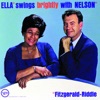
 Ella Fitzgerald
Ella Swings Brightly with Nelson
1993 Verve 314519347
Original recording 1963
|
|
The title is no misnomer as vocalist Fitzgerald does indeed sparkle in front of the Nelson Riddle orchestra. Upbeat, joyous, and irrepressible, the singer shows why she is the best.
|
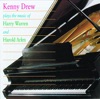
 Kenny Drew
Plays the Music of Harry Warren and Harold Arlen
1995 Milestone 47070
Original Recording 1957
|
|
Kenny Drew was a master solo pianist who achieved such a full sound that other instruments weren’t missed. This fine collection features a romantic take on “I Only Have Eyes for You” that flows from a chorus of solo piano to a lovely duet with bassist Wilbur Ware.
|
 Rene Marie
Vertigo
2001 MAXJAZZ 114
Original recording 2001
|
|
Vocalist Rene Marie is sensational as she plays with tempo and mood, slowing the song down to a slow shuffle/samba. Her breathless delivery heightens the sensuality of the performance.
|
 Harry Connick Jr
Only You
2004 Columbia 90551
Original recording 2003
|
|
The moody, atmospheric approach that singer/pianist Connick takes is right on the money. Eloquent and heartfelt, he perfectly captures the bittersweet anguish of yearning.
|
|
|
|